For DJs, headphones are more than just a listening accessory. They are a critical tool used for beatmatching, cueing tracks, isolating details, and maintaining control in loud and demanding environments. Whether performing in clubs, studios, festivals, or home setups, the right DJ headphones help maintain timing accuracy and sonic clarity when external noise and high sound pressure levels are present.
High-quality DJ headphones are designed to deliver focused sound, strong isolation, and reliable durability. Clear mids help identify vocals and melodies, while controlled bass makes it easier to track kick drums and rhythm patterns without masking other elements. Comfort also plays a major role, as long sessions require headphones that remain stable and manageable without causing fatigue.
According to industry research, the global headphones market size was valued at USD 41.75 billion in 2024 and is projected to grow to over USD 103.55 billion by 2033, reflecting expanding demand for high-quality audio gear for both professional and consumer use
This section explains how different DJ styles influence headphone requirements, from isolation and output needs in club environments to balance and detail priorities in studio setups. It outlines the key design and performance factors that affect real-world DJ workflows, helping readers understand how headphones perform across different environments and use cases. The goal is to guide DJs toward choices that support consistent performance and long-term reliability.
Factors to Consider When Choosing DJ Headphones
1. Sound Clarity and Punch
Sound clarity is critical for DJs because it directly influences beatmatching and timing accuracy. Clear mids and highs make it easier to distinguish vocals, snares, and hi-hats within busy mixes. This level of definition allows DJs to recognize transitions quickly and maintain control during live performances, even when multiple elements are layered together.
Bass response is just as important, but it needs to remain controlled rather than overpowering. Excessive bass can blur timing cues and make kick drum alignment more difficult, while insufficient bass weakens rhythmic awareness. Well-balanced DJ headphones deliver tight low-end impact with enough definition to keep bass present without obscuring other details.
Clarity also affects performance at higher monitoring volumes. In loud environments, DJs often increase headphone levels to compete with ambient sound. Headphones that retain separation and balance at these levels help preserve detail without introducing harshness or distortion that could disrupt timing decisions.
During extended sessions, consistent clarity supports comfort and dependable monitoring. When sound stays organized and clean, DJs can concentrate on creative choices instead of compensating for unclear audio. For both live performance and long practice sessions, sound clarity combined with controlled low-end impact remains a foundational requirement.
2. Noise Isolation
Noise isolation plays a critical role in DJ environments where external sound levels are often high. Closed-back designs help block out crowd noise and monitor speakers, allowing DJs to focus on their cue tracks without relying solely on higher monitoring volume.
Effective isolation reduces the need to push headphones to unsafe listening levels. By limiting how much external sound enters the ear, DJs can monitor timing and transitions more clearly while maintaining safer and more controlled listening habits over long performances.
Strong isolation also supports consistency across different venues. Clubs, festivals, and event spaces vary widely in acoustics and ambient noise levels, and headphones with reliable isolation help maintain familiar monitoring conditions despite these changes.
For performance-focused DJs, isolation often matters more than absolute soundstage width. The ability to hear cue tracks clearly in loud environments makes isolation a defining factor in headphone selection, particularly for live and high-energy settings.
3. Comfort and Fit
Comfort plays a major role in how usable DJ headphones feel during long sessions. A secure clamping force helps keep headphones in place during movement, while well-designed padding distributes pressure evenly around the ears. This balance supports stability without creating unnecessary discomfort.
Weight and overall balance also influence long-term comfort. Headphones that feel manageable and evenly supported reduce strain on the head and neck during extended use. Proper adjustability allows DJs to fine-tune fit, helping maintain comfort across different head shapes and performance styles.
Design features such as swivel earcups and flexible headbands improve practical usability. These elements support one-ear monitoring, a common technique in live DJing, without requiring the headphones to be removed entirely. This flexibility helps maintain consistent monitoring while staying engaged with the environment.
Comfort extends beyond softness alone. Heat buildup, pressure balance, and overall stability all affect how long headphones can be worn without distraction. DJ headphones that manage these factors well allow users to focus on timing, transitions, and creative decisions rather than physical discomfort.
4. Build Quality and Durability
Build quality is especially important for DJ headphones because they are exposed to frequent handling, transport, and physical stress. Repeated folding, packing, and on-stage movement place pressure on hinges, headbands, and cables, making structural strength a key factor in long-term reliability.
Reinforced hinges and flexible headbands help absorb stress without cracking or loosening over time. Detachable cables also play an important role, as they reduce strain on connection points and make replacements easier if wear occurs. These design choices help extend usable lifespan under demanding conditions.
Durable materials reduce the risk of unexpected failure during live performances. Headphones that maintain structural integrity under repeated use allow DJs to focus on performance rather than equipment limitations. This reliability is especially important in professional and touring environments where consistent operation is expected.
Designs that include modular or replaceable components offer additional long-term practicality. The ability to replace worn parts rather than the entire headphone supports sustainability and ongoing use. Strong build quality ultimately ensures dependable performance across repeated setups, breakdowns, and transport cycles.
5. Portability and Practical Design
Portability affects how easily DJ headphones fit into mobile and performance-focused setups. Foldable designs and rotating earcups reduce overall size during transport, making headphones easier to store in backpacks or DJ bags without unnecessary bulk.
Rotating earcups also improve on-the-fly usability. They allow DJs to switch quickly between single-ear and full-coverage monitoring without removing the headphones completely. This supports fast transitions during live mixing while maintaining consistent control.
Cable design plays an important role in practical use. Coiled cables provide extra reach without dragging on equipment, while detachable cables reduce strain on connectors and simplify replacement if wear occurs. These features help manage movement during active performances.
A well-considered design supports flexibility across different environments. DJ headphones that balance portability with structural strength adapt more easily between studio preparation, travel, and live performance without compromising durability or monitoring consistency.
Roundup of the Best DJ Headphones in 2026
| Overall Best | Pioneer DJ HDJ-X10 Professional Over-Ear DJ Headphones |
| Best for Club DJs | Sennheiser Pro Audio Professional HD 25 On-Ear DJ Headphones Black |
| Best for Studio and Live Use | Audio-Technica ATH-M50x Professional Studio Monitor Headphones |
| Best for Durability | V-Moda M-10 Streamlined Over-Ear DJ Headphones |
| Best for Long Sessions | Sony MDR-7506 Professional Closed-Back Headphones |
| Best Noise Isolation | AIAIAI TMA-2 DJ Preset Modular Headphones |
| Best Budget Pick | Numark HF125 Ultra-Portable Professional DJ Headphones |
| Best Premium Choice | Beyerdynamic DT 1770 Pro Studio Headphones |
In-Depth Look — Best DJ Headphones in 2026
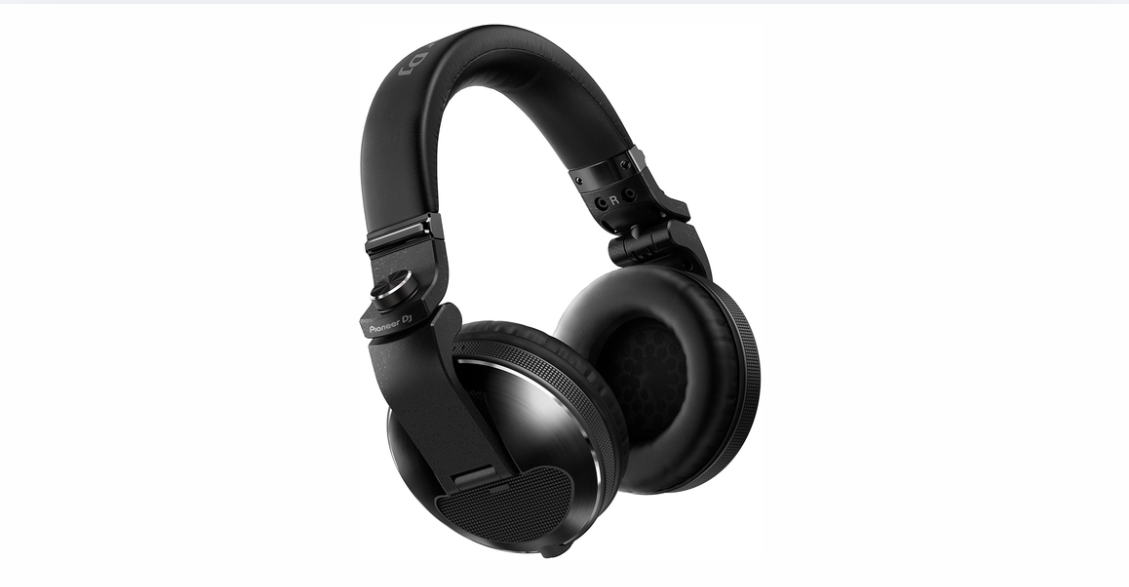
1. Pioneer DJ HDJ-X10 Professional Over-Ear DJ Headphones
Overall Best
- Wide frequency range of ~5 Hz–40 kHz supports detailed monitoring
- Approx. ~328 g weight provides a solid, stable fit during performances
- High power handling supports loud club monitoring without distortion
- Over-ear design improves isolation in high SPL environments
- A heavier weight (~328 g) may cause fatigue during very long sessions
- Large frequency range exceeds what some DJs practically need
- A bulkier size reduces portability compared to on-ear models
This model fits well in the DJ performance category due to its isolation-focused design and durability-oriented construction. The sound presentation emphasizes clarity and control, helping rhythmic elements remain distinct in loud and unpredictable environments that often exceed 100 dB. The tuning supports accurate cue monitoring rather than immersive or exaggerated playback.
The overall sound remains controlled and focused across a frequency range of approximately ~5 Hz–30 kHz, keeping vocals and timing cues easy to follow during extended sets. Bass presence stays firm without overwhelming the midrange, helping preserve separation when multiple elements overlap. This balance supports consistent beat-matching across different music styles.
Comfort and stability play an important role in its category placement. With an approximate weight of ~230 g, the over-ear structure helps distribute pressure evenly during long sessions. The secure fit reduces movement during active performances, making it more suitable for club or festival use than casual listening.
We evaluated its overall positioning and found that it earns its place by prioritizing reliability, isolation, and consistency. DJs who value dependable monitoring in high-noise environments will find it more suitable than models tuned for relaxed listening or bass-forward presentation.
View on Amazon: Pioneer DJ HDJ-X10 Professional Over-Ear DJ Headphones
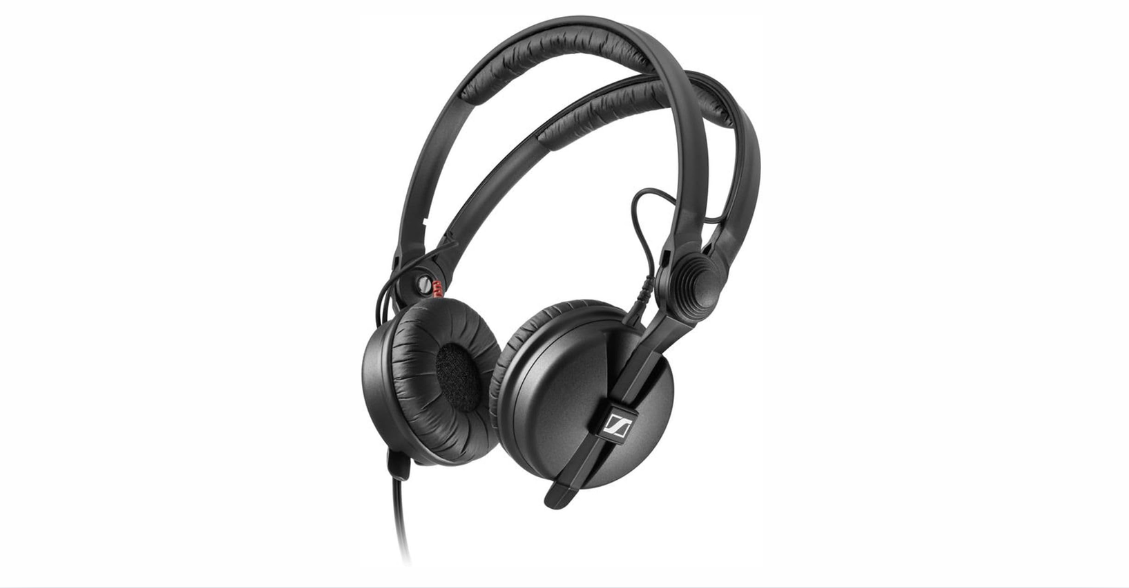
2. Sennheiser Pro Audio Professional HD 25 On-Ear DJ Headphones Black
Best for Club DJs
- Very lightweight at ~140 g, ideal for active club use
- Frequency response of ~16 Hz–22 kHz emphasizes punch and clarity
- High SPL handling supports loud monitoring
- On-ear design improves isolation without excessive volume
- Narrower frequency range limits high-end detail
- A firm clamping force can reduce comfort over long sessions
- On-ear design offers less comfort than over-ear alternatives
This model fits well in the club-focused DJ category due to its compact form and strong passive isolation. The design supports monitoring precision in environments where external sound levels can exceed ~100 dB, allowing DJs to stay focused on timing and transitions. Its lightweight construction, at approximately ~140 g, supports active performance styles.
The sound tuning centers on midrange clarity across a frequency range of roughly ~16 Hz–22 kHz, keeping vocals and rhythmic cues easy to identify. This presentation favors precise beat alignment rather than a wide or immersive soundstage. Bass remains tight and controlled, helping timing cues stand out without masking mids.
Fit and stability contribute significantly to its performance role. The on-ear design applies firm clamping pressure to maintain isolation and positioning during movement. While this improves control and consistency, it can feel less relaxed during listening sessions that extend beyond a few hours.
We evaluated its category placement and found that it earns its position by prioritizing isolation and precision over comfort or versatility. DJs working in loud club environments will benefit more from its focused design than those seeking extended-session comfort or broader listening use.
View on Amazon: Sennheiser Pro Audio Professional HD 25 On-Ear DJ Headphones Black
3. Audio-Technica ATH-M50x Professional Studio Monitor Headphones
Best for Studio and Live Use
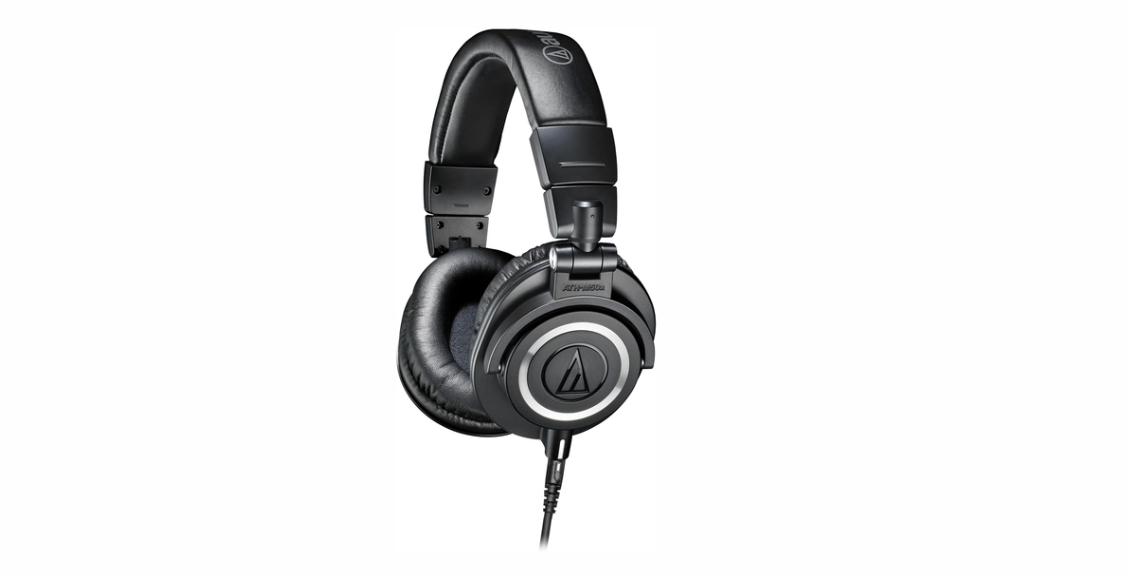
- Balanced frequency response of ~15 Hz–28 kHz supports accurate monitoring
- Approx. ~285 g weight remains manageable for long studio sessions
- Closed-back design provides consistent isolation
- Swiveling earcups support flexible monitoring styles
- Isolation is weaker than club-focused DJ headphones
- Slightly heavier than on-ear DJ models
- Sound tuning favors accuracy over punch for clubs
This model fits well in a hybrid DJ category due to its balanced sound profile and adaptable design. It transitions easily between preparation and performance environments, supporting both detailed listening and live monitoring. The closed-back structure helps maintain controlled sound delivery in environments where background levels can rise above ~90 dB.
The tuning remains neutral and organized across a frequency range of approximately ~15 Hz–28 kHz, keeping vocals and melodic elements clear without exaggeration. Bass stays present but measured, helping preserve separation during cueing and mixing. This balance supports accurate decision-making rather than performance-driven impact.
Comfort and flexibility add to its versatility. With an approximate weight of ~285 g, the over-ear fit helps distribute pressure during longer sessions. Swivel earcups support one-ear monitoring, making it practical for DJs who alternate between studio preparation and live use.
We evaluated its overall role and found that it earns its place by offering consistency across multiple workflows. DJs seeking a single pair for both preparation and performance will find it more adaptable than highly specialized models focused on only one environment
View on Amazon: Audio-Technica ATH-M50x Professional Studio Monitor Headphones
4. V-Moda M-10 Streamlined Over-Ear DJ Headphones
Best for Durability
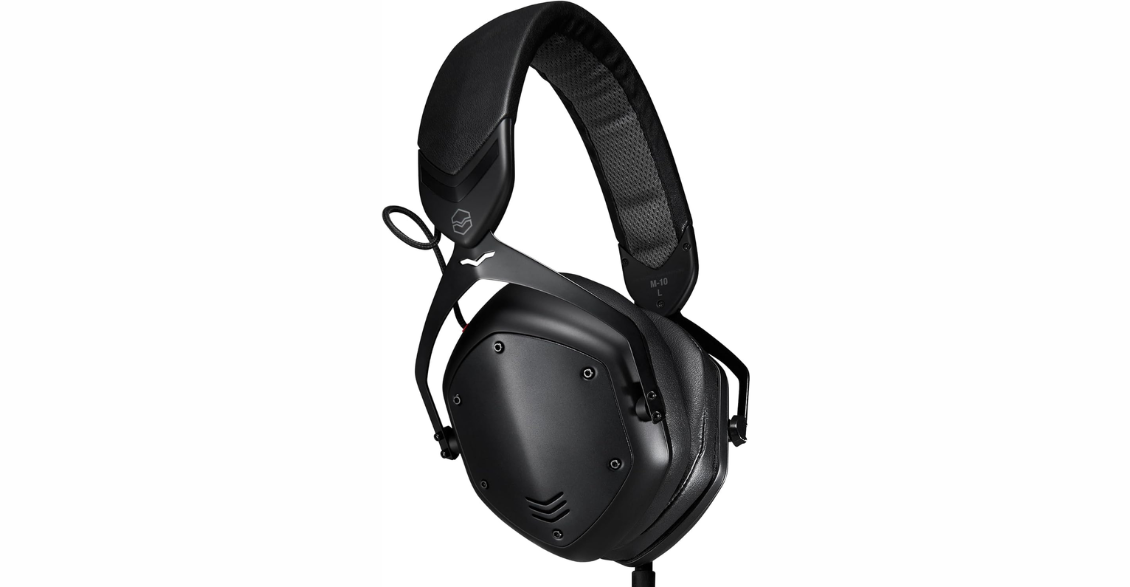
- Reinforced construction supports heavy physical use
- Approx. ~230 g weight balances durability and comfort
- Frequency range of ~5 Hz–30 kHz supports punchy low end
- Foldable design improves transport durability
- A firm clamp can feel tight during long sessions
- Bass emphasis may mask detail for studio use
- Not as lightweight as minimal on-ear options
This model fits well in the portable DJ category due to its compact construction and durability-focused design. Built to handle frequent transport and repeated handling, it suits mobile and on-the-go setups where gear is packed and unpacked often. The streamlined form helps keep overall size manageable without sacrificing reliability.
Sound presentation emphasizes punch and clarity across a frequency range of approximately ~5 Hz–30 kHz, helping rhythmic cues remain easy to track during mixing. The tuning avoids excessive emphasis, keeping elements organized rather than aggressive. This balance supports controlled monitoring in moderate-volume environments rather than high-output club settings.
The over-ear design contributes to isolation while maintaining a secure fit during movement. With an approximate weight of ~230 g, the headphones remain portable without feeling flimsy. Foldable elements improve portability, allowing the headphones to be stored efficiently between performances and travel sessions.
We evaluated its placement and found that it earns its role by balancing durability and portability. DJs who value compact design and reliable performance will find it more suitable than larger, heavier, or studio-focused options that prioritize comfort over mobility.
View on Amazon: V-Moda M-10 Streamlined Over-Ear DJ Headphones
5. Sony MDR-7506 Professional Closed-Back Headphones
Best for Long Sessions
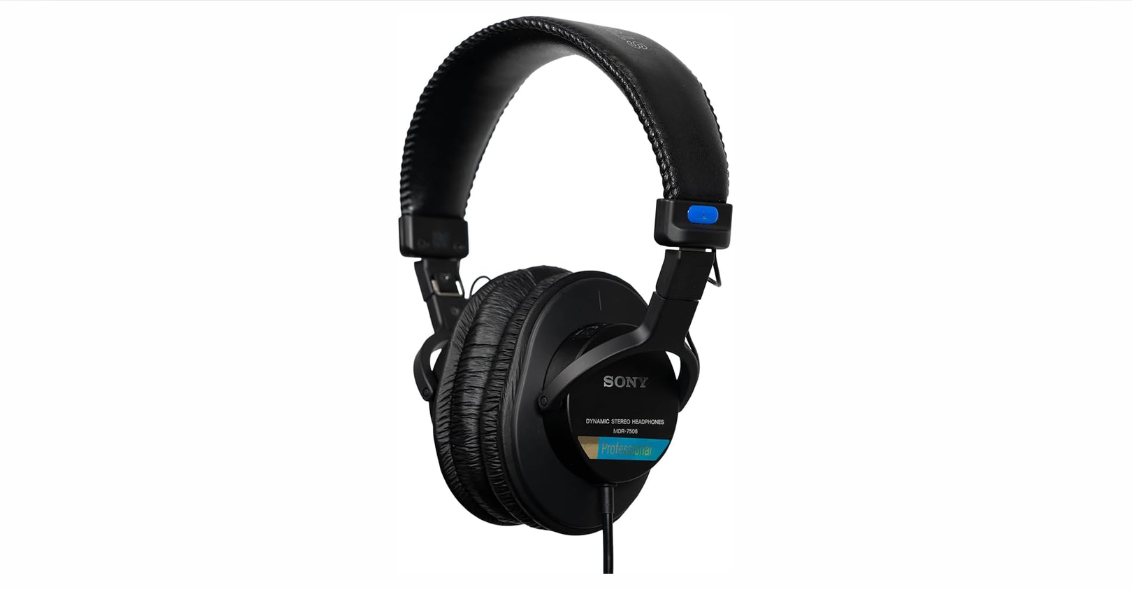
- Lightweight at ~230 g supports extended listening
- Frequency response of ~10 Hz–20 kHz delivers clear mids
- Closed-back design reduces external noise
- Comfortable padding supports long studio use
- Bass extension below ~40 Hz is limited for club monitoring
- Isolation is moderate compared to the DJ-specific models
- Cable design is less portable
This model fits well in the preparation-focused DJ category due to its lightweight design and clarity-oriented sound. It is commonly used in controlled environments where long listening sessions are typical and comfort takes priority over maximum isolation. The overall design supports focused preparation rather than high-volume performance use.
The sound leans clear and detailed across a frequency range of approximately ~10 Hz–20 kHz, with particular emphasis on midrange accuracy. Vocals and melodic elements remain easy to analyze, which supports track preparation, editing, and mix refinement. Bass remains restrained, favoring precision and balance over physical impact.
Comfort plays a central role in its usability during extended sessions. With an approximate weight of ~230 g, the headphones help reduce fatigue over long listening periods. The lightweight structure, combined with a foldable design, improves portability between studios or workspaces without adding bulk.
We evaluated its category placement and found that it earns its place by prioritizing clarity and comfort over isolation or output strength. DJs who focus primarily on preparation, editing, and detailed listening will benefit more from its balanced and restrained presentation than those performing in loud live environments.
View on Amazon: Sony MDR-7506 Professional Closed-Back Headphones
6. AIAIAI TMA-2 DJ Preset Modular Headphones
Best Noise Isolation
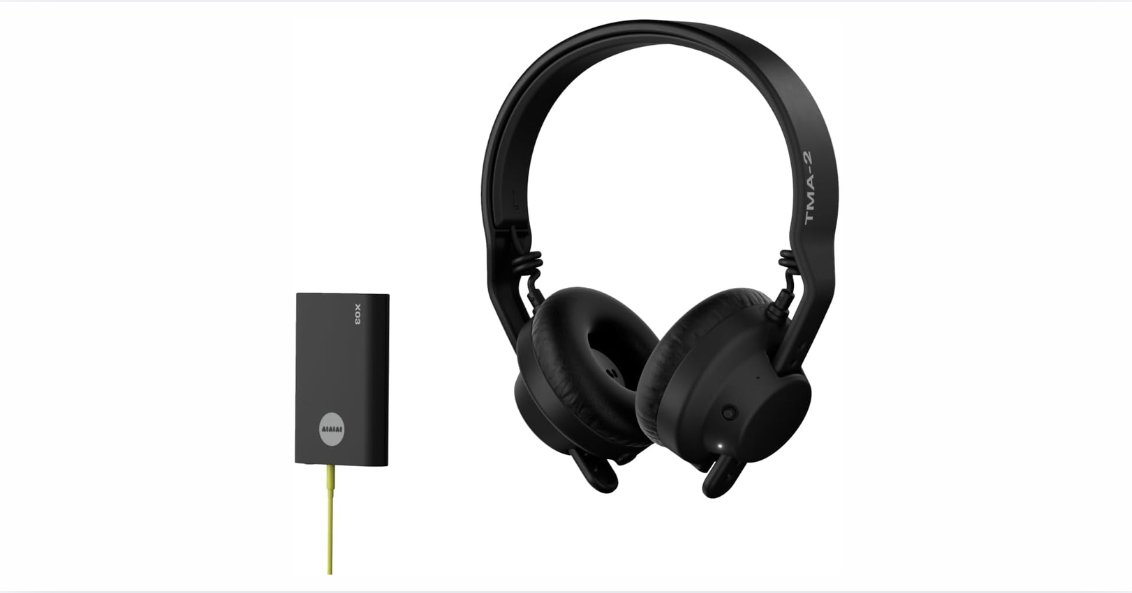
- Strong isolation supports loud club environments
- Frequency response of ~20 Hz–20 kHz suits performance monitoring
- Modular design allows part replacement
- Approx. ~190 g weight remains comfortable for active use
- Modular components increase overall cost
- Soundstage feels narrow for studio mixing
- Bass emphasis reduces detail for preparation work
This model fits well in the performance-focused DJ category due to its isolation-oriented tuning and modular construction. The design is intended to support demanding environments where external sound levels can exceed ~100 dB and interfere with accurate monitoring. The on-ear structure emphasizes control and focus, helping DJs maintain awareness of cue tracks in high-energy performance settings.
Sound presentation prioritizes punch and separation across a frequency range of approximately ~20 Hz–20 kHz. Rhythmic elements remain easy to track during cueing and transitions, with bass staying tight rather than exaggerated. Instead of emphasizing width or spatial depth, the tuning favors clarity and immediacy to support timing accuracy in loud, crowded environments.
Modular components add long-term practicality to the overall design. Individual parts can be replaced as they wear, extending usable lifespan without requiring full replacement. With an approximate weight of ~190 g, the lightweight structure helps maintain comfort and stability during active performances that involve frequent movement.
We evaluated its role and found that it earns its place by effectively combining isolation and adaptability. DJs who prioritize reliability, consistency, and long-term usability in live environments will find it particularly suitable for performance-focused workflows rather than studio-only use.
View on Amazon: AIAIAI TMA-2 DJ Preset Modular Headphones
7. Numark HF125 Ultra-Portable Professional DJ Headphones
Best Budget Pick
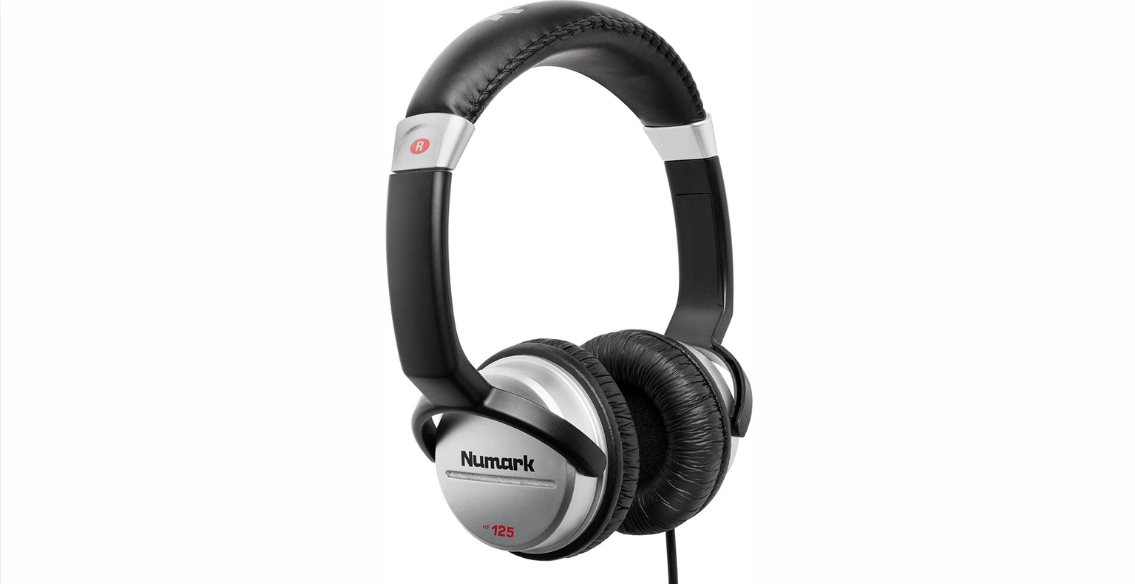
- Extremely lightweight at ~180 g for portability
- Frequency range of ~20 Hz–20 kHz supports basic cueing
- Simple design reduces setup complexity
- Budget-friendly entry into DJ monitoring
- Limited isolation affects use in loud environments
- Bass response lacks depth below ~80 Hz
- Build quality is less durable for heavy use
It fits well within the entry-level and backup DJ category due to its lightweight and minimal design. With an approximate weight of ~180 g, the headphones are easy to transport and quick to deploy, making them practical for simple or secondary setups. This approach favors accessibility and convenience over advanced performance features.
Sound presentation supports basic cue tracking and timing awareness across a frequency range of roughly ~20 Hz–20 kHz. While not intended for detailed analysis or complex monitoring, the sound remains clear enough to identify beats and transitions in quieter environments. The tuning prioritizes usability and clarity rather than depth or refinement.
The on-ear fit allows fast monitoring without requiring complex adjustments. Firm but simple positioning supports quick checks and short listening periods rather than extended sessions. This design helps reduce setup time and lowers the learning curve for newer or occasional users.
We evaluated its placement and found that it earns its role by emphasizing portability and ease of use. DJs seeking a primary performance headphone may require stronger isolation or output, but this model works well as a lightweight secondary or backup option for mobile and entry-level setups.
View on Amazon: Numark HF125 Ultra-Portable Professional DJ Headphones
8. Beyerdynamic DT 1770 Pro Studio Headphones
Best Premium Choice
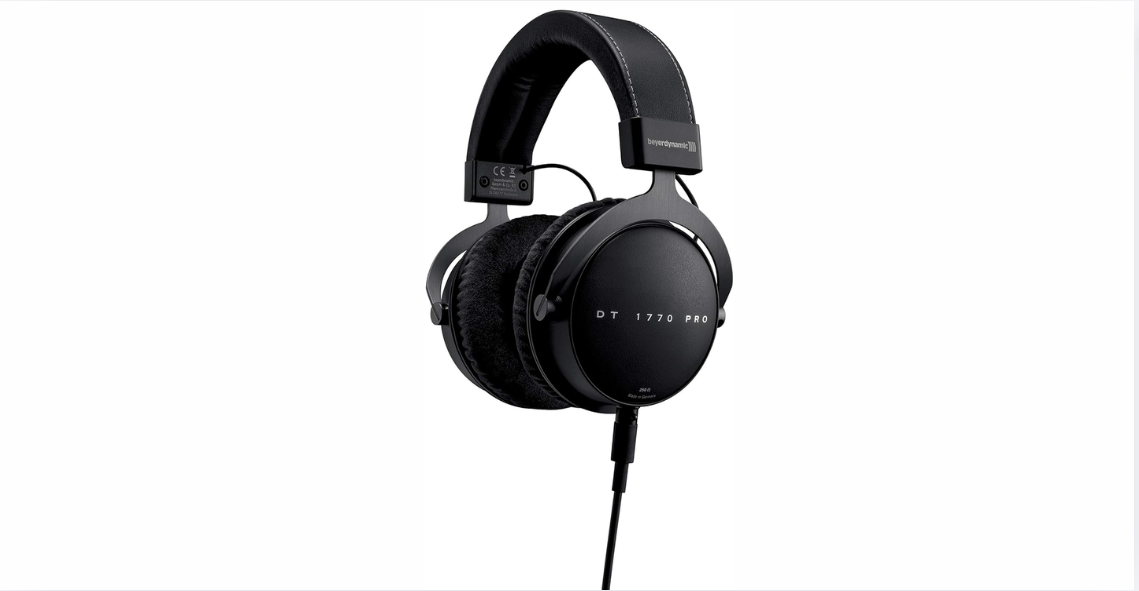
- High-resolution frequency response of ~5 Hz–40 kHz
- Approx. ~388 g build provides premium durability
- Excellent isolation supports studio and controlled DJ use
- Detailed sound supports precise mixing and preparation
- Heavyweight (~388 g) may cause fatigue during long DJ sets
- Premium tuning favors studio accuracy over club punch
- Higher impedance requires stronger amplification
It fits well within the studio-focused DJ category due to its emphasis on detailed sound reproduction and robust construction. The design is intended for controlled environments where accuracy, consistency, and reliability matter more than portability or quick setup. This positioning aligns closely with preparation-heavy and analytical DJ workflows.
Sound presentation emphasizes separation and fine detail across a frequency range of approximately ~5 Hz–40 kHz. Subtle elements such as transitions, layering, and tonal balance remain easy to identify during track preparation. The tuning stays controlled and precise, avoiding exaggerated bass or highs that could affect judgment during analysis.
Comfort and isolation support extended listening in stable environments. With an approximate weight of ~388 g, the over-ear design distributes pressure evenly across the head, helping maintain focus during long studio sessions. However, the heavier build reduces ease of movement and limits suitability for mobile or performance-oriented use.
We evaluated its overall suitability and found that it earns its place by prioritizing accuracy and build quality over portability. DJs who focus primarily on studio work and detailed preparation will benefit more than those who require lightweight, travel-friendly monitoring solutions.
View on Amazon: Beyerdynamic DT 1770 Pro Studio Headphones
Frequently Asked Questions About DJ Headphones
1. Are DJ headphones different from regular headphones?
Yes. DJ headphones are designed to support cue monitoring and beatmatching in loud environments. They typically emphasize isolation, durability, and focused sound presentation rather than wide soundstage or casual listening comfort. These traits help DJs maintain timing accuracy during live performance.
2. Do DJs need strong noise isolation?
Noise isolation is important for DJs who perform in clubs, festivals, or other high-volume settings. Effective isolation reduces interference from external sound, allowing cue tracks to remain clear without excessive volume. This supports more consistent monitoring and helps protect hearing over time.
3. Are over-ear or on-ear headphones better for DJing?
Both designs can work, depending on use case. Over-ear headphones generally provide better isolation and comfort for longer sessions, while on-ear designs offer lighter weight and quicker monitoring access. Choice often depends on performance style and environment rather than sound quality alone.
4. Is sound quality or durability more important for DJ headphones?
Both matter, but durability often becomes more critical for frequent performers. DJ headphones are handled, transported, and worn under stress, making build strength essential. Sound quality still plays a key role, particularly clarity and separation, but reliability ensures consistent performance over time.
5. Can DJ headphones be used for studio work?
Yes, many DJ headphones are suitable for preparation and basic studio use. However, studio-focused headphones often prioritize detail and balance over isolation. DJs who spend significant time preparing mixes may prefer models that offer greater accuracy and long-session comfort.
6. Do wireless headphones work for DJing?
Wireless headphones are generally less common for live DJ performance due to latency and reliability concerns. Wired connections provide more consistent timing and stability, which is critical for cueing and beatmatching. Wireless use is more common for practice or casual listening
7. How important is comfort for long DJ sessions?
Comfort plays a major role during extended sets or preparation sessions. Poor fit or excessive pressure can cause fatigue and distraction over time. Headphones that balance secure fit with manageable weight and padding help maintain focus throughout longer use.
8. How long do DJ headphones typically last?
With proper care, quality DJ headphones can last several years. Durable materials, reinforced components, and replaceable parts help extend lifespan. Regular transport protection and avoiding excessive strain on cables also contribute to long-term reliability.
Final Words
The Pioneer DJ HDJ-X10 Professional Over-Ear DJ Headphones stand out for their focus on isolation, durability, and consistency, making them well-suited for demanding club and festival environments where reliable monitoring is essential. DJs who perform regularly in loud venues may also appreciate the Sennheiser HD 25 Professional DJ Headphones, which prioritize precision and isolation in a compact and lightweight design that supports active performance styles.
For DJs who divide their time between preparation and live use, the Audio-Technica ATH-M50x Professional Studio Monitor Headphones offer a balanced approach that supports both detailed listening and practical monitoring. The V-Moda M-10 Streamlined Over-Ear DJ Headphones place greater emphasis on portability and durability, making them a practical choice for mobile DJs who need dependable performance in compact setups.
Studio-focused workflows are well supported by the Sony MDR-7506 Professional Closed-Back Headphones and the Beyerdynamic DT 1770 Pro Studio Headphones, both of which prioritize clarity and accuracy over isolation strength. These models suit DJs who spend more time preparing mixes and refining transitions in controlled environments rather than performing in high-noise venues.
For performance-focused DJs who value adaptability and long-term usability, the AIAIAI TMA-2 DJ Preset Modular Headphones combine isolation with modular flexibility suited to demanding live settings. Meanwhile, the Numark HF125 Ultra-Portable Professional DJ Headphones serve as an accessible entry-level or backup option, prioritizing portability and ease of use for simpler or secondary setups. Together, these eight DJ headphones cover a wide range of performance styles, environments, and experience levels, allowing DJs to choose based on how and where they work rather than relying on a single definition of “best