

When producing electronic music, beats are the backbone of rhythm and groove. Delivering responsive, accurate drum hits is essential for tight production, live performance, or beat-making sessions. The right MIDI drum pads can transform rhythm creation — enabling expressive control, dynamic velocity response, and workflow flexibility.
A good pad controller provides solid velocity sensitivity, pad responsiveness, and low latency. This allows every drum hit or percussion sound to feel natural and precise. Whether programming hip-hop beats, live triggering, or layering drum loops, it helps maintain musical integrity and creative flow.
Portability and workflow integration matter too. Many producers work on the go or switch between studio and live setups. A compact, USB-powered pad controller can make rhythm creation accessible anywhere. Robust build quality and intuitive control layout further support consistent performance.
Whether for studio production, live performance, or beat-making on the move, a high-quality MIDI drum pads supports fast, expressive, and reliable rhythm creation — making it a fundamental tool for modern musicians.
Factors to Consider When Choosing a MIDI Drum Pad
1. Pad Response and Velocity Sensitivity
Pad response and velocity sensitivity are among the most important considerations because they dictate how expressive and dynamic the drum programming feels. A sensitive pad picks up soft taps and aggressive hits alike, giving control over volume, accent, and nuance. The right pad controller reproduces subtle velocity differences so that drum hits are musical and natural.
Consistency across all pads is also essential. Uneven sensitivity can lead to unpredictable results, which can break rhythm flow or require extra editing. High-quality pads deliver uniform response across all zones, enabling confident live performance or recording.
Latency and triggering speed also matter. Low-latency pads ensure that hits sound instantly when tapped, preserving timing accuracy during fast patterns or live triggering. Clear, responsive pads provide reliability and musical detail, supporting sophisticated rhythm work.
2. Build Quality and Portability
Build quality is important because MIDI drum pads are frequently transported between studios, rehearsals, and live shows. A solid chassis made from durable plastic or metal helps prevent wear and tear during regular use. Rubber or silicone pad surfaces also improve longevity and reduce the chance of cracking or mechanical failure.
Portability plays a major role for musicians who travel or perform live. Compact and lightweight controllers are easier to set up quickly and fit into small workspace areas without requiring extra equipment.
USB-powered designs increase convenience by eliminating the need for external power supplies. This makes it simple to plug into laptops or minimal setups on the go.
A balanced combination of durability and portability ensures the pad remains reliable and comfortable to use in different locations and production environments
3. Pad Layout and Control Features
Pad layout affects workflow speed and efficiency. Having enough pads for drums, percussion, and samples reduces the need to switch banks during recording or performance. Additional controls, such as knobs, faders, or RGB feedback, improve convenience in real-time use.
A clear and organized layout supports intuitive playing and reduces mistakes, especially during live sets. Good spacing and pad size help maintain accuracy when performing fast rhythms.
Extra performance-based features expand versatility, enabling sample triggering, loop launching, and instrument control, making the pad useful across many production styles.
4. Software Integration and Compatibility
Software integration ensures smooth communication between the pad and music production tools. Proper mapping and velocity interpretation help reduce setup time and improve workflow consistency across different DAWs and plugins.
Many controllers include ready-to-use templates that simplify installation, especially for popular platforms like Ableton, FL Studio, and Logic Pro. This allows immediate access to drum kits and sample libraries without extra configuration.
Class-compliant operation and cross-platform support help maintain long-term usability, ensuring the pad remains functional even as software or hardware setups change.
5. Power and Connectivity Options
USB-powered pads offer flexibility and easy portability, making them convenient for mobile producers and live performers. No external power supply is needed, simplifying setup.
Some models include additional connectivity such as MIDI out, USB-C, or foot-switch inputs for controlling hardware instruments or triggering live performance features.
Multiple output options support hybrid studio setups, combining both hardware and software tools, giving the controller extended long-term value.
Roundup of the Best MIDI Drum Pads
| Overall Best | Akai MPD218 |
| Best for Beat Producers | Native Instruments Maschine Mikro MK3 |
| Best for Advanced Control | Akai MPD226 |
| Best for Live Performance | Novation Launchpad Pro MK3 |
| Best Workflow Integration | Ableton Push 2 |
| Best Sequencer-Enhanced Option | Arturia BeatStep Pro |
| Best Compact Choice | Akai APC Mini MK2 |
| Best Portable Pad | Korg nanoPAD2 |
In-Depth Look — 8 Best MIDI Drum Pads in 2025
1. Akai MPD218
Overall Best
- Responsive velocity-sensitive pads
- Compact and portable design
- Simple and intuitive layout
- Reliable pad surface feel
- Great value for most producers
- Lacks onboard sequencer
- Minimal control knobs
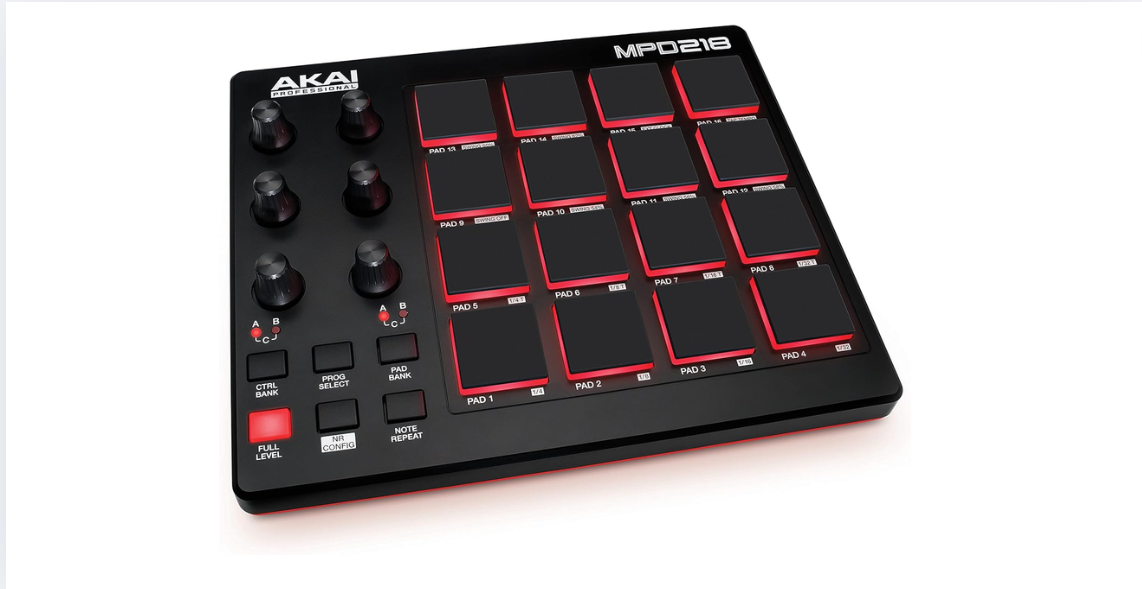
The Akai MPD218 is known for its reliable pad responsiveness and straightforward workflow, making it suitable for studio beat creation and live triggering. It delivers dynamic performance accuracy for both soft and heavy playing styles, allowing expressive control across a wide range of music genres. The compact profile makes it easy to position within any production setup.
We assessed its pad sensitivity and observed consistent triggering accuracy across all pads, supporting smooth performance without unintended variations. This helps producers maintain tight timing and avoid extensive post-edit correction, particularly during fast rhythmic programming.
Its durable rubber pad surface and lightweight construction support frequent use in mobile or studio environments. The compact body fits easily alongside keyboards or laptops, helping producers maintain an efficient and organised layout.
For creators seeking a simple yet expressive pad controller with dependable response and portability, the MPD218 delivers an effective balance of performance and usability.
View on Amazon: Akai MPD218
2. Native Instruments Maschine Mikro MK3
Best for Beat Producers
- High-quality velocity-sensitive pads
- Deep software workflow integration
- Compact yet feature-rich interface
- Strong build quality
- Smooth sampling and sequencing features
- Requires software setup
- Steeper learning curve for beginners
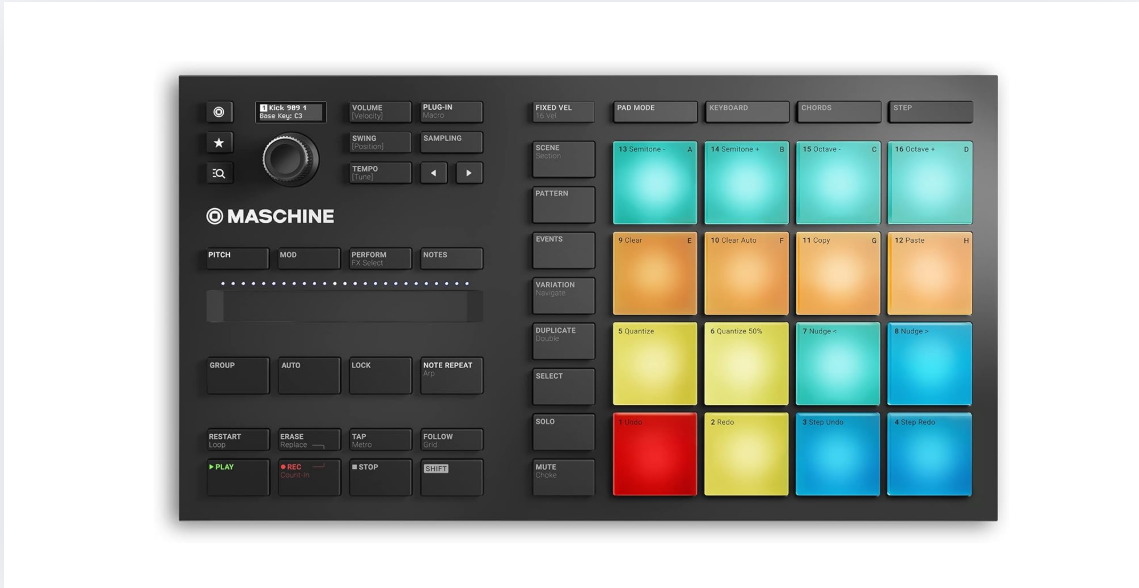
The Maschine Mikro MK3 provides a powerful beat-production workflow that combines responsive pad control with integrated sequencing and sampling tools. It supports detailed rhythm creation and sample manipulation, enabling producers to build layered percussion and loop-based arrangements efficiently. The pad grid responds accurately to dynamic playing, offering expressive control suitable for a range of musical styles and live performance needs.
We evaluated its integration performance and observed streamlined control over beat-making tasks, improving workflow speed and timing precision during active production. The controller maintains consistent response during fast rhythmic patterns and complex triggering, making it dependable for energetic studio sessions and real-time performance environments.
Its durable construction supports frequent use in both studio and stage setups. The reinforced pad surfaces maintain tactile feel over extended use, while the compact form factor fits easily into mobile rigs or small workspaces without sacrificing essential control features.
For producers seeking flexible rhythm manipulation and deep creative control, the Maschine Mikro MK3 delivers a strong combination of pad performance and integrated workflow tools. Its balance of portability, responsiveness, and production features makes it a reliable option for evolving beat-making requirements
View on Amazon: Native Instruments Maschine Mikro MK3
3. Akai MPD226
Best for Advanced Control
- Large responsive pads
- Additional knobs and faders for expanded control
- Full MIDI and USB connectivity
- Strong structural durability
- Suitable for advanced production workflows
- Bulkier layout
- Higher price than entry-level pads
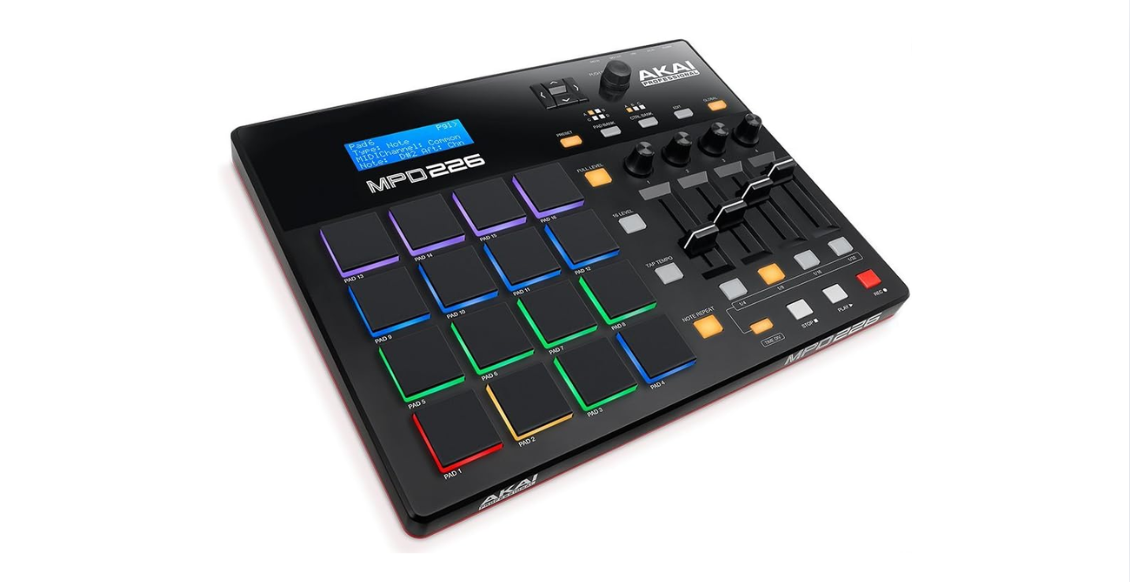
The Akai MPD226 delivers a more advanced playing and control experience with large velocity-sensitive pads and versatile hardware controls. It supports beat production, live performance, and parameter control for software instruments, improving creative flexibility.
We assessed its extended control capability and observed consistent responsiveness under expressive pad strikes and real-time adjustments. The control knobs and faders enhance workflow and allow hands-on manipulation of effects, filters, or mix elements during performance or recording.
Durable construction supports repeated heavy playing and equipment transport. The strong chassis and reinforced pad surface provide long-term stability.
With extensive control tools and versatile connectivity, the MPD226 is suited for professional-level production and performance environments requiring deep control.
View on Amazon: Akai MPD226
4. Novation Launchpad Pro MK3
Best for Live Performance
- Fast triggering for samples and loops
- Large grid layout for live sequencing
- Low latency and stable response
- Robust performance-focused design
- Suitable for stage environments
- Less traditional drum-pad feel
- Requires familiarity with grid workflow
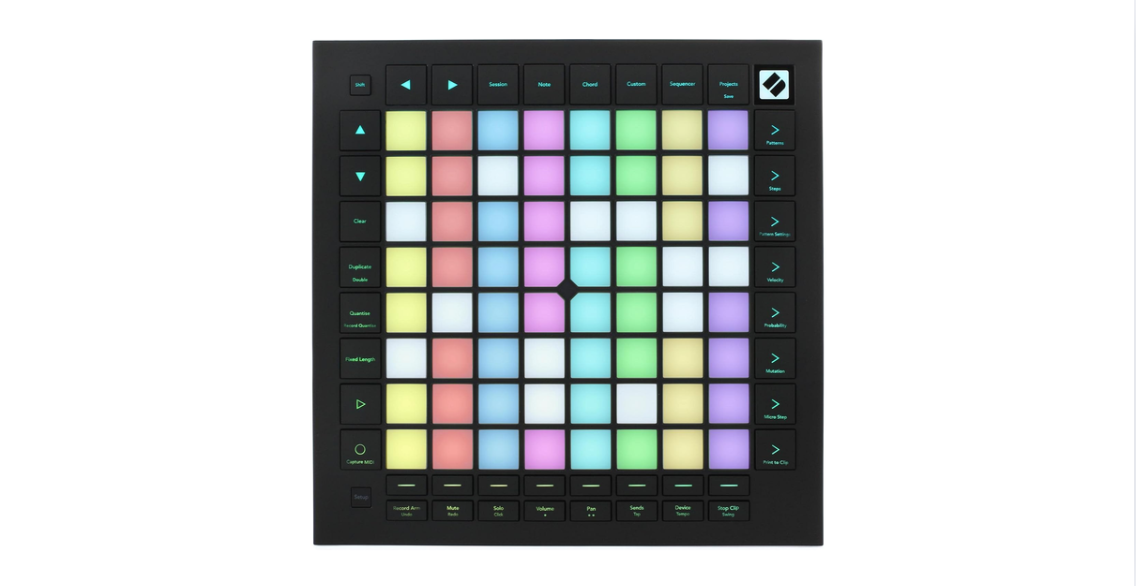
The Launchpad Pro MK3 delivers strong performance control for live production environments, offering rapid triggering for loops, samples, and percussion layers. The large grid layout supports creative sequencing and real-time improvisation, making it suitable for electronic music and live remixing.
We evaluated its live performance behaviour and found that triggering response remains rapid with minimal latency, even during complex rhythmic layering. This reliability makes it effective for dynamic stage performance and energetic live sets.
The durable construction supports long-term use, resisting wear from frequent travel and setup changes. Illuminated pads improve visibility in low-light environments, supporting confident stage control.
For musicians who require flexible live sequencing and responsive sample triggering, the Launchpad Pro MK3 provides powerful performance capability.
View on Amazon: Novation Launchpad Pro MK3
5. Ableton Push 2
Best for Workflow Integration
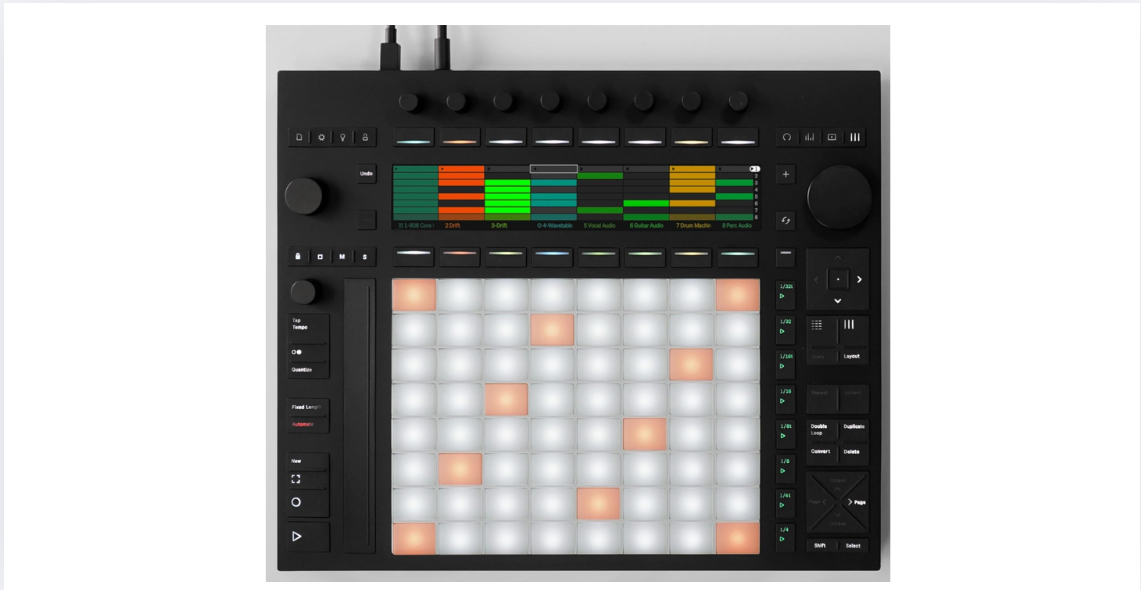
- Deep DAW integration
- High-resolution pads
- Built-in sequencing tools
- Professional build quality
- Strong control across instruments and effects
- Higher price range
- Less portable than compact pads
The Ableton Push 2 integrates deeply into production workflows with high-resolution pads and advanced sequencing tools. It supports drum programming, melodic creation, and session control directly from the hardware, reducing dependence on external devices.
We evaluated its workflow efficiency and observed smooth control transitions between programming, editing, and performance functions. Pads register detailed dynamic differences and maintain reliable timing response during intensive rhythmic work.
Its durable construction supports professional studio and stage environments, with a solid build designed for frequent long session use. The layout supports intuitive control navigation for complex arrangement tasks.
For musicians prioritizing integrated production control and expressive pad feel, the Push 2 serves as a fully equipped creative instrument.
View on Amazon: Ableton Push 2
6. Arturia BeatStep Pro
Best Sequencer-Enhanced Option
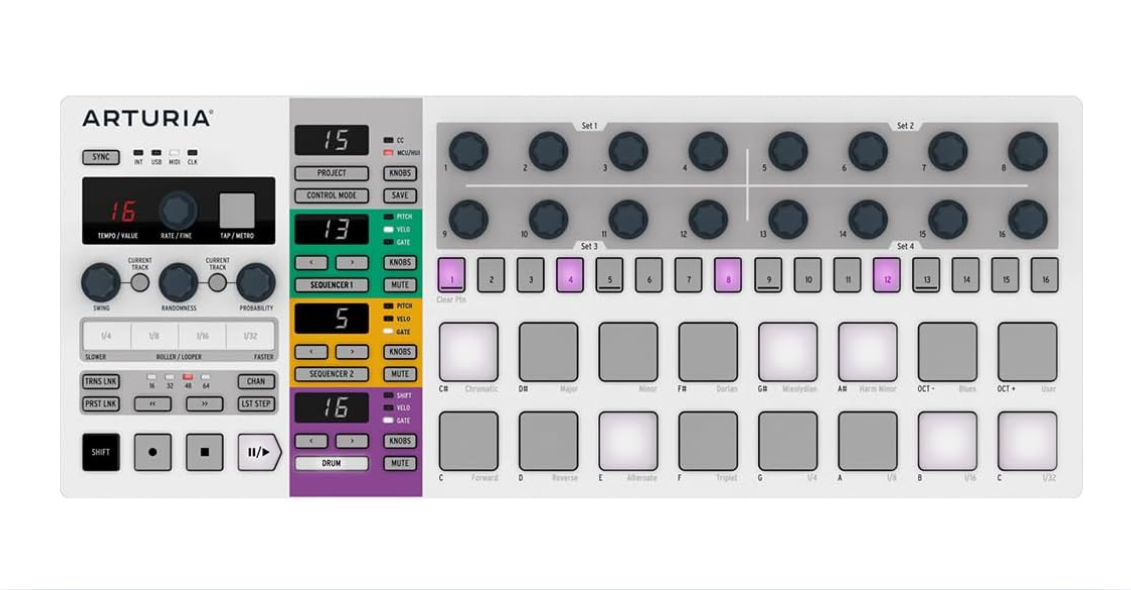
- Integrated sequencing controls
- Flexible pad triggering
- Comprehensive connectivity options
- Durable hardware build
- Supports hybrid production setups
- More complex interface
- Not designed solely for pad drumming
The Arturia BeatStep Pro combines pad performance with advanced sequencing functionality, supporting hybrid setups that include external synthesizers and drum machines. It enables detailed pattern management and real-time variation control for creative composition.
We assessed its sequencing behavior and observed stable timing performance and reliable pad triggering for both drum and melodic tasks. The extended connectivity supports flexible setups across software and hardware environments.
Its robust build ensures durability during frequent use, making it suitable for live performance and studio composition. The interface supports adaptive routing and multi-device control.
For producers who need sequencing depth alongside pad performance, the BeatStep Pro delivers flexible creative capabilities.
View on Amazon: Arturia BeatStep Pro
7. Akai APC Mini MK2
Best Compact Choice
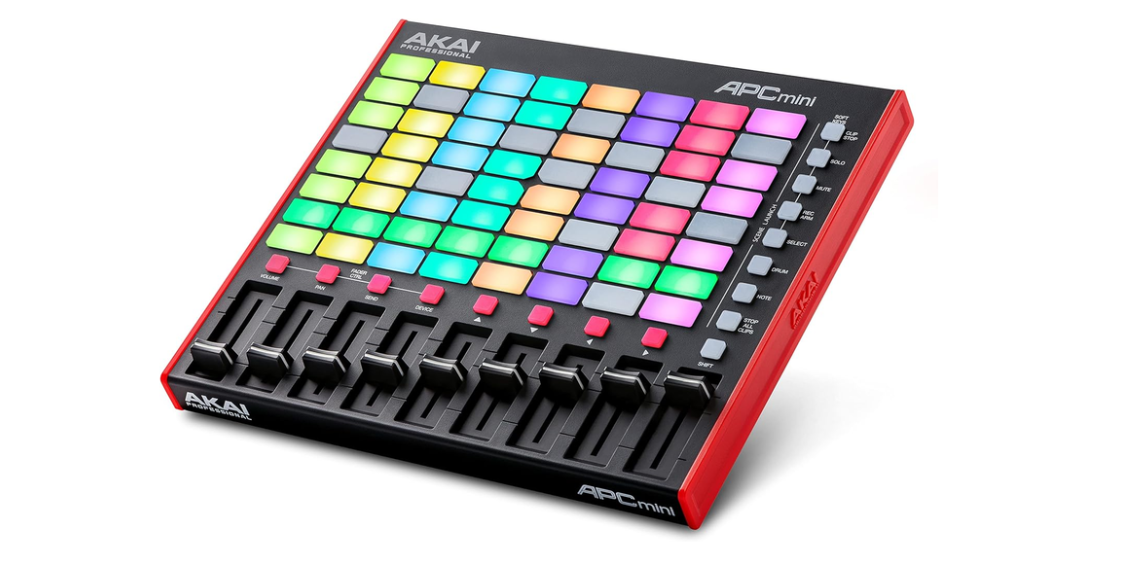
- Minimal and portable layout
- Easy setup and lightweight form
- Efficient for simple triggering and clips
- USB-powered for convenience
- Good beginner entry point
- Smaller pad size
- Limited tactile expression
The Akai APC Mini MK2 is designed for portability and simplicity, offering basic pad triggering and clip launching for mobile production and compact studio environments. Its small footprint enables easy placement in minimal workspaces or travel setups.
We evaluated its portability performance and found consistent pad control suitable for basic rhythm sketching and loop triggering. The compact design supports quick setup and efficient idea capture during early composition.
Its lightweight construction is convenient for producers who move equipment often or work in tight spaces. USB-powered operation reduces the need for additional hardware components.
For musicians needing a compact entry-level pad tool for travel or beginners’ workflow development, the APC Mini MK2 provides an efficient solution.
View on Amazon: Akai APC Mini MK2
8. Korg nanoPAD2
Best Portable Pad
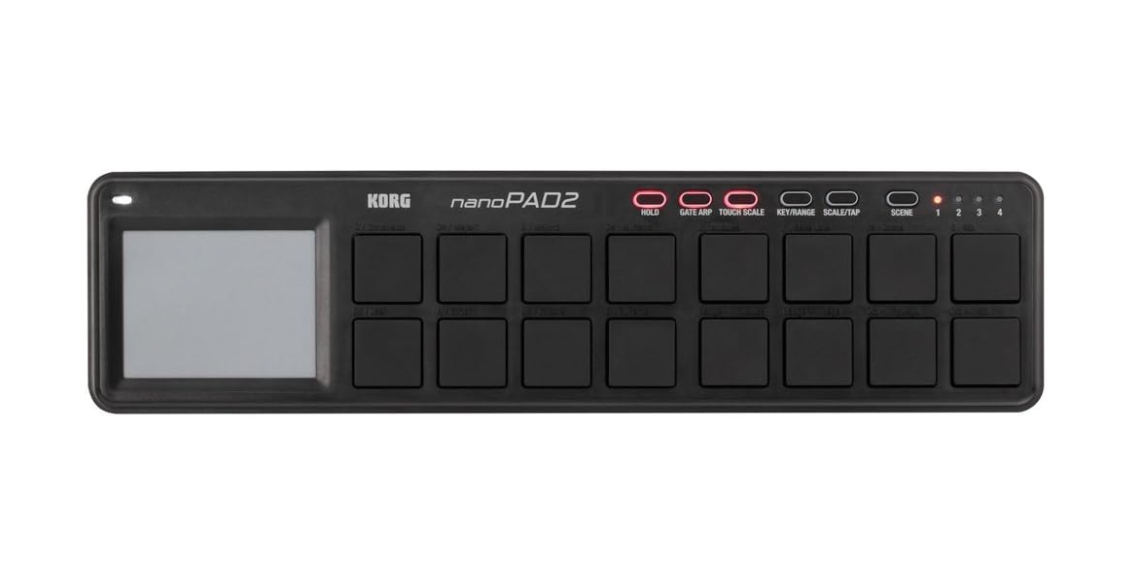
- Very lightweight and travel-friendly
- Simple layout for basic percussion
- USB-powered system
- Easy integration with most DAWs
- Ideal for entry-level beat sketching
- Small pad surface area
- Limited expressive depth
The Korg nanoPAD2 serves musicians who need an extremely compact pad controller for lightweight beat creation. It supports percussion triggering and simple rhythm programming for travel, live sketching, or on-the-go production.
We assessed its mobility performance and noted reliable functionality for compact playing environments, maintaining consistent basic triggering accuracy. The slim and lightweight design supports convenient storage and fast setup.
USB power improves portability and efficiency for laptop-based production workflows. The straightforward interface simplifies early beat creation or quick idea capture.
For users seeking a minimal and portable option to complement larger studio setups, the nanoPAD2 provides functional beat control in a highly convenient design.
View on Amazon: Korg nanoPAD2
Frequently Asked Questions About MIDI Drum Pads
1. Are MIDI drum pads necessary for producing beats?
MIDI drum pads are not required, but they significantly improve workflow and allow more expressive control than using a keyboard or mouse. Pads enhance timing accuracy and dynamic variation, which reduces programming effort and improves realism.
2. Are MIDI drum pads good for live performance?
Yes. Many MIDI drum pads are designed for fast triggering and stable low-latency performance, making them effective for live shows, DJ sets, and real-time loop launching.
3. Do MIDI drum pads work with any digital audio workstation?
Most pad controllers use standard MIDI over USB, allowing them to integrate with major DAWs and drum software. Mapping tools and templates simplify setup for common production environments
4.Is pad size important for drumming comfort?
Larger pads provide a more comfortable playing surface and improved accuracy during fast performance. Smaller pads increase portability but reduce tactile depth.
5. Can a MIDI drum pad replace a hardware drum machine?
A pad controller triggers sounds but does not generate audio by itself. Drum machines and samplers create sound, while pads control them. Together, they form a complete rhythm system
6. Is velocity sensitivity important?
Yes. Velocity sensitivity captures dynamic variation between soft and strong hits, improving realism and musical expression.
7. Can MIDI drum pads connect to external synthesizers or drum modules?
Many controllers support MIDI or USB-MIDI output, making them compatible with hardware instruments for hybrid production setups.
8. Are USB-powered drum pads good for travel?
USB-powered units reduce cable and power requirements, improving portability and convenience for mobile setups and laptop-based recording.
Final Words
Selecting the right MIDI drum pad can transform the rhythm programming process, improving expression, performance control, and creative flexibility. Each model in this list offers unique strengths supporting different workflow preferences and production environments.
The Akai MPD218 delivers balanced pad responsiveness and practicality for everyday beat-making. The Maschine Mikro MK3 provides deep workflow integration ideal for sample and loop-based production. For advanced control requirements, the Akai MPD226 offers robust interaction with instruments and effects. Live performers benefit from the speed and flexibility of the Launchpad Pro MK3, while the Ableton Push 2 supports professional-level workflow control.
The Arturia BeatStep Pro enhances sequencing and hybrid setups, while the Akai APC Mini MK2 supports compact and affordable beat creation. For lightweight travel workflows, the Korg nanoPAD2 provides a simple and portable option.
Together, these eight MIDI drum pads support a wide range of creative needs — from beginner beat sketching to advanced live performance — ensuring reliable, expressive rhythm creation anywhere.


