AirPods 5 arrive while Apple’s broader device ecosystem continues to grow. According to Counterpoint Research data reported by Reuters in January 2026, global smartphone shipments increased by 2% in 2025. Apple led the market with a 20% share, narrowly ahead of Samsung at 19%. This enormous iPhone user base gives Apple a built-in audience for its latest wireless earbuds.
Apple maintained that momentum during the first quarter of 2026. Reuters reported in April 2026 that iPhone shipments in China increased by 20%, even as the country’s overall smartphone market declined by 4%. Apple captured 19% of the Chinese smartphone market, just behind Huawei at 20%. The figures help explain why AirPods remain an important part of Apple’s expanding device ecosystem.
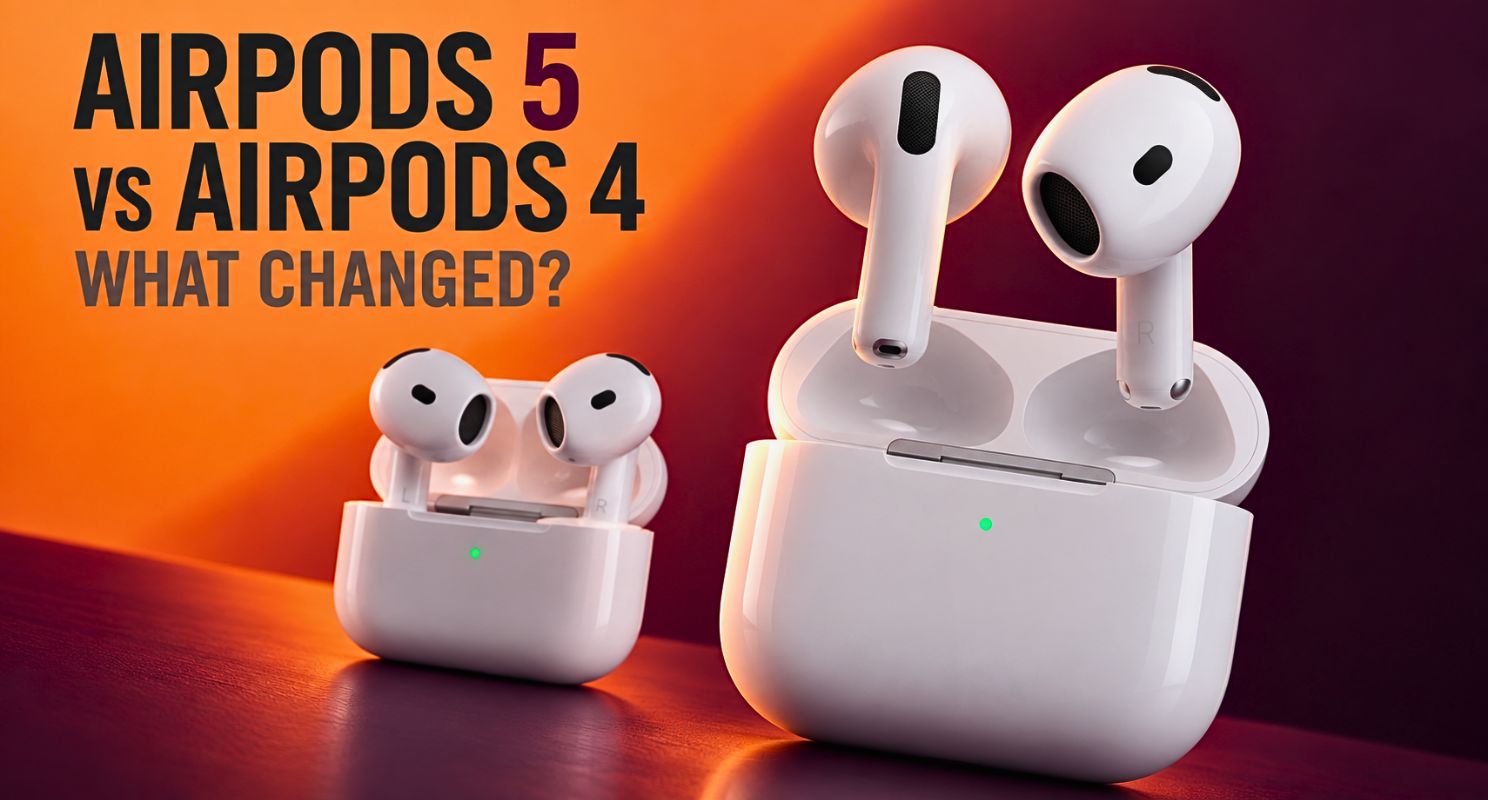
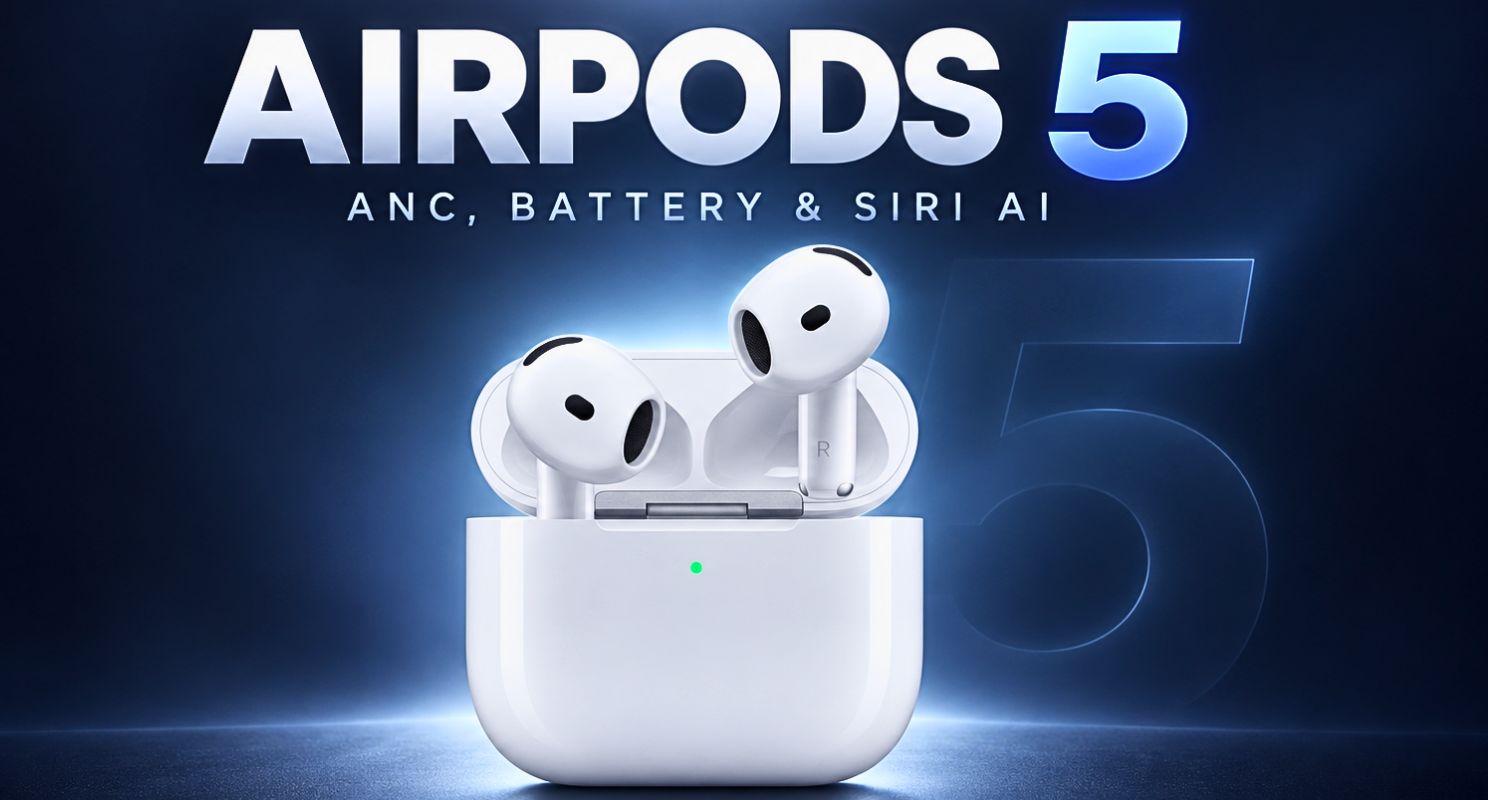
Apple announced AirPods 5 in September 2026 as the successor to AirPods 4, with availability beginning September 18. According to Apple’s official AirPods 5 overview, the new earbuds deliver up to 1.5 times more Active Noise Cancelation (ANC) than AirPods 4 with ANC. They also introduce revised acoustic architecture, improved water resistance, new Siri Artificial Intelligence (AI) functions, and direct volume control on one version. This guide explains every important AirPods 5 feature and separates confirmed specifications from Apple’s performance claims.
Explore the Most Important AirPods 5 Features
1. Understand the Two AirPods 5 Versions
Apple offers AirPods 5 in two versions, but the company no longer separates them by whether they include ANC. Both versions support Active Noise Cancelation, Transparency, Adaptive Audio, Conversation Awareness, and Voice Isolation.
The standard AirPods 5 include a Universal Serial Bus Type-C (USB-C) charging case. This version supports wired charging and provides up to four hours of listening with ANC enabled.
AirPods 5 with Wireless Charging Case add several features. The upgraded case works with USB-C, an Apple Watch charger, and Qi-certified wireless chargers. It also contains a speaker that can play Find My alerts.
The wireless-case version increases the claimed single-charge battery life to five hours with ANC enabled. It also adds a swipe gesture for controlling volume directly from the earbud stem.
The model name can therefore cause confusion. The Wireless Charging Case version does not simply change how the case receives power. It also changes the earbud controls and available battery life.
2. Examine the Improved Active Noise Cancelation
Both AirPods 5 versions include ANC, making noise control a standard fifth-generation feature. Apple previously limited ANC to the more expensive AirPods 4 configuration.
Apple claims that AirPods 5 block up to 1.5 times more noise than AirPods 4 with ANC. This represents a claimed 50% improvement, although independent testing will determine how consistently users experience that difference.
AirPods 5 use an open-ear design without silicone tips. This design allows some environmental sound to reach the ear directly, unlike sealed in-ear earbuds that create a physical barrier inside the ear canal.
Apple relies on microphones, computational processing, and the redesigned acoustic structure to reduce external sound. The system should work most effectively against consistent noises such as engines, air conditioners, fans, and low-frequency transportation sounds.
The result will still depend on the wearer’s ear shape and the way each earbud sits. A loose fit can reduce bass response and allow more surrounding noise to enter.
Transparency mode performs the opposite task. It uses external microphones to help surrounding voices, traffic, and environmental sounds reach the listener more naturally.
Adaptive Audio combines Transparency and ANC. The system changes the balance between environmental awareness and noise reduction as the wearer moves between different locations.
Conversation Awareness detects when the user starts speaking. It lowers media volume and emphasizes nearby voices, then restores the original listening level when the conversation ends.
3. Review the Redesigned Sound System
AirPods 5 continue using Apple’s H2 headphone chip. Apple has not introduced a new H3 chip for this generation.
The most important sound changes come from redesigned multiport acoustic architecture and next-generation Adaptive Equalization (EQ). Apple says the revised design produces greater depth, clarity, detail, and accuracy.
Adaptive EQ measures how music reaches the ear and adjusts the output in real time. This processing attempts to compensate for differences in fit and ear shape across a wider frequency range.
The open-ear design still places physical limits on low-frequency performance. If the earbuds do not sit securely, bass can sound weaker because acoustic energy escapes instead of entering the ear canal.
AirPods 5 also support Personalized Spatial Audio with dynamic head tracking. This feature creates a three-dimensional sound field for compatible music, movies, television programs, and games.
Dynamic head tracking adjusts the perceived sound position when the listener turns or moves. The effect can make voices and instruments seem anchored to the screen or listening environment.
Listeners who regularly struggle with fixed-shape earbuds may need a different design rather than more processing. Our guide to the best earbuds for small ears explains how size, weight, nozzle shape, and ear-tip selection affect comfort.
4. Check the Microphones and Recording Features
AirPods 5 use dual beamforming microphones to focus on the wearer’s voice during calls. An inward-facing microphone also supports Adaptive EQ and noise-control processing.
Voice Isolation uses computational audio to reduce environmental noise during conversations. The feature can make the wearer easier to understand in windy streets, offices, cafés, and other noisy spaces.
Apple also describes AirPods 5 as supporting studio-quality audio recording. This feature targets voice recordings, interviews, video capture, and other situations where the user records sound through the earbuds.
The phrase “studio-quality” comes from Apple’s product description. It should not imply that the earbuds replace a professional studio microphone in every recording environment.
Recording quality will depend on microphone placement, wind, room reflections, wireless compression, connected hardware, and application support. Controlled testing will reveal how much the recording system improves over AirPods 4.
5. Use the Updated Controls and Siri Features
Both AirPods 5 versions include a force sensor on each stem. Users can press the sensor to control music, calls, listening modes, and compatible camera functions.
Press once to play or pause media. The same action can answer a call or mute and unmute the microphone during supported calls.
Press twice to skip forward or end a call. Press three times to return to the previous track.
Press and hold the sensor to move between available listening modes. Users can configure the preferred noise-control options through a connected Apple device.
Only AirPods 5 with Wireless Charging Case support volume swipe. Slide a finger upward or downward on the stem to adjust the volume without reaching for an iPhone or Apple Watch.
AirPods 5 also support Siri Interactions. Users can nod or shake their heads when Siri asks whether they want to answer a call, hear a message, or manage a notification.
New Siri AI features provide more conversational assistance through a compatible iPhone. Availability depends on the connected device, software version, language, region, and Apple Intelligence support.
Live Translation can translate supported spoken languages through the earbuds. This feature also requires compatible hardware and software, and Apple limits it to selected languages and regions.
Check the Battery Life and Charging Options
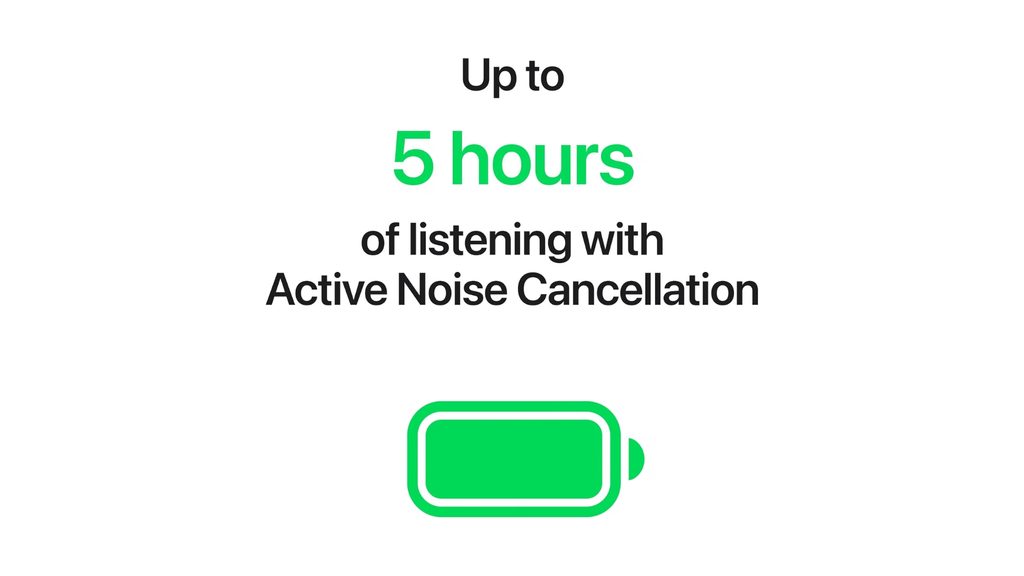
Apple’s AirPods 5 technical specifications rate standard AirPods 5 for up to four hours of listening with ANC enabled. The USB-C charging case increases total listening time to 20 hours.
AirPods 5 with Wireless Charging Case provide up to five hours with ANC enabled. The case increases the total to 22 hours.
A five-minute charge inside either case provides approximately one hour of listening time. Actual performance will depend on volume, calls, recording, noise control, device settings, environmental conditions, and battery age.
The standard case charges only through USB-C. The wireless case adds compatibility with Apple Watch and Qi-certified chargers.
The wireless case also contains a speaker for Find My. Users can make the case emit a sound when it is nearby but hidden.
The Find My application can display the AirPods location, provide separation alerts, and help estimate how close the earbuds are. If a case goes missing, our guide explaining how to find an AirPods case covers the available tracking methods.
Rechargeable batteries gradually lose capacity through normal chemical aging. Heat, repeated charge cycles, and extended storage at very high or low charge levels can accelerate that process.
Users should avoid charging wet AirPods, leaving them in hot vehicles, or storing them unused with an empty battery. Apple’s Optimized Battery Charging feature can also reduce the time the battery spends completely full.
Consider the Design, Fit, and Durability
AirPods 5 maintain Apple’s open-ear design. They do not use removable silicone tips and do not seal the ear canal like AirPods Pro.
Each earbud measures 1.19 inches high, 0.72 inch wide, and 0.71 inch deep. Each one weighs 0.15 ounce, or 4.3 grams.
The compact dimensions should feel familiar to AirPods 4 users. However, one fixed shell cannot match every ear shape equally well.
Users should move their heads, speak, and walk around after inserting the earbuds to check stability. An insecure fit can affect comfort, bass response, noise cancelation, and microphone consistency.
AirPods 5 carry an IP57 Ingress Protection (IP) rating for dust, sweat, and water resistance. The first digit indicates protection from solid particles, while the second represents water protection.
The IP57 rating provides stronger tested water protection than the IP54 rating of AirPods 4. It does not make AirPods 5 permanently waterproof.
Water resistance can decline with normal wear. Users should dry the earbuds fully before returning them to the case because moisture around the charging contacts can interrupt charging or contribute to corrosion.
Automatic ear detection pauses playback when the user removes an earbud. If the sensors trigger unwanted pauses, follow our instructions for turning off Automatic Ear Detection.
Understand Compatibility and Find My Support
AirPods 5 work most completely with an iPhone, iPad, Mac, Apple Watch, Apple TV, and Apple Vision Pro running current software. Apple links the earbuds to the user’s Apple Account for automatic setup and device switching.
Users can place AirPods 5 near an unlocked iPhone or iPad and follow the on-screen connection prompt. Devices connected to the same Apple Account can then recognize the earbuds.
AirPods 5 can function as standard Bluetooth headphones with older Apple hardware and non-Apple devices. However, Android phones and other products may not support every Apple-specific feature.
Feature limitations can affect automatic switching, settings, Find My integration, Siri AI, Personalized Spatial Audio, head gestures, and Live Translation. Users should check compatibility before depending on one of these functions.
The wireless charging case includes a speaker that can produce a Find My alert. The standard USB-C case does not include the same speaker.
Software problems can sometimes appear to be hardware failures. If AirPods fail to pair, charge unevenly, or play audio from only one side, use our headphone troubleshooting guide before assuming the earbuds need replacement.
Frequently Asked Questions
Do Both AirPods 5 Versions Have Active Noise Cancelation?
Yes. Both AirPods 5 versions support Active Noise Cancelation, Transparency, Adaptive Audio, Conversation Awareness, and Voice Isolation.
The differences involve the charging case, battery life, Find My speaker, and volume control. Standard AirPods 5 include a USB-C case, while the upgraded version includes the Wireless Charging Case.
Do AirPods 5 Have Silicone Ear Tips?
No. AirPods 5 use an open-ear design without removable silicone tips.
This design may feel less intrusive than sealed in-ear earbuds, but it allows more external sound to enter naturally. Fit and noise-control performance will vary between users.
What Chip Do AirPods 5 Use?
AirPods 5 use Apple’s H2 headphone chip. AirPods 4 also used the H2 chip.
Apple links the new generation’s sound and ANC improvements to revised acoustic architecture, next-generation Adaptive EQ, and updated computational audio rather than a new processor.
Can You Adjust AirPods 5 Volume From the Stem?
You can adjust volume from the stem only on AirPods 5 with Wireless Charging Case. Swipe upward or downward across the force sensor to change the listening level.
Standard AirPods 5 do not include volume swipe. Users must adjust volume through Siri or a connected device.
Are AirPods 5 Waterproof?
No. AirPods 5 carry an IP57 dust, sweat, and water-resistance rating, but Apple does not classify them as permanently waterproof.
Water resistance can weaken over time. Avoid deliberate submersion, high-pressure water, and charging while the earbuds remain wet.
How Long Does the AirPods 5 Battery Last?
Standard AirPods 5 provide up to four hours with ANC enabled and up to 20 hours with the case. AirPods 5 with Wireless Charging Case provide up to five hours with ANC and up to 22 hours in total.
These are Apple’s maximum test figures. Calls, high volume, recording, environmental conditions, and battery aging can shorten actual listening time.
Do AirPods 5 Work With Android Phones?
AirPods 5 can connect to compatible Android devices through Bluetooth. Basic audio playback and calling should work normally.
Apple-specific functions may remain limited or unavailable. These can include automatic device switching, Siri, Find My, Personalized Spatial Audio, head gestures, and some configuration controls.
Final Thoughts
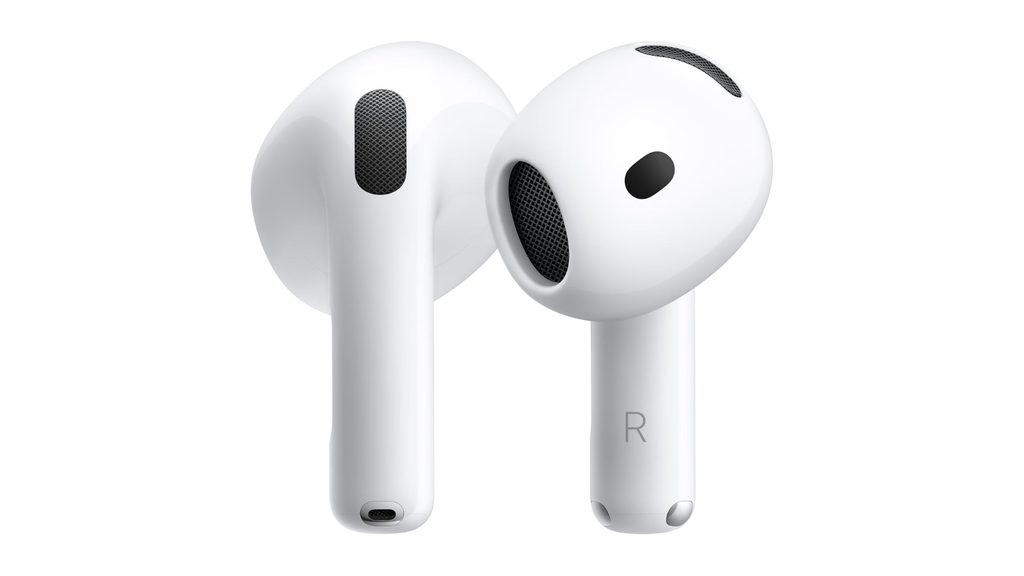
AirPods 5 update Apple’s mainstream open-ear earbuds without changing their familiar identity. Both versions now include Active Noise Cancelation, Adaptive Audio, Transparency, Conversation Awareness, Voice Isolation, revised acoustic architecture, next-generation Adaptive EQ, and IP57 protection.
The Wireless Charging Case version provides the more complete experience. It adds stem-based volume control, five-hour ANC battery life, Qi and Apple Watch charging, and a case speaker for Find My.
Several important claims still require independent testing, particularly the promised 1.5-times improvement in noise cancelation and the description of studio-quality recording. Apple’s specifications clearly show what changed, but real-world fit, sound, microphone quality, and battery endurance will determine how substantial the upgrade feels.