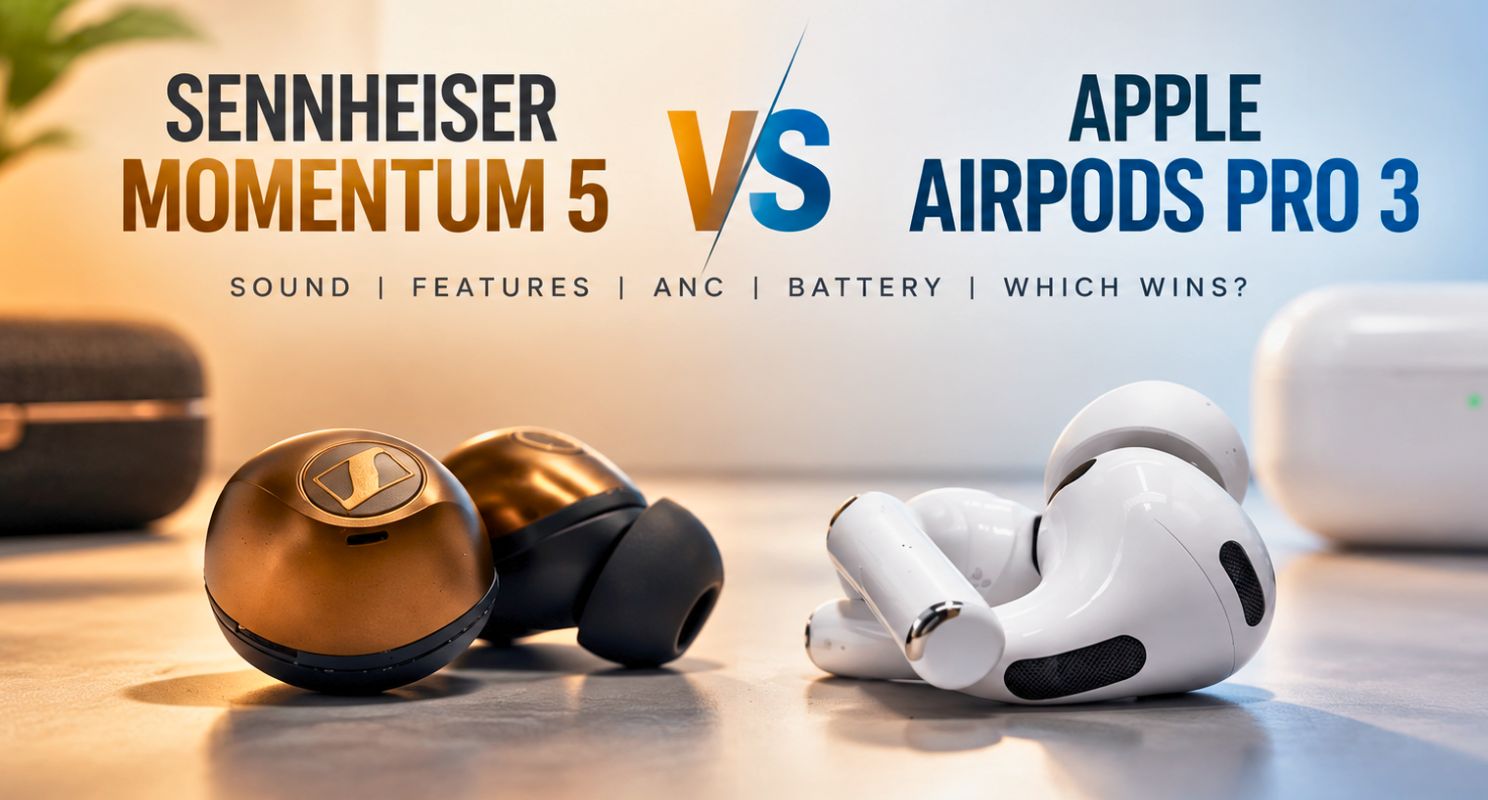
The Sennheiser Momentum True Wireless 5 vs Apple AirPods Pro 3 comparison arrives as premium wireless earbuds become increasingly tied to larger device ecosystems. According to Counterpoint Research data reported by Reuters in January 2026, worldwide smartphone shipments increased by 2% during 2025. Apple led the global market with a 20% share, narrowly ahead of Samsung at 19%. That enormous iPhone user base gives AirPods Pro 3 an immediate ecosystem advantage.
Apple’s momentum continued during the first quarter of 2026. Reuters reported in April 2026 that iPhone shipments in China increased by 20%, even as the country’s overall smartphone market declined by 4%. Apple captured a 19% share, just behind Huawei at 20%. Sennheiser does not control a smartphone platform, so it competes through sound customization, wider codec support, longer total battery life, and replaceable batteries.
These two earbuds consequently target different priorities. The Momentum True Wireless 5 emphasize high-resolution Bluetooth audio, an eight-band Equalization (EQ) system, Dolby Atmos, multipoint connectivity, and long-term repairability. AirPods Pro 3 focus on Active Noise Cancelation (ANC), Apple integration, heart-rate sensing, hearing-health features, and stronger water resistance. This comparison examines the verified differences without assuming that either model produces universally better sound for every listener.
Main Differences Between These Earbuds
1. Design, Fit, and Durability
Both products use a sealed in-ear design with replaceable ear tips. A secure seal improves bass response, passive isolation, and ANC performance, so fit can affect the experience as much as the internal hardware.
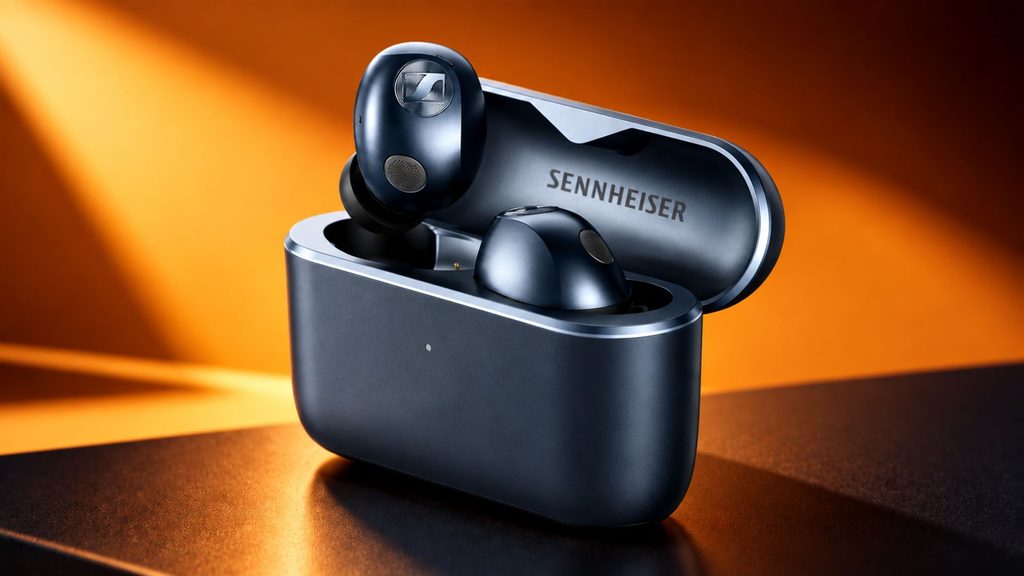
Sennheiser redesigned the Momentum True Wireless 5 with a smaller, more ergonomic shell. The earbuds come with four ear-tip sizes, allowing users to adjust the seal for comfort and stability.
The Sennheiser earbuds also arrive in Graphite, Cream, Copper, Denim, and Lavender. This five-color selection provides considerably more visual choice than Apple’s familiar white finish.
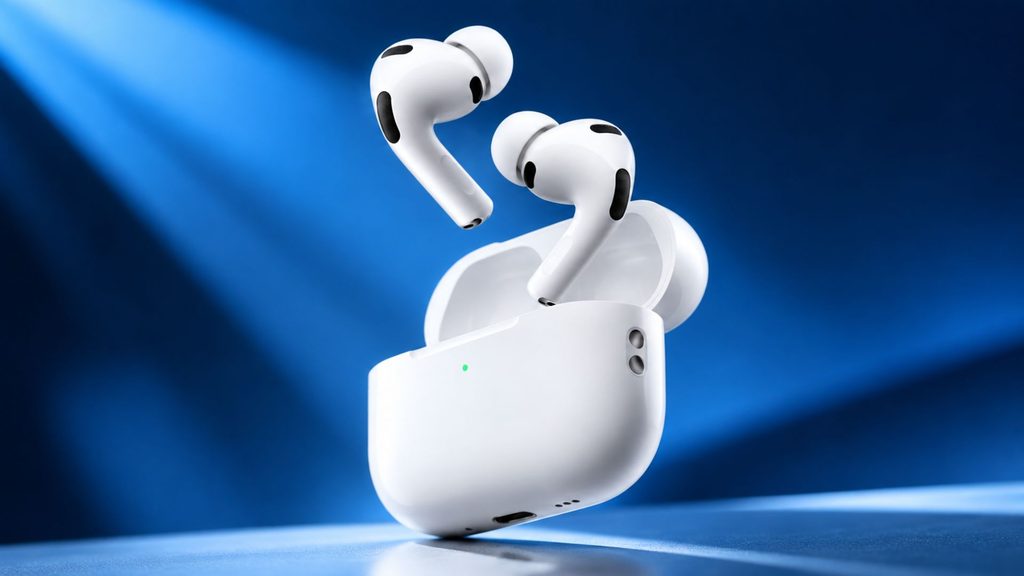
AirPods Pro 3 use a shorter stem-based design. Apple rotated the ear tips inward and added foam-infused microspheres to the silicone material to improve stability, comfort, and acoustic isolation.
Apple includes five ear-tip sizes: XXS, XS, S, M, and L. The extra-small options may help users who previously found AirPods Pro uncomfortable or difficult to secure.
Readers who regularly struggle with large earbud shells can explore our guide to the best earbuds for small ears for additional information about weight, nozzle angle, shell size, and ear-tip selection.
AirPods Pro 3 carry an IP57 Ingress Protection (IP) rating. Momentum True Wireless 5 carry an IP54 rating.
Both ratings include strong dust protection, but AirPods provide higher tested resistance to water. IP57 protection makes AirPods Pro 3 more suitable for heavy perspiration, rain, and demanding workouts.
Neither rating makes the earbuds permanently waterproof. Water resistance can weaken through wear, and users should always dry the earbuds before placing them inside a charging case.
Design and durability advantage: AirPods Pro 3 for five ear-tip sizes and IP57 protection. Sennheiser provides more color choices and a stemless appearance.
2. Sound Quality and Audio Customization
Momentum True Wireless 5 use Sennheiser’s 7 mm TrueResponse dynamic drivers. The company developed these transducers to produce a detailed, natural presentation rather than relying entirely on heavily processed sound.
The earbuds support Bluetooth 6.0 and several audio codecs, including Subband Codec (SBC), Advanced Audio Coding (AAC), aptX, aptX Adaptive, and aptX Lossless. Compatible hardware can deliver audio at up to 24-bit/96 kHz.
Codec support does not automatically guarantee superior sound. The connected phone, streaming source, recording quality, fit, and listening environment all influence the final result.
Many Android phones with supported Qualcomm hardware can access aptX Adaptive or aptX Lossless. iPhones use AAC instead, so Apple users will not receive the full codec advantage offered by Sennheiser.
The Sennheiser Smart Control Plus application provides an eight-band EQ. Advanced Sound Personalization uses algorithms developed with the Fraunhofer Institute to create a sound profile based on the listener’s preferences.
This system gives Sennheiser users considerably more manual control over bass, midrange, and treble. Listeners who enjoy adjusting specific frequency regions may prefer this approach.
Momentum True Wireless 5 also support Dolby Atmos and spatial audio with head tracking. The availability and behavior of spatial features can depend on the connected device, application, and content.
AirPods Pro 3 use Apple’s H2 headphone chip with a custom driver, amplifier, and redesigned multiport acoustic architecture. Apple says the system provides deeper bass, clearer vocals, a wider soundstage, and low distortion.
Next-generation Adaptive EQ uses an inward-facing microphone to measure sound inside the ear. It then adjusts the response according to the wearer’s ear geometry and the fit of the earbuds.
Apple also includes Custom EQ, although its three controls provide less detailed manual adjustment than Sennheiser’s eight-band system. AirPods focus more heavily on automatic adaptation.
Personalized Spatial Audio uses an iPhone’s TrueDepth camera to build a profile based on the user’s head and ear geometry. Dynamic head tracking then changes the perceived sound position as the listener moves.
AirPods Pro 3 do not support aptX Adaptive or aptX Lossless. Their strongest audio advantages come from consistent Apple integration, adaptive processing, and spatial audio across supported Apple devices.
No specification can establish a universal sound-quality winner. Sennheiser offers wider codec support and deeper manual adjustment, while Apple prioritizes automatic personalization and ecosystem consistency.
Sound and customization advantage: Momentum True Wireless 5 for compatible high-resolution codecs and eight-band EQ. AirPods Pro 3 suit listeners who prefer automatic tuning and Apple Spatial Audio.
3. Noise Cancelation and Transparency
Momentum True Wireless 5 introduce a redesigned hybrid adaptive ANC system. External and internal microphones monitor surrounding sound and adjust the cancelation response automatically.
Sennheiser does not provide a simple cross-brand numerical comparison with AirPods Pro 3. ANC results will also vary according to ear-tip seal, ear shape, firmware, and the frequency of the surrounding noise.
Automatic wind-noise suppression attempts to reduce the rumbling sound that microphones can create outdoors. This feature can help during walking, cycling, and calls in exposed areas.
AirPods Pro 3 use ultra-low-noise microphones, the H2 chip, foam-infused ear tips, and computational processing. Apple claims they remove up to twice as much unwanted noise as AirPods Pro 2 and up to four times as much as the original AirPods Pro.
Those figures compare AirPods generations under Apple’s testing conditions. They do not prove that AirPods Pro 3 cancel exactly twice as much noise as the Sennheiser earbuds.
Apple’s Adaptive Audio combines ANC and Transparency according to the surrounding environment. Conversation Awareness detects when the wearer speaks and temporarily lowers media volume.
Personalized Volume learns listening habits and adjusts the level according to the surroundings. These automated functions reduce the need to change modes manually throughout the day.
Transparency mode aims to keep environmental sound natural while maintaining awareness of speech, traffic, and announcements. Apple also connects Transparency to its Hearing Aid and Conversation Boost features.
Based on the published features, Apple places greater emphasis on intelligent noise control. Sennheiser provides adaptive ANC and wind management without the same collection of conversation and hearing-health tools.
A final cross-brand ANC winner requires controlled testing with identical noise, volume, fit, and measurement equipment. Manufacturer claims alone cannot produce a reliable direct ranking.
Noise-control advantage: AirPods Pro 3 have the more extensive feature set, but independent measurements remain necessary for a definitive ANC comparison.
4. Battery Life and Repairability
Battery life changes considerably depending on whether ANC remains active.
Sennheiser rates each Momentum True Wireless 5 earbud for up to 12 hours without ANC. The charging case increases total playback to a maximum of 40 hours.
With ANC enabled, published figures fall to approximately six hours per charge. Real-world results will vary with volume, codec, calls, spatial audio, connection quality, and battery age.
The slim Sennheiser case supports Universal Serial Bus Type-C (USB-C) and wireless charging. Multipoint support allows the earbuds to maintain connections with more than one compatible device.
AirPods Pro 3 provide up to eight hours of listening with ANC enabled. Spatial Audio with head tracking reduces the figure slightly to 7.5 hours.
Using heart-rate sensing during workouts reduces Apple’s rated runtime to 6.5 hours. Transparency mode with the Hearing Aid feature can reach up to 10 hours.
The MagSafe Charging Case increases total ANC listening time to 24 hours. A five-minute charge provides approximately one hour of playback.
The comparison produces different winners depending on usage. AirPods Pro 3 provide two more claimed hours than Sennheiser during an individual ANC session. Momentum True Wireless 5 provide longer maximum playback without ANC and a larger 40-hour total.
Sennheiser has a much stronger repairability advantage. Users can replace the batteries in both earbuds and the charging case with basic tools.
Rechargeable batteries lose capacity through normal chemical aging. Replaceable cells can extend the useful life of the Sennheiser earbuds instead of turning battery degradation into a reason to discard the complete product.
Apple does not provide the same user-replaceable battery design. AirPods Pro 3 owners must rely on Apple’s available battery service or replace affected hardware.
Heat can accelerate battery aging in either model. Avoid leaving the earbuds in hot vehicles, storing them completely discharged, or charging them while moisture remains around the contacts.
Battery advantage: AirPods Pro 3 for longer ANC runtime per charge. Momentum True Wireless 5 for maximum total playback and user-replaceable batteries.
5. Calls, Controls, Fitness, and Smart Features
Momentum True Wireless 5 use six microphones with bone-conduction sensors and Artificial Intelligence (AI) powered voice isolation. The system combines airborne sound with vibrations from the wearer’s voice to distinguish speech from environmental noise.
Automatic wind suppression also supports outdoor call clarity. Performance can still depend on wind direction, fit, network compression, and the calling application.
Sennheiser provides customizable touch controls through its companion application. Users can change playback, volume, noise-control, and voice-assistant commands according to their preferences.
AirPods Pro 3 use force sensors on their stems. Pressing controls playback and calls, while swiping adjusts volume.
Apple also allows compatible AirPods to control an iPhone camera remotely. Siri Interactions let users nod or shake their heads when responding to calls, messages, and notifications.
Voice Isolation reduces background noise during calls. Automatic switching moves the connection between Apple devices linked to the same Apple Account.
AirPods Pro 3 add heart-rate sensing for workouts. Light-Emitting Diodes (LEDs) pulse invisible light 256 times per second, while the accelerometers help calculate heart rate and calories burned.
Apple supports up to 50 workout types through the Fitness application. With a compatible iPhone, users can record workout data without wearing an Apple Watch.
Momentum True Wireless 5 do not include an equivalent heart-rate sensor. Their features remain focused primarily on listening, calling, connection flexibility, and long-term ownership.
AirPods Pro 3 also support Live Translation in selected languages and regions. Apple Intelligence requirements, regional restrictions, and compatible hardware can limit availability.
Sennheiser provides broader platform neutrality. Its application, codec options, and multipoint features make it easier to use across Android phones, Windows computers, and other Bluetooth devices.
AirPods Pro 3 can connect to Android and Windows devices as standard Bluetooth earbuds. However, users lose several Apple-specific settings and functions outside the company’s ecosystem.
Windows users who experience connection problems can consult our guide to fixing AirPods that do not work correctly on Windows 11. Although the guide focuses on an earlier model, many Bluetooth and output-selection checks remain relevant.
Smart-feature advantage: AirPods Pro 3 for iPhone owners, workouts, Siri, and automatic Apple-device behavior. Momentum True Wireless 5 provide greater flexibility across different platforms.
Features Unique to Each Model
The most important Sennheiser feature is not a codec or sound preset. It is the replaceable battery system.
Battery failure often determines the lifespan of true wireless earbuds. Allowing owners to replace the batteries in the earbuds and case addresses a problem that software updates cannot solve.
Sennheiser also provides deeper sound adjustment. The eight-band EQ, Sound Personalization, aptX options, and platform-neutral application give users more control over the listening experience.
AirPods Pro 3 answer with health and accessibility functions. They combine heart-rate sensing, a Hearing Test, Hearing Aid capability, Conversation Boost, and Hearing Protection.
Apple says its active Hearing Protection system can reduce exposure in environments reaching 110 A-weighted decibels (dBA). The system processes louder, intermittent sounds up to 48,000 times per second.
Hearing-health features have age, hardware, software, and regional requirements. They do not replace professional medical evaluation when a person experiences hearing loss, pain, tinnitus, or sudden changes in hearing.
The AirPods charging case also includes a speaker and next-generation Ultra Wideband (UWB) technology. Apple claims Precision Finding works at up to 1.5 times the distance of the previous system.
If the case disappears, our guide explaining how to find an AirPods case covers Find My, sound alerts, last-known locations, and practical search steps.
Decide Which Earbuds Better Match Your Devices
Momentum True Wireless 5 make the strongest case for listeners who use Android, Windows, or a mixture of platforms. Bluetooth 6.0, multipoint, aptX support, extensive EQ, and replaceable batteries do not depend on owning an iPhone.
They also suit users who want to shape the sound manually. The Sennheiser application provides more detailed control than Apple’s simplified EQ system.
AirPods Pro 3 fit more naturally into an Apple-centered setup. Fast pairing, automatic switching, Find My, Siri, Personalized Spatial Audio, Fitness integration, and hearing-health features work together across compatible Apple products.
AirPods Pro 3 also make more sense for strenuous exercise because they combine heart-rate sensing, five ear-tip sizes, and IP57 protection. Their eight-hour ANC rating exceeds Sennheiser’s approximate six-hour ANC figure.
Neither model guarantees the best fit. Users should try every included ear-tip size and perform a seal test before judging sound or noise cancelation.
A weak seal can reduce bass, create uneven sound, and make ANC appear less effective. If one side sounds unusually quiet, clean the ear tip and acoustic mesh before changing EQ settings.
Users should also rule out connection and charging problems before treating an earbud as defective. Our general headphone troubleshooting guide covers common Bluetooth, power, and one-sided playback problems.
Frequently Asked Questions
Which Sounds Better, Sennheiser Momentum True Wireless 5 or AirPods Pro 3?
Sound preference depends on tuning, fit, source quality, and personal hearing. Momentum True Wireless 5 offer aptX Adaptive, aptX Lossless, up to 24-bit/96 kHz support, and an eight-band EQ on compatible devices.
AirPods Pro 3 use Adaptive EQ, Custom EQ, a redesigned acoustic system, and Personalized Spatial Audio. Sennheiser provides more manual control, while Apple focuses on automatic tuning and consistent performance across its ecosystem.
Which Earbuds Have Better Active Noise Cancelation?
Apple makes the stronger numerical claim, stating that AirPods Pro 3 remove up to twice as much unwanted noise as AirPods Pro 2. That number does not directly compare AirPods with the Momentum True Wireless 5.
Sennheiser uses adaptive hybrid ANC with automatic wind suppression. A reliable winner requires controlled cross-brand measurements because fit and ear-tip seal can significantly change the result.
Which Earbuds Have Better Battery Life?
AirPods Pro 3 provide the longer rated ANC session at up to eight hours, compared with approximately six hours for Momentum True Wireless 5 with ANC.
Sennheiser reaches up to 12 hours without ANC and up to 40 hours with the charging case. AirPods Pro 3 provide up to 24 total hours with ANC enabled, so the winner depends on the chosen listening mode.
Can You Replace the Batteries in Either Model?
Users can replace the batteries in the Momentum True Wireless 5 earbuds and charging case. This modular approach can extend the product’s lifespan after the original cells lose capacity.
AirPods Pro 3 do not have user-replaceable batteries. Apple may provide battery service according to its current service terms, location, and hardware condition.
Do Momentum True Wireless 5 Work With an iPhone?
Yes. They connect to an iPhone through Bluetooth and use the AAC codec. The Sennheiser application also provides settings and sound customization.
An iPhone does not support the Sennheiser earbuds’ aptX Adaptive or aptX Lossless modes. Android phones with compatible Qualcomm hardware can access more of their high-resolution codec features.
Do AirPods Pro 3 Work With Android?
AirPods Pro 3 can connect to an Android phone as Bluetooth earbuds. Music playback, basic controls, ANC, and calls can still work.
Several features become limited or unavailable without compatible Apple hardware. These may include Siri, Find My, automatic switching, detailed configuration, Personalized Spatial Audio setup, heart-rate integration, and some firmware functions.
Which Earbuds Are Better for Exercise?
AirPods Pro 3 have the stronger exercise feature set. They provide IP57 protection, heart-rate sensing, five ear-tip sizes, and integration with up to 50 workout types in Apple’s Fitness application.
Momentum True Wireless 5 provide IP54 protection and an ergonomic fit, but they do not include heart-rate tracking. Their suitability will depend on whether the redesigned shell remains secure in the individual user’s ears.
Which Earbuds Are Better for Long-Term Ownership?
Momentum True Wireless 5 have the clearest long-term hardware advantage because their batteries are replaceable. Their platform-neutral features also reduce dependence on one phone manufacturer.
AirPods Pro 3 can receive software and firmware improvements through Apple’s ecosystem, but battery service remains less user-accessible. Long-term value will depend on battery health, repair availability, and continued device compatibility.
Final Thoughts
Sennheiser Momentum True Wireless 5 and Apple AirPods Pro 3 take different approaches to flagship wireless audio. Sennheiser emphasizes detailed sound control, wider codec support, multipoint connectivity, long total battery life, multiple colors, and user-replaceable batteries.
AirPods Pro 3 emphasize intelligent noise control, longer ANC runtime, IP57 protection, heart-rate sensing, hearing-health features, Find My, Siri, and close integration with Apple devices. They provide the more complete experience for many iPhone users, especially those who exercise regularly or depend on Apple’s accessibility tools.
The most meaningful distinction is therefore not a single sound or ANC claim. Choose between platform flexibility and repairability on the Sennheiser side, or health features and Apple ecosystem integration on the AirPods side. Fit remains essential, and neither model can perform at its best without a secure acoustic seal.