AirPods 5 arrive at a time when Apple’s device ecosystem remains exceptionally strong. According to Counterpoint Research data reported by Reuters in January 2026, global smartphone shipments increased by 2% in 2025. Apple led the market with a 20% share, narrowly ahead of Samsung at 19%. That large installed base gives millions of iPhone owners a direct reason to compare AirPods 5 with the two-year-old AirPods 4.
Apple’s momentum continued into 2026 despite weaker conditions in major technology markets. Reuters reported in April 2026 that iPhone shipments in China increased by 20% during the first quarter, even as the country’s overall smartphone market declined by 4%. Apple captured a 19% share of the Chinese smartphone market, just behind Huawei at 20%. These figures show why upgrades to connected accessories such as AirPods remain important to Apple’s expanding ecosystem.
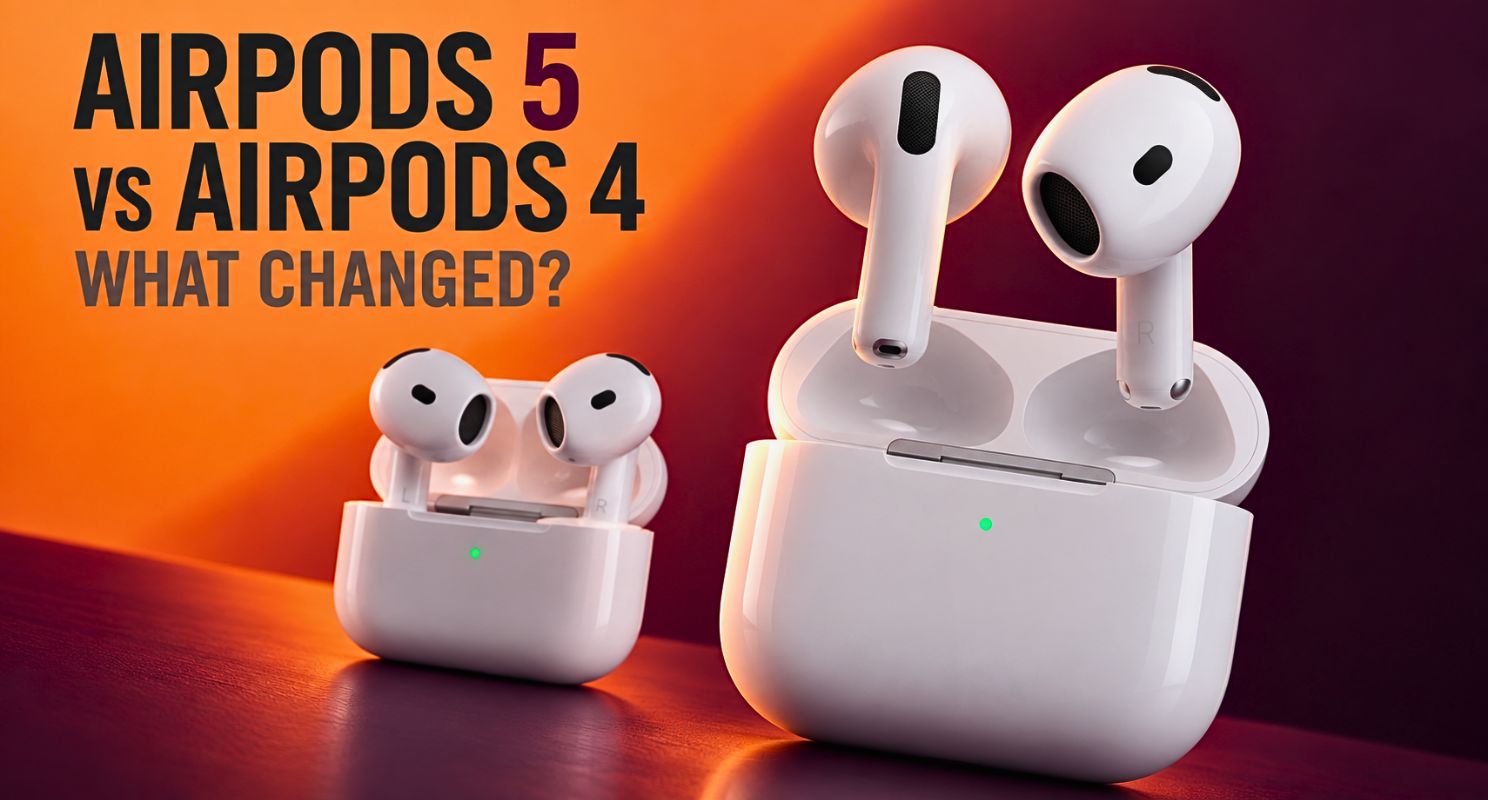
AirPods 5 now replace AirPods 4 as Apple’s mainstream open-ear earbuds, but this is not a complete redesign. According to The Verge’s September 2026 launch report, Apple claims the new model removes 50% more surrounding noise than AirPods 4 with Active Noise Cancelation (ANC). AirPods 5 also introduce revised acoustics, stronger IP57 water resistance, and volume swipe on the wireless-case version. This AirPods 5 vs AirPods 4 comparison explains whether those changes create a meaningful real-world improvement or simply refine an already familiar design.
Compare the Main AirPods 5 and AirPods 4 Differences
1. Separate the Two Versions of Each Generation
Start with the model names because Apple used a different split for each generation. AirPods 4 launched as a basic model without ANC and a higher-tier model called AirPods 4 with Active Noise Cancelation.
Both AirPods 5 versions include ANC, Adaptive Audio, Transparency, Conversation Awareness, and Voice Isolation. Apple instead separates the fifth-generation options by charging case, controls, and battery life.
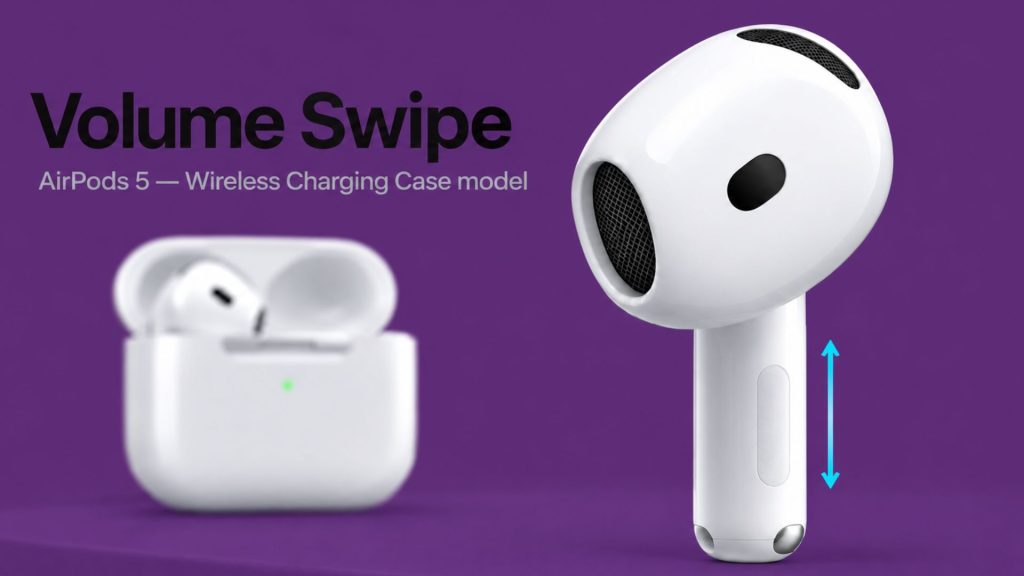
Standard AirPods 5 come with a Universal Serial Bus Type-C (USB-C) charging case. AirPods 5 with Wireless Charging Case add wireless charging, a case speaker, volume swipe, and an extra hour of claimed listening time.
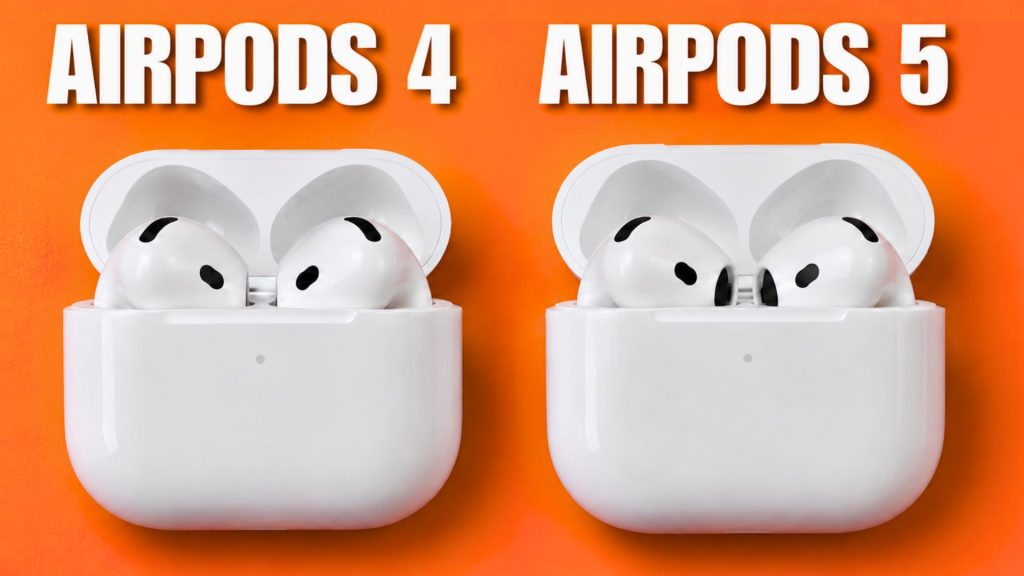
This distinction matters when comparing specifications. Standard AirPods 5 represent a major feature upgrade over standard AirPods 4 because they add noise control. The difference between AirPods 5 and AirPods 4 with ANC is more incremental.
2. Compare Noise Cancelation and Transparency Performance
AirPods 5 bring ANC to both versions. Standard AirPods 4 lack ANC, Transparency, Adaptive Audio, and Conversation Awareness, so users moving from that model gain an entire group of listening modes.
AirPods 4 with ANC already support these modes, but Apple rates AirPods 5 at up to 1.5 times better noise cancelation. Apple attributes the improvement to advanced computational audio and redesigned acoustic architecture instead of a new headphone processor.
Both generations use an open-ear fit without silicone ear tips. Air can still pass around the earbuds, so neither model creates the strong physical seal of an in-ear design.
The improved processing should reduce steady low-frequency sounds more effectively. However, ear shape, fit, and the type of surrounding noise will still affect the result.
Transparency allows external sound to pass through the earbuds more naturally. Adaptive Audio automatically blends Transparency and ANC as the surrounding environment changes.
Conversation Awareness detects when the wearer starts speaking and lowers the media volume. It restores the volume after the conversation ends.
3. Compare Sound Quality, Microphones, and Smart Features
AirPods 5 retain Apple’s H2 headphone chip, which also powers AirPods 4. The new model does not rely on a generational chip change to produce its audio improvements.
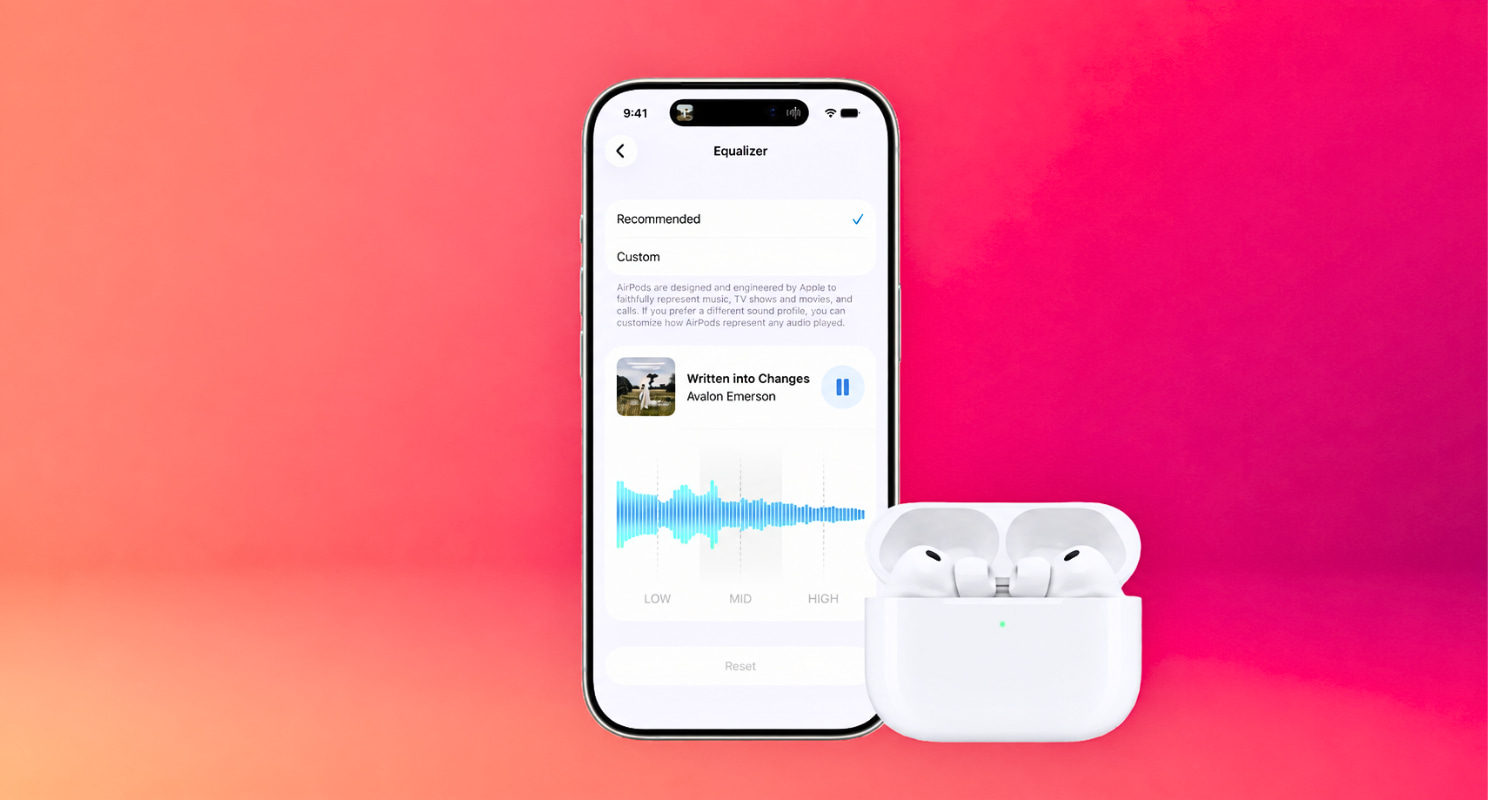
Instead, Apple redesigned the multiport acoustic architecture and introduced next-generation Adaptive Equalization (EQ). The system measures how sound reaches the ear and adjusts the output across a wider frequency range.
Apple says the revised acoustic design produces greater depth, clarity, detail, and more accurate sound. The improvement may become most noticeable in vocal clarity, instrument separation, and bass consistency.
The physical fit remains central to the final result. Open-ear earbuds can lose bass when they sit loosely, and software cannot fully correct a poor fit.
Readers who consistently struggle with Apple’s one-size shell may find more practical options in our guide to the best earbuds for small ears.
Both generations provide Personalized Spatial Audio with dynamic head tracking and use beamforming microphones for calls. Spatial Audio can position compatible music, movies, and games around the listener while head tracking adjusts the soundstage as the listener moves.
AirPods 5 also add studio-quality audio recording to Apple’s specification sheet. Voice Isolation uses computational audio to reduce background noise and make speech easier to understand during calls.
AirPods 5 list Live Translation and Siri Artificial Intelligence (AI) among their smart features. Some software-driven functions require a compatible iPhone, supported language, available region, and current operating system.
Owning AirPods 5 alone does not guarantee access to every software feature. Users should check Apple’s regional and device compatibility requirements before relying on Live Translation or the latest Siri functions.
4. Check the Controls, Fit, and Water Resistance
AirPods 5 keep nearly the same dimensions and weight as AirPods 4. Each AirPods 5 earbud measures 1.19 inches high, 0.72 inch wide, and 0.71 inch deep. Each earbud weighs 0.15 ounce.
The open-ear design still avoids silicone tips. Users who find AirPods 4 comfortable should experience a familiar fit, while people who struggle with the shape may face the same problem with AirPods 5.
Both generations use a force sensor for controlling playback, calls, track changes, and listening modes. However, AirPods 5 with Wireless Charging Case add direct volume control.
Users can swipe a finger up or down on the stem to change the volume. Standard AirPods 5 do not include this gesture.
Standard-model users must adjust the volume through Siri, an iPhone, an Apple Watch, or another connected device. This distinction makes the Wireless Charging Case version more than a simple charging upgrade.
AirPods 5 also improve dust, sweat, and water resistance from IP54 on AirPods 4 to IP57. Under the Ingress Protection (IP) rating system, the first digit covers solid-particle protection and the second covers water protection.
IP57 gives AirPods 5 stronger tested water protection than the splash-focused IP54 rating of AirPods 4. The improved rating can provide additional protection during workouts, rain, or accidental water exposure.
However, IP57 does not make AirPods 5 permanently waterproof. Water resistance can decrease as seals and materials age, so users should still dry the earbuds completely before charging them.
5. Compare Battery Life, Charging, and Find My
Battery comparisons require careful matching because Apple publishes different figures for different listening modes.
Apple’s official AirPods 5 technical specifications rate standard AirPods 5 for up to four hours of listening with ANC enabled. The charging case increases the total to 20 hours.
AirPods 5 with Wireless Charging Case provide up to five hours with ANC enabled and up to 22 hours with the case.
AirPods 4 with ANC offered up to four hours with ANC enabled. Standard AirPods 4 could reach up to five hours because they did not run noise-canceling microphones and processing.
The fifth-generation premium model therefore adds one claimed hour over AirPods 4 with ANC during a single listening session. Its total ANC battery figure does not increase as dramatically.
Users who regularly listen for several continuous hours may appreciate the extra single-charge runtime. People who frequently return their earbuds to the case may notice the improved controls and noise reduction more than the battery difference.
Every AirPods 5 case supports USB-C charging. The Wireless Charging Case also works with Apple Watch and Qi-certified chargers.
The wireless case includes a speaker for Find My alerts. The speaker can play a sound when the case is nearby but hidden under furniture, inside a bag, or between cushions.
If a case disappears, follow our step-by-step AirPods case location guide before assuming the hardware is permanently lost.
Check Which Differences Matter in Daily Use
Standard AirPods 4 users will experience the largest functional change. AirPods 5 add ANC and the related Transparency, Adaptive Audio, and Conversation Awareness modes while improving water resistance and revising the acoustic system.
AirPods 4 with ANC users already have most of the core experience. They share the H2 chip, open-ear fit, Personalized Spatial Audio, Voice Isolation, head gestures, automatic ear detection, and basic force-sensor commands with AirPods 5.
For those users, the practical changes narrow to stronger claimed ANC, revised sound tuning, IP57 protection, studio-quality recording, and the premium model’s volume swipe and longer single-charge runtime.
The fit remains largely familiar. AirPods 5 do not completely solve the limitations of an open-ear design, especially for listeners who need strong passive isolation or a more secure in-ear seal.
The most important points to remember are:
- Identify whether the AirPods 4 have ANC before comparing features.
- Expect the largest upgrade when moving from AirPods 4 without ANC.
- Prioritize AirPods 5 with Wireless Charging Case when direct volume control matters.
- Keep using AirPods 4 with ANC if their battery, fit, sound, and noise control still meet your needs.
Software settings can also make two identical pairs behave differently. If playback pauses unexpectedly, check the sensor setting with our guide to turning off Automatic Ear Detection.
Connection failures, one-sided sound, and charging problems do not automatically justify changing generations. Try the diagnostic steps in our headphone troubleshooting guide before treating a software or charging-contact issue as failed hardware.
Frequently Asked Questions
Do AirPods 5 Have Better Noise Cancelation Than AirPods 4?
Yes, when compared with AirPods 4 with ANC. Apple claims AirPods 5 cancel up to 1.5 times more noise, while standard AirPods 4 do not support ANC at all.
The real improvement will vary with ear shape, fit, and noise type. Because both generations use an open-ear design, some outside sound can still reach the ear without passing through the noise-canceling system.
Do AirPods 5 Use a New Chip?
No. AirPods 5 and AirPods 4 both use Apple’s H2 headphone chip.
Apple connects the fifth-generation audio and ANC improvements to redesigned acoustic architecture, next-generation Adaptive EQ, and updated computational processing. The shared chip also explains why many ecosystem features overlap.
Can AirPods 5 Control Volume From the Stem?
Only AirPods 5 with Wireless Charging Case support volume swipe. Swipe up or down on the force sensor to change the listening level.
Standard AirPods 5 retain force controls for playback, calls, and listening modes but omit the volume gesture. This detail makes the selected case version part of the earbud control specification, not merely a charging choice.
Are AirPods 5 More Water Resistant Than AirPods 4?
Yes. AirPods 5 carry an IP57 dust, sweat, and water-resistance rating, while AirPods 4 carry an IP54 rating.
The higher second digit indicates stronger tested water protection. Water resistance can weaken with wear, and users should never charge wet earbuds or assume either model can tolerate every type of water exposure.
Do AirPods 4 Cases Work With AirPods 5?
Do not assume cross-generation case compatibility simply because the dimensions look similar. Apple identifies each case for its matching AirPods generation, and charging contacts, pairing, firmware, and Find My behavior can depend on the exact model.
Use the case supplied with AirPods 5 or an Apple-confirmed replacement for that model. Check the model number in the Bluetooth settings or inside the case before replacing a lost or damaged unit.
Final Thoughts
AirPods 5 refine the AirPods 4 formula instead of replacing it with a completely new shape or processor. The most important differences are ANC on both fifth-generation versions, up to 1.5 times stronger claimed noise cancelation, revised acoustics, next-generation Adaptive EQ, IP57 protection, and studio-quality recording.
AirPods 5 with Wireless Charging Case add the changes most likely to affect daily interaction: stem-based volume swipe, five-hour ANC battery life, wireless charging, and a Find My speaker. AirPods 4 with ANC remain much closer to the new experience than standard AirPods 4, so always identify the exact fourth-generation version before judging what changed.