Workout earbuds need to stay secure, resist sweat, and preserve useful detail when treadmills, fans, traffic, or weight plates compete with the music. That matters because a meta-analysis of 139 exercise and sports studies involving 3,599 participants associated music with beneficial effects on mood, physical performance, perceived exertion, and oxygen consumption, although the size of each effect varied.
The right design depends on the session. Sealed earbuds with Active Noise Cancelation (ANC) can reduce steady gym noise and protect bass from environmental masking, while open-fit and open-ear models preserve spatial awareness for road running, cycling, and shared training spaces. Retention hardware, Ingress Protection (IP) ratings, Equalization (EQ), control placement, microphone behavior, and battery life all become more important once sweat and repeated motion enter the picture.
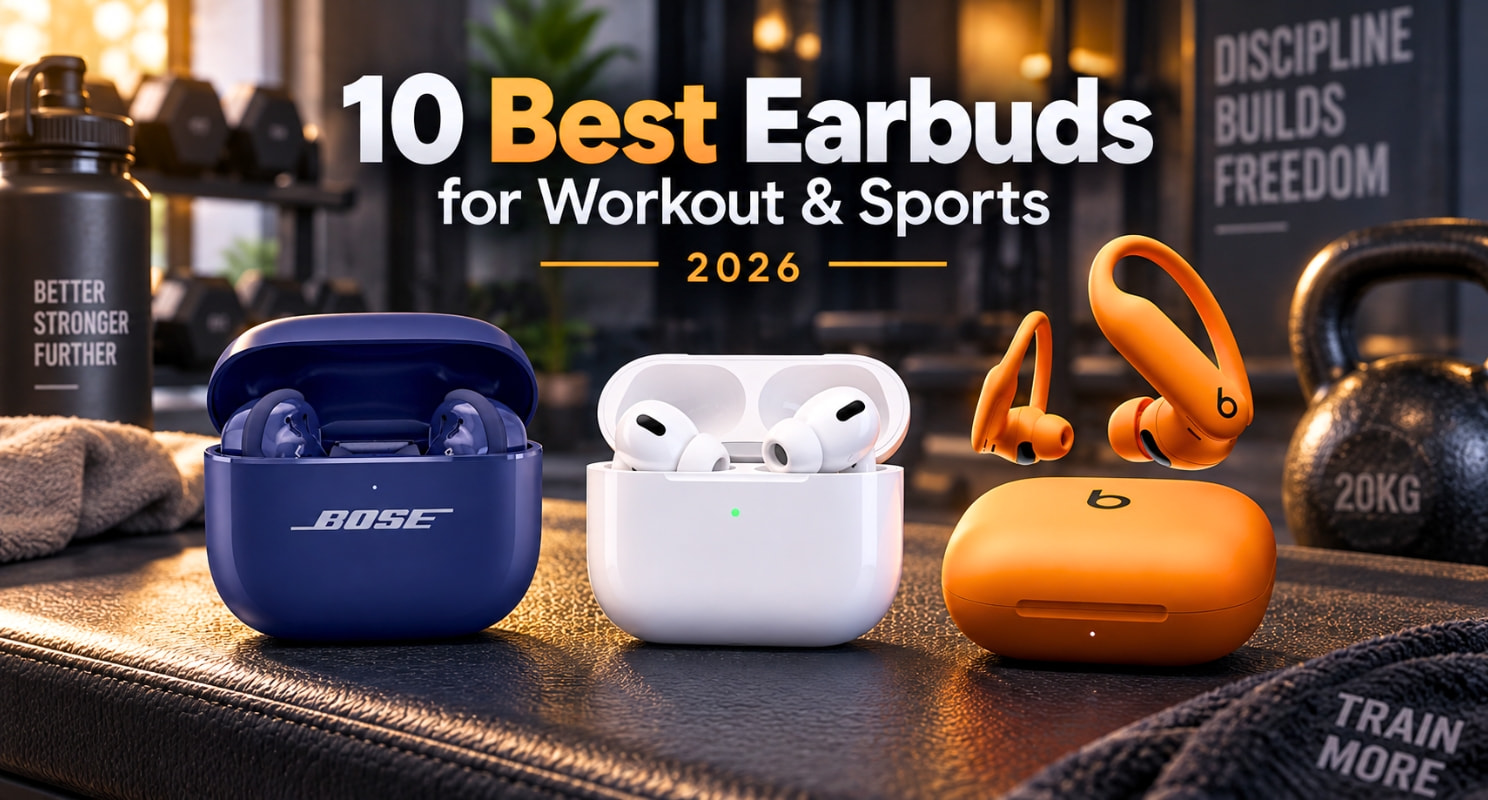
This guide compares secure in-ear, wingtip, ear-hook, clip-on, and open-ear options for strength training, High-Intensity Interval Training (HIIT), running, cycling, and wet or dusty conditions. It also points readers toward HPR’s small-ear earbud guide and outdoor-work earbud guide where fit or awareness needs extra attention. Every evaluation below uses current manufacturer specifications and support documentation with established acoustic principles, not invented listening sessions or unverified laboratory measurements.
Quick Overview for Workout and Sports Earbuds
| Overall Best Sports Earbuds | Powerbeats Pro 2 |
| Best Entry-Level Sports Earbuds | soundcore Sport X20 |
| Best Open-Fit Option for iPhone | Apple AirPods 4 |
| Best for iPhone Fitness Tracking | Apple AirPods Pro 3 |
| Best Wingtip Fit | Powerbeats Fit |
| Best for Wet and Dusty Training | JBL Endurance Peak 4 |
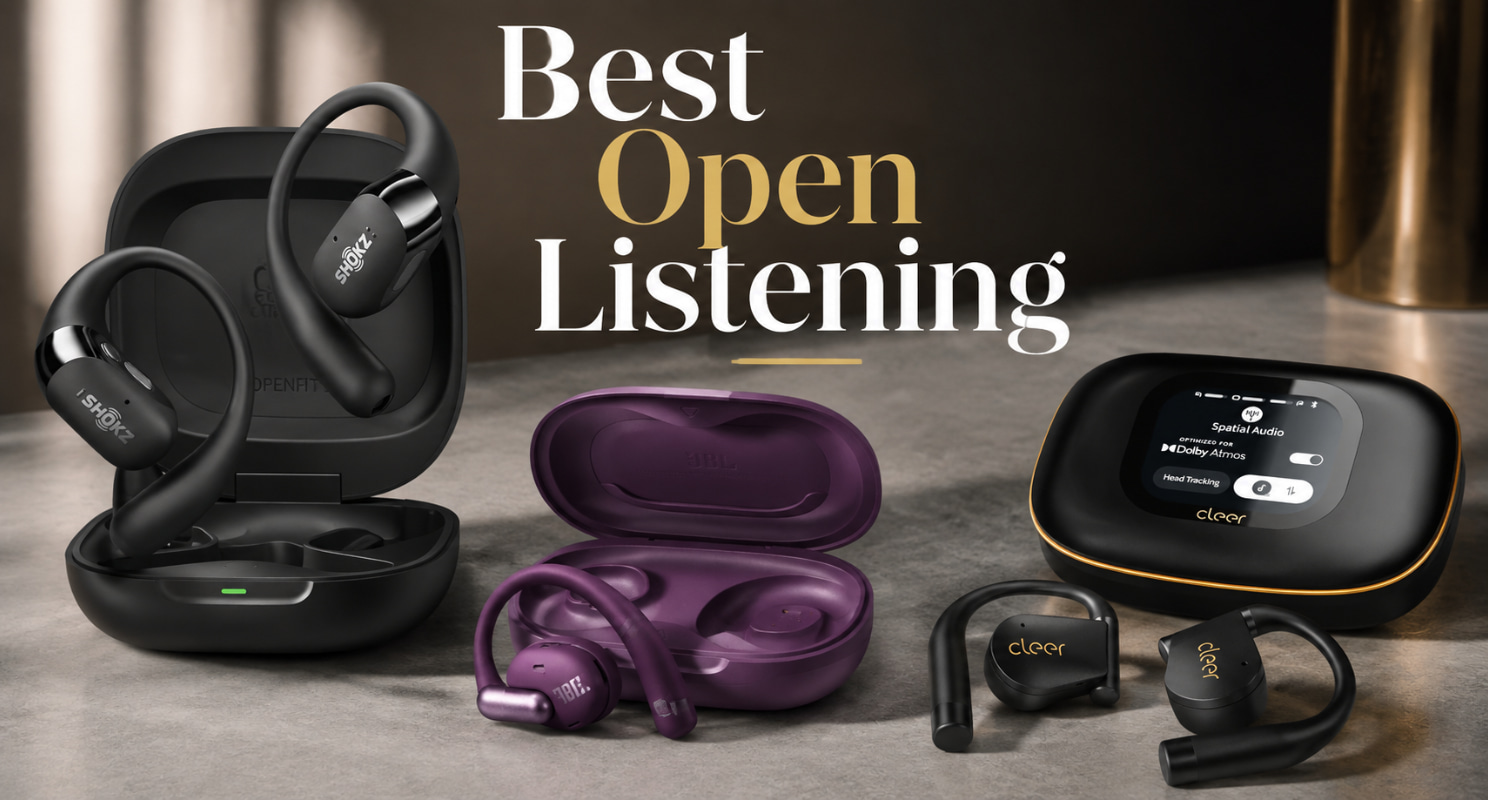
| Best Open-Ear Ear-Hook Design | Shokz OpenFit 2+ |
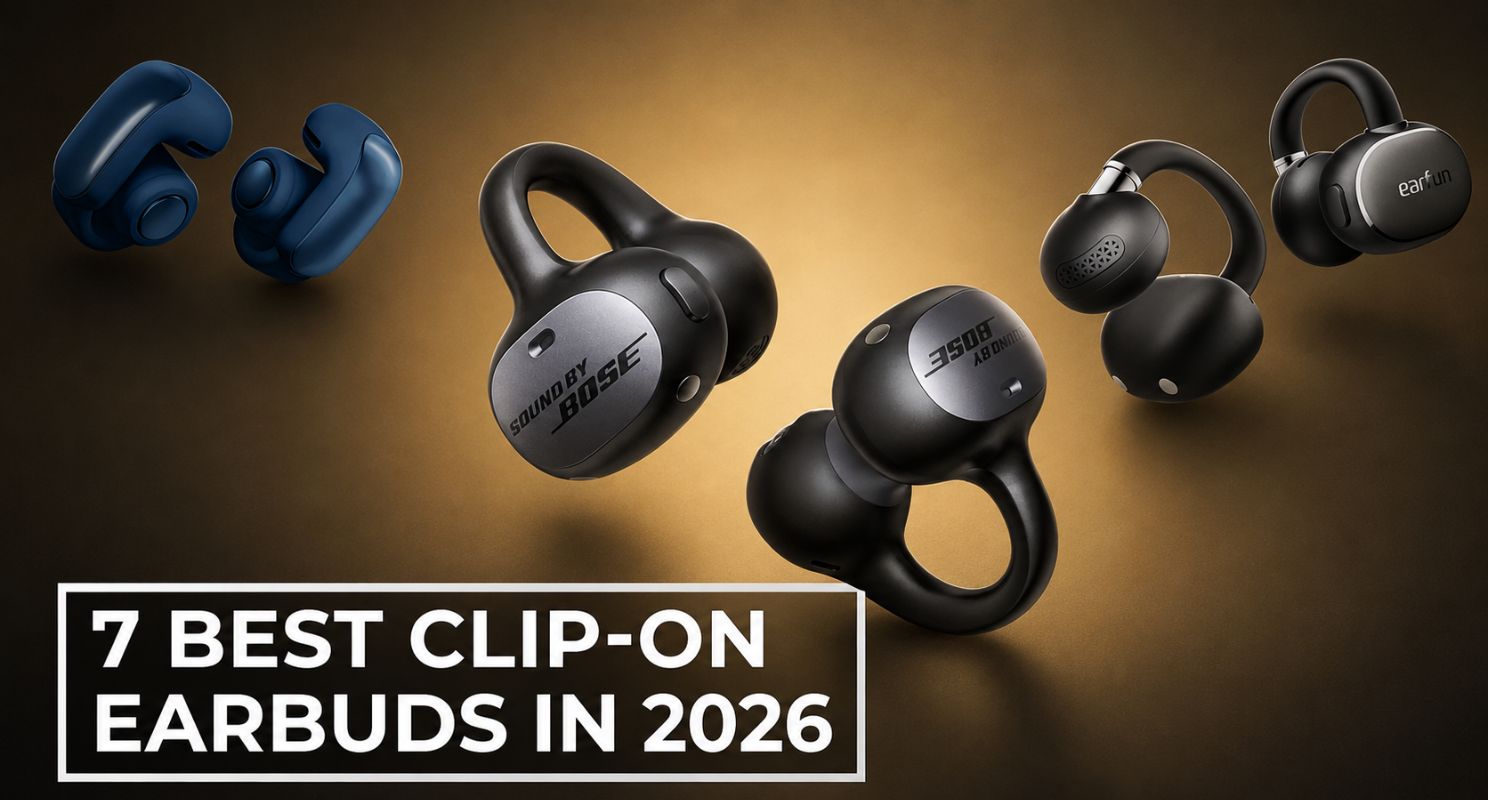
| Best Clip-On Option | Shokz OpenDots 2 |
| Best Open-Ear Sound Features | Cleer ARC 5 |
| Best Noise Cancelation | Bose QuietComfort Ultra Earbuds (2nd Gen) |
In-Depth Look: Workout and Sports Earbuds
1. Powerbeats Pro 2
Overall Best Sports Earbuds
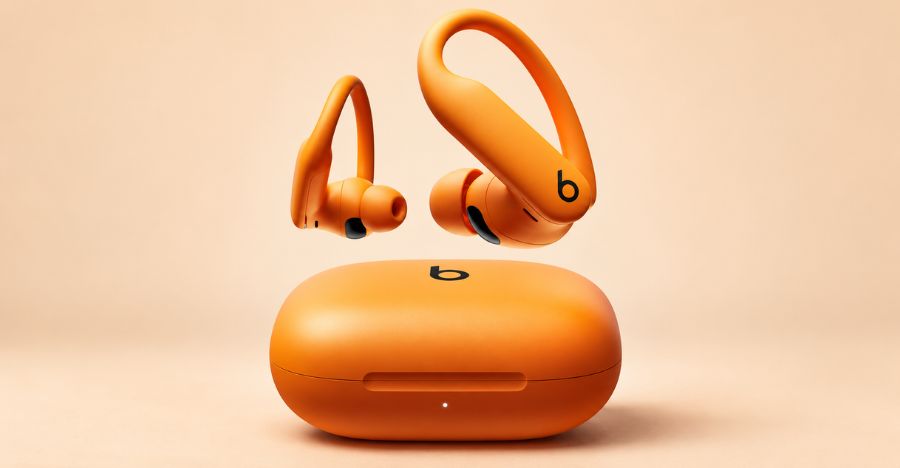
- Secures each earbud with a nickel-titanium reinforced hook.
- Tracks workout heart rate with compatible Apple and Android apps and equipment.
- Delivers adaptive ANC, Transparency mode, Adaptive EQ, and Personalized Spatial Audio.
- Provides up to 10 hours per charge and 45 hours with the case.
- Includes five tip sizes, physical volume rockers, and Qi wireless charging.
- Prominent 8.7-gram earpieces that feel larger than wingtip alternatives.
- IPX4 resistance that limits protection to sweat and splashes.
- Large 69-gram case that reduces pocket ability.
The Powerbeats Pro 2 earns the Overall Best Sports Earbuds award because it combines secure full ear hooks, balanced sound, adaptive noise control, physical controls, long battery life, and heart-rate sensing that works with supported fitness experiences on both Apple and Android devices. That range makes it unusually versatile for sprints, jumps, court drills, strength work, commuting, and everyday listening.
Dual-layer drivers and revised venting support a powerful, balanced profile with firm bass and less pressure buildup than a fully closed cavity. Adaptive EQ helps stabilize tonal balance when the seal shifts, and five tip sizes offer more adjustment than many sports earbuds. The hooks distribute retention around the ear, but users with compact anatomy should compare dimensions and tip strategies in HPR’s small-ear earbud guide before committing.
Adaptive ANC reduces steady equipment and ventilation noise, while Transparency mode restores cues for road training and group instruction. Each bud contains three microphones, physical volume rockers avoid wet touch-panel errors, and heart-rate data can feed compatible fitness apps and equipment. Beats specifies IPX4 protection, up to 10 hours per charge, 45 hours with the wireless-charging case, and 8.7 grams per bud, so the tradeoff for stability and sensors is a larger physical package.
View on Amazon: Powerbeats Pro 2
2. Soundcore Sport X20
Best Entry-Level Sports Earbuds
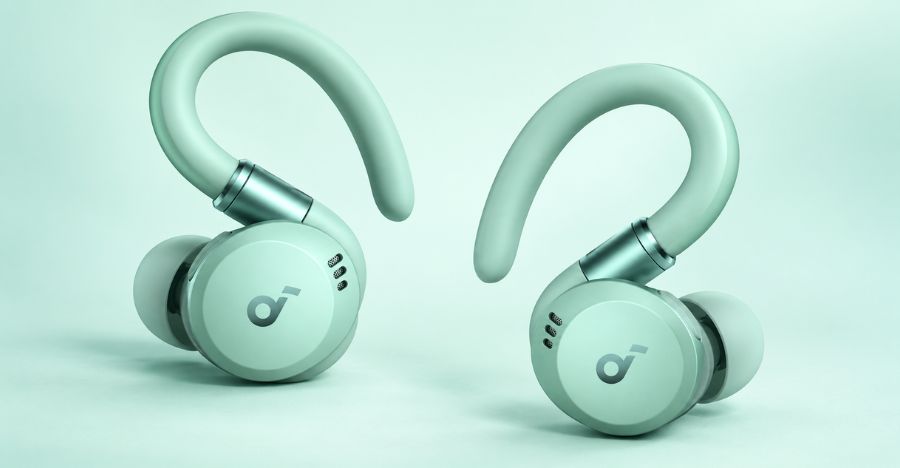
- Secures each bud with hooks that rotate up to 30 degrees and extend by 4 mm.
- Delivers energetic low-frequency weight through 11 mm drivers and BassUp processing.
- Provides up to 12 hours per charge and 48 hours with the case when ANC stays off.
- Resists sweat, water, and dust with an IP68 rating and SweatGuard construction.
- Supports adaptive ANC, transparency, six-microphone calling, multipoint, and app EQ.
- Bass-forward default tuning that may crowd lower-mid detail.
- Large ear-hook profile that occupies more space than a compact stem design.
- No wireless charging for the case.
The soundcore Sport X20 earns the Best Entry-Level Sports Earbuds award because it combines adjustable retention, strong environmental protection, useful noise control, and long battery life in an approachable all-purpose package. It covers more workout types than a specialist open-ear or ecosystem-locked model, making it a practical starting point for gym members, runners, and mixed-training users.
Its 11 mm dynamic drivers and BassUp processing favor a strong sub-bass and mid-bass foundation, which helps kick drums remain audible around cardio equipment. The soundcore app lets listeners lower the bass or lift the vocal range when that weight starts to mask guitars and speech, while a correct silicone-tip seal improves instrument separation without requiring excessive volume. The adjustable hooks spread retention around the outer ear, although the sealed tips can still create canal pressure and warmth during long sessions.
Adaptive ANC should work best against steady treadmill motors, ventilation noise, and low-frequency transit rumble on the way to the gym, while voices and metal impacts remain harder to suppress completely. Transparency mode restores awareness, and the IP68 build better suits heavy sweat or dusty trails than basic splash resistance. Battery life falls to a specified seven hours per charge and 28 hours with the case when ANC runs, while six microphones and multipoint make the X20 practical for calls and device switching between sessions.
View on Amazon: soundcore Sport X20
3. Apple AirPods 4
Best Open-Fit Option for iPhone
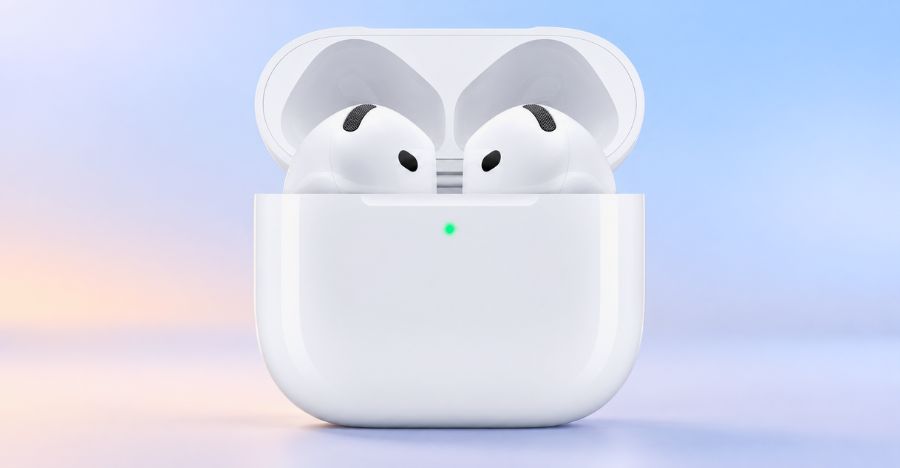
- Preserves outside awareness through a light, unsealed earbud shape.
- Integrates the H2 chip, Adaptive EQ, Voice Isolation, and Personalized Spatial Audio.
- Weighs only 4.3 grams per earbud for minimal canal pressure.
- Resists dust, sweat, and water with an IP54 rating.
- Provides up to five hours per charge and 30 hours with the charging case.
- Limited sub-bass consistency because the shell does not form a silicone-tip seal.
- Fixed one-size shape that cannot adapt through interchangeable ear tips.
The Apple AirPods 4 earns the Best Open-Fit Option for iPhone award because it pairs a pressure-free open fit with deep iPhone integration and simple stem controls. The linked version omits ANC, but that limitation becomes an advantage for users who want natural environmental awareness without switching modes before a road run or shared workout.
The unsealed geometry produces a more open spatial impression than a tightly sealed in-ear model, and it keeps vocals easy to follow when the fit aligns correctly with the ear. It cannot maintain the same deep sub-bass pressure as a silicone-tip design, especially when head movement changes the angle between the driver and ear canal. At 4.3 grams per bud, the AirPods 4 applies little weight, but the fixed shell either matches an ear well or leaves few ways to correct looseness.
Because this Amazon variant lacks ANC, ventilation rumble, traffic, conversation, and keyboard clatter enter the mix freely and can mask bass at modest volume. That openness suits awareness-first use cases covered in HPR’s guide to earbuds for outdoor work, though windy routes may challenge both music clarity and microphone pickup. The H2 chip supports Voice Isolation and Adaptive EQ, while the IP54 rating, five-hour earbud battery, and 30-hour case total cover ordinary workouts rather than multiday endurance use.
View on Amazon: Apple AirPods 4
4. Apple AirPods Pro 3
Best for iPhone Fitness Tracking
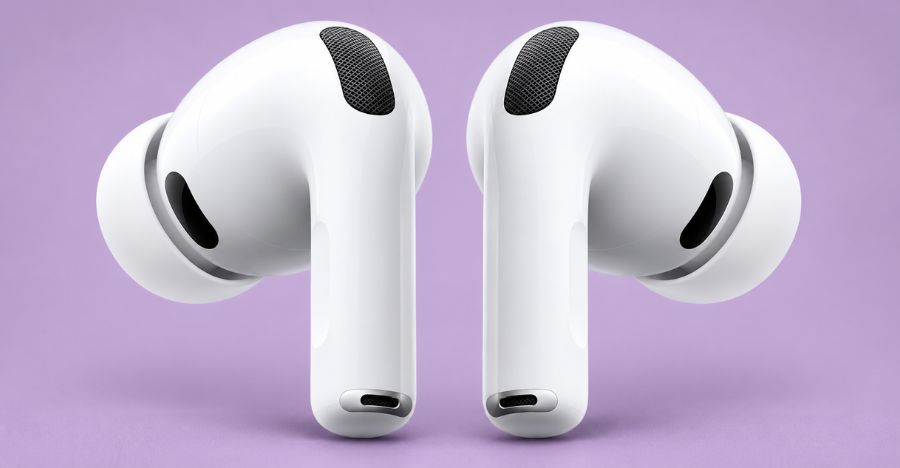
- Tracks workout heart rate through an integrated optical sensor.
- Suppresses gym and travel noise with ANC, Adaptive Audio, and a sealed in-ear fit.
- Fits a wider range of ears with five silicone-tip sizes from double-extra-small through large.
- Resists dust, sweat, and water with an IP57 rating for both buds and case.
- Provides up to eight hours with ANC or 6.5 hours with heart-rate sensing active.
- iPhone-centered fitness integration that loses depth on non-Apple devices.
- Sealed insertion that can create more canal pressure than open-fit earbuds.
- Twenty-four-hour total ANC battery that trails several sport-focused cases.
The Apple AirPods Pro 3 earns the Best for iPhone Fitness Tracking award because it combines heart-rate sensing with Apple Fitness integration, secure sealed tips, and strong adaptive noise control. It turns one pair of earbuds into both an audio device and a convenient workout data source for iPhone owners who do not want another sensor on the wrist or chest.
The sealed acoustic path gives the custom driver a firmer low-frequency platform than AirPods 4, while Adaptive EQ compensates for fit-related changes and keeps vocals from sinking behind the bass. Personalized Spatial Audio expands the apparent stage for compatible content, though stereo workout playlists retain more predictable center imaging. Five ear-tip sizes improve the chance of a stable seal, and readers who struggle with small shells can compare the fit principles in HPR’s best earbuds for small ears guide.
ANC targets steady fan, treadmill, and engine noise, while Adaptive Audio and Transparency mode help when a coach, training partner, or approaching vehicle needs attention. The IP57 rating applies to both the earbuds and case, but water resistance still does not make them swimming earbuds. Apple specifies up to eight hours with ANC, 6.5 hours with heart-rate sensing, and 24 hours with the case, while Voice Isolation and beamforming microphones support calls when the surrounding noise remains manageable.
View on Amazon: Apple AirPods Pro 3
5. Powerbeats Fit
Best Wingtip Fit
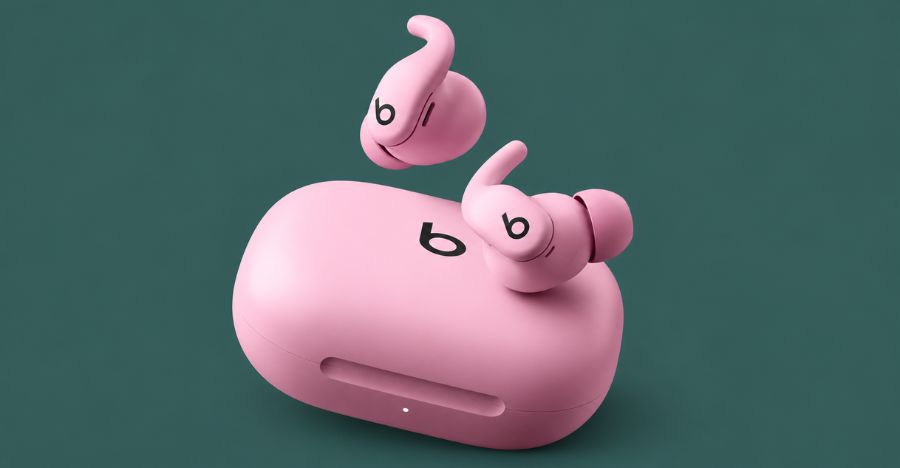
- Anchors each 5.78-gram bud with a flexible wingtip that tucks into the outer ear.
- Delivers Adaptive EQ, ANC, Transparency mode, and Personalized Spatial Audio.
- Provides four ear-tip sizes for seal and comfort adjustment.
- Extends playback to seven hours per charge and 30 hours with noise control off.
- Uses six microphones for beamforming calls and adaptive noise control.
- IPX4 protection that handles sweat and splashes but not submersion.
- Older H1 chip that lacks the newer processing platform in Powerbeats Pro 2.
- Wingtip contact pressure that may irritate sensitive outer ears.
The Powerbeats Fit earns the Best Wingtip Fit award because its flexible stabilizer adds movement resistance without wrapping a full hook around the ear. That compact retention system suits lifting, rowing, intervals, and floor exercises where ordinary sealed earbuds can loosen as facial muscles and jaw position change.
The custom acoustic platform and Adaptive EQ aim for a powerful but balanced presentation, with the sealed tips preserving bass impact more consistently than an open-fit shell. Personalized Spatial Audio can widen compatible tracks, but its head tracking matters less than stable center vocals during active movement. Four tip sizes let users tune insertion depth and bass seal, while the wingtip improves stability at the cost of possible pressure along the concha during long sessions.
ANC can soften ventilation, machine motors, and distant conversation, although sudden plate impacts and nearby speech still cut through more readily than steady rumble. Transparency mode restores situational cues for outdoor training, and all six microphones contribute to calls as well as noise control. Beats specifies up to six hours per charge and 24 hours total with ANC or Transparency active, while the IPX4 rating covers both the earbuds and case against sweat and splashes.
View on Amazon: Powerbeats Fit
6. JBL Endurance Peak 4
Best for Wet and Dusty Training
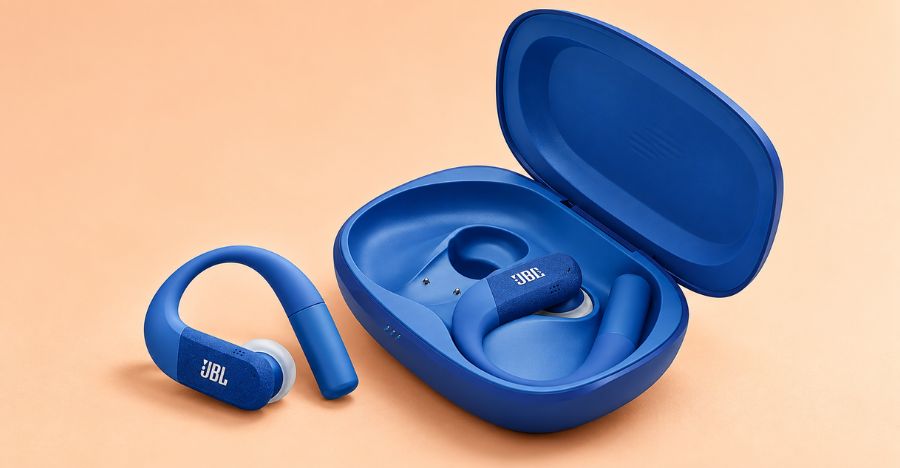
- Locks the earbuds in place with flexible memory-wire hooks and TwistLock geometry.
- Resists water and dust with an IP68 earbud rating.
- Delivers strong workout bass through 10 mm drivers and JBL Pure Bass tuning.
- Provides adaptive ANC, Smart Ambient, Spatial Sound, and Personi-Fi 3.0 customization.
- Supports up to 48 hours of total playback and six-microphone calling.
- Heavy 10.5-gram weight for each earpiece.
- Bulky 80.5-gram charging case that occupies substantial pocket space.
- IPX2 case protection that falls far below the earbuds’ IP68 rating.
The JBL Endurance Peak 4 earns the Best for Wet and Dusty Training award because its IP68 earbuds, secure TwistLock system, and long total battery directly address harsh workout conditions. It makes particular sense for trail runners, beach workouts, high-sweat gym sessions, and athletes who want to rinse residue from the earbuds after use without treating the charging case the same way.
The 10 mm dynamic drivers and JBL Pure Bass tuning emphasize rhythm and low-end impact, while Personi-Fi 3.0 offers a route to reduce excess warmth or improve vocal presence. Spatial Sound can enlarge the presentation, but listeners who prioritize precise stereo placement may prefer it disabled for a more stable image. The liquid-silicone hooks and oval tubes distribute retention across the outer ear, although each 10.5-gram bud feels materially heavier than compact stem models.
Four sensing microphones feed adaptive ANC to reduce steady low-frequency distractions, while Smart Ambient keeps speech and environmental cues available when needed. The six-microphone system supports calls, but wind remains a demanding condition for any exposed ear-hook design. IP68 protection gives the buds a clear advantage for the conditions discussed in HPR’s outdoor-work earbud guide, while the IPX2 case needs a dry pocket and the 48-hour total battery reduces charging frequency.
View on Amazon: JBL Endurance Peak 4
7. Shokz OpenFit 2+
Best Open-Ear Ear-Hook Design
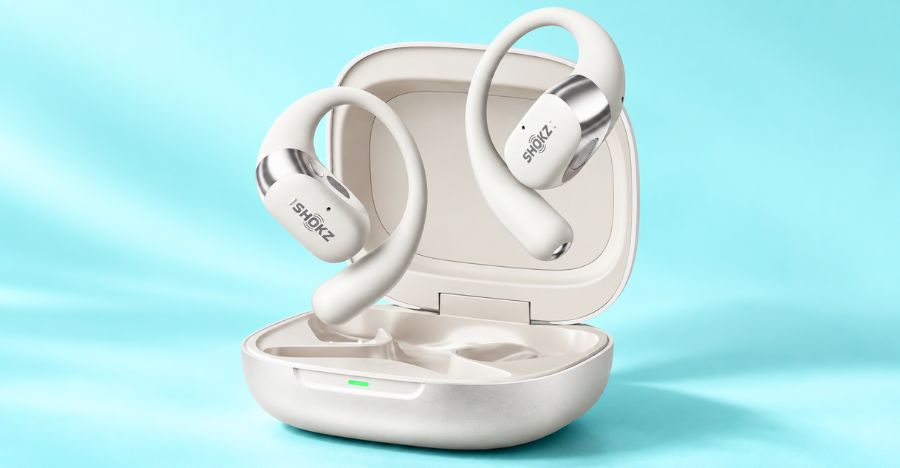
- Preserves environmental awareness through an open-ear air-conduction layout.
- Separates high- and low-frequency duties across independent drivers.
- Provides physical multifunction buttons that resist accidental sweat-triggered touches.
- Supports Dolby Audio, multipoint, app adjustment, and wireless case charging.
- Delivers up to 11 hours per charge and 48 hours with the case.
- Reduced deep-bass pressure compared with sealed in-ear alternatives.
- No ANC for loud gyms, flights, or commuting.
- One-size ear-hook geometry that may not suit every ear shape.
The Shokz OpenFit 2+ earns the Best Open-Ear Ear-Hook Design award because it balances a stable wraparound fit with physical controls, long battery life, and useful audio processing. It suits runners and cyclists who prefer the predictable retention of an ear hook but do not want a silicone tip blocking the ear canal.
DualBoost uses separate high- and low-frequency drivers, while OpenBass 2.0 and Dolby Audio strengthen weight and spaciousness within the limits of open-ear acoustics. The design can present vocals and treble with an airy sense of space, but it cannot build the same sealed sub-bass pressure or prevent ambient noise from masking quiet details. Soft silicone covers the hook contact area, and the 8.7-gram earpieces distribute their mass around the outer ear instead of concentrating it inside the canal.
OpenFit 2+ provides almost no passive isolation, so speech, traffic, keyboard clatter, and gym equipment remain audible without activating a transparency circuit. That awareness helps outdoors, but a loud environment can tempt users to raise volume, making restraint important. Shokz specifies IP55 protection, two microphones per bud, multipoint, 11 hours per charge, 48 hours with the case, and a roughly two-hour battery penalty when Dolby Audio stays active.
View on Amazon: Shokz OpenFit 2+
8. Shokz OpenDots 2
Best Clip-On Option
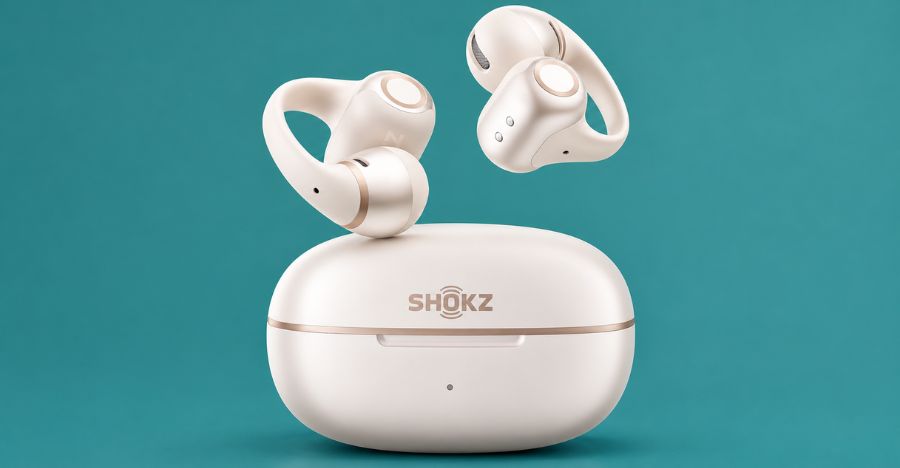
- Clips onto the outer ear without inserting a tip or wrapping a hook behind it.
- Delivers enhanced bass and spatial processing through Bassphere 2.0 and Dolby Audio.
- Resists sweat, rain, and dust with an IP57 rating.
- Provides up to 10 hours per charge and 40 hours with the wireless-charging case.
- Uses three microphones per bud, Bluetooth 6.1, multipoint, and automatic side detection.
- Clip pressure and stability that vary with outer-ear thickness and shape.
- No ANC or passive seal for loud indoor environments.
- Bass detail that loses audibility when traffic or equipment noise rises.
The Shokz OpenDots 2 earns the Best Clip-On Option award because its light, interchangeable design avoids both canal pressure and behind-ear hook contact. Dynamic Ear Detection identifies left and right automatically, which also removes the annoyance of placing a specific bud on a specific ear before a quick training session.
The dual-driver Bassphere 2.0 system and upgraded Dolby Audio aim to deliver stronger low frequencies and a broader stage than a basic clip-on speaker. Open construction still limits true sub-bass pressure, but clear vocal positioning and a spacious presentation suit podcasts, coaching audio, and moderate-volume playlists. Each bud weighs about 6.4 grams, although the flexible nickel-titanium clip may feel secure on one ear shape and tight on another, a tradeoff worth comparing with HPR’s small-ear fit guidance.
The open path keeps traffic, speech, and gym activity audible, so OpenDots 2 prioritizes awareness rather than isolation. Three microphones per bud combine air-conduction and bone-conduction pickup for calls, though strong wind can still interfere with intelligibility. An IP57 rating, Bluetooth 6.1, multipoint, 10-hour earbud battery, 40-hour case total, and Qi wireless charging make the design unusually complete for an awareness-first clip-on model.
View on Amazon: Shokz OpenDots 2
9. Cleer ARC 5
Best Open-Ear Sound Features
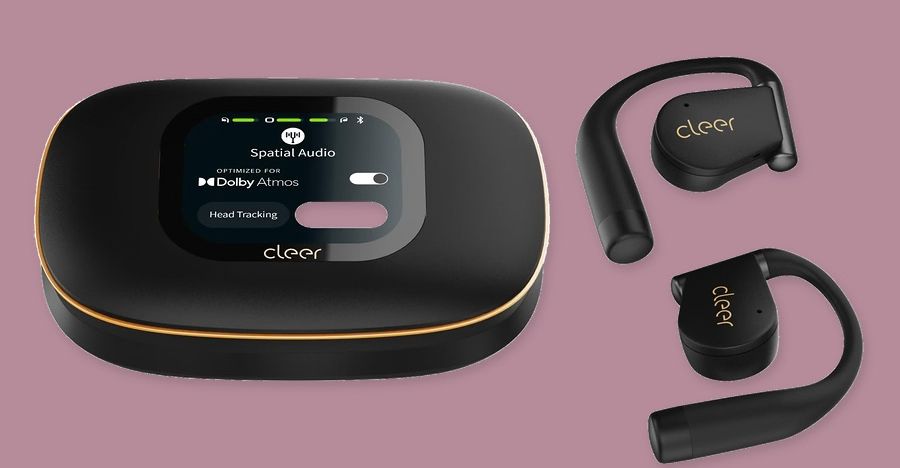
- Drives open-ear audio through large 16.2 mm transducers.
- Supports THX Spatial Audio, Dolby Atmos, head tracking, and high-resolution codec options.
- Resists sweat and water with an IPX7 rating.
- Extends playback to 12 hours per charge and 60 hours with the case.
- Adds an Active-Matrix Organic Light-Emitting Diode (AMOLED) case for playback and EQ control.
- Heavy 11.5-gram weight for each open-ear earpiece.
- Premium codec benefits that depend on source-device compatibility.
- No ANC or passive seal for loud training spaces.
The Cleer ARC 5 earns the Best Open-Ear Sound Features award because it combines large drivers, spatial processing, broad codec support, and a smart control case in one awareness-first design. It targets listeners who want open ears during a workout but still value detailed format support and flexible presentation modes.
The 16.2 mm drivers provide more radiating area than compact sealed-earbud transducers, while THX Spatial Audio and Dolby Atmos can expand the apparent stage for compatible material. Cleer rates the Bluetooth response from 65 Hz to 40 kHz, a specification that also signals why open-ear users should expect less physical sub-bass than a sealed design despite the large driver. The ear hooks stabilize each 11.5-gram earpiece, but that mass may become more noticeable on smaller ears over a long session.
ARC 5 leaves environmental sound available and does not use ANC, so loud fans, speech, and traffic can mask low-level detail. The Qualcomm platform supports aptX Lossless, aptX Adaptive, Sony’s Lossless Digital Audio Codec (LDAC), and Advanced Audio Coding (AAC), while two-microphone Clear Voice Capture supports calls and multipoint handles two sources. IPX7 protection, a 12-hour earbud battery, 60-hour case total, and case-level EQ controls reduce maintenance, although HPR’s headphone troubleshooting guide remains useful if charging contacts or one-sided playback ever cause trouble.
View on Amazon: Cleer ARC 5
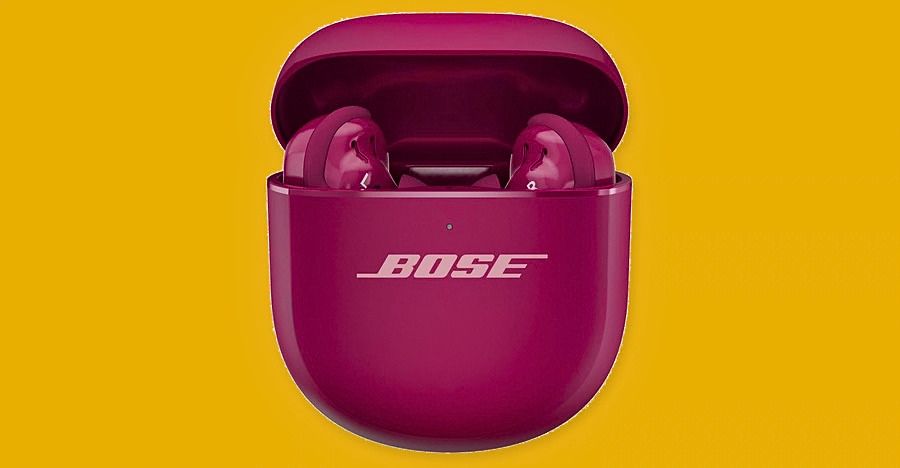
10. Bose QuietComfort Ultra Earbuds (2nd Gen)
Best Noise Cancelation
- Suppresses steady environmental noise through adjustable ANC and CustomTune processing.
- Personalizes tonal response to the acoustic characteristics of each ear.
- Stabilizes the fit through nine combinations of silicone tips and support bands.
- Improves voice pickup with SpeechClarity processing and noise-rejecting microphones.
- Supports multipoint, wireless case charging, Aware mode, and Immersive Audio.
- Six-hour battery ceiling that falls to four hours with Immersive Audio.
- IPX4 resistance that suits sweat but not immersion or dusty trail exposure.
- Large earpiece body that may crowd small outer ears despite the fit options.
The Bose QuietComfort Ultra Earbuds (2nd Gen) earns the Best Noise Cancelation award because it places adaptive ear-specific processing and adjustable isolation ahead of sport-only extras. It suits gym users who value quiet focus, strong low-frequency masking control, and fit customization more than heart-rate sensing or extreme water resistance.
CustomTune adjusts the output for the acoustic path of each ear, helping the sealed design maintain solid bass, centered vocals, and smooth upper-frequency balance as fit changes. Immersive Audio moves the presentation beyond the head for a wider effect, though conventional stereo keeps positional cues more stable during fast movement. Three tip sizes and three stability-band sizes create nine combinations, but the roughly 7.3-gram earpiece body still occupies more outer-ear space than a compact stem bud.
Quiet mode targets low-frequency ventilation, treadmill, and transit rumble, while Aware mode restores speech and surrounding cues without removing the earbuds. SpeechClarity improves calls by focusing the microphone system on the voice, and multipoint simplifies switching between a phone and gym tablet. Bose specifies six hours per charge, four with Immersive Audio, three additional case charges, wireless charging, and IPX4 protection; readers familiar with the earlier line can use HPR’s Bose QuietComfort Earbuds II review for useful generational context.
View on Amazon: Bose QuietComfort Ultra Earbuds (2nd Gen)
What to Look for in Workout and Sports Earbuds
Fit and Retention
Match the retention style to the motion. Full ear hooks give the strongest mechanical hold, wingtips create a more compact anchor, clip-ons avoid the canal, and ordinary sealed tips depend heavily on a correct friction fit.
Pressure matters as much as stability because a painful hook, wing, or deep tip can shorten a workout. Compare tip sizes, earpiece weight, hook adjustability, and outer-ear contact points, then use HPR’s small-ear fit guide if standard shells crowd the concha.
Sweat and Water Protection
Read the full IP code instead of accepting a broad “water-resistant” label. IPX4 covers splash testing, IP55 adds limited dust and water-jet protection, IP57 and IPX7 add immersion testing, and IP68 combines dust-tight construction with manufacturer-specified immersion protection beyond level 7.
The earbud and charging case may carry different ratings, as the JBL Endurance Peak 4 demonstrates with IP68 buds and an IPX2 case. Dry the contacts before charging, keep the case away from wet clothing, and consult HPR’s outdoor-work earbud guide when rain, dust, and situational awareness overlap.
Isolation and Awareness
Choose sealed ANC earbuds for loud indoor gyms, flights, and commutes where steady rumble masks bass and encourages higher volume. Choose open-fit or open-ear models when traffic, coworkers, coaches, or nearby equipment must remain audible without relying on an electronic transparency mode.
Neither strategy solves every environment. Open designs lose bass audibility as background noise rises, while strong isolation can hide important cues, so switch modes or remove one earbud when safety requires direct hearing.
Sound and EQ Flexibility
Workout tuning often emphasizes bass, but excessive mid-bass can blur vocals and guitars. A companion app with adjustable EQ lets users trim low-frequency weight, raise speech presence, or reduce sharp treble without replacing the earbuds.
Driver size alone does not determine quality because seal, enclosure, processing, and placement change the result. Keep boosts moderate, reduce another band before adding large positive gain, and lower the master volume if an EQ adjustment increases overall loudness.
Battery Life With Active Features
Compare battery figures with ANC, spatial audio, Dolby processing, or biometric sensing enabled, not only the longest quoted number. Powerbeats Fit drops from seven hours with noise control off to six with ANC or Transparency, while Bose falls from six hours to four with Immersive Audio.
Case totals matter for travel, but single-charge endurance decides whether the earbuds survive a long run or tournament day. Fast charging and wireless charging improve convenience, yet neither replaces enough earbud capacity for the longest uninterrupted session.
Controls, Calls, and Device Support
Physical buttons and volume rockers usually behave more predictably than touch panels when sweat covers the fingers. Microphone count can help, but wind position, beamforming, and voice-processing algorithms influence call intelligibility more than the raw number alone.
Confirm which features work on the intended phone because Apple fitness integration, Android apps, high-resolution codecs, multipoint, and spatial formats vary by source. If one channel, control, or charging contact stops working, HPR’s headphone repair and troubleshooting guide provides practical first checks before replacement.
Frequently Asked Questions
Are Open-Ear Earbuds Better for Running Outdoors?
Open-ear earbuds usually preserve more direct traffic, bicycle, and pedestrian sound than sealed models, which makes them attractive for awareness-first running. They also let wind and road noise mask music, so keep expectations for bass and quiet detail realistic and follow local rules for headphone use.
Is IPX4 Enough for Heavy Workouts?
IPX4 covers splashing water and usually suits sweat-heavy indoor exercise when the earbuds remain intact and users dry them before charging. Choose IP55, IP57, IPX7, or IP68 when training involves heavy rain, dust, frequent rinsing, or harsher exposure, and always check the case rating separately.
Should I Use ANC in the Gym?
ANC can reduce steady fan, ventilation, treadmill, and machine noise, which may help users hear music at a lower level. The World Health Organization’s safe-listening guidance says adults can listen at 80 decibels (dB) for up to 40 hours per week, while 90 dB reduces that allowance to four hours, so isolation should support lower volume rather than justify louder playback.
Can Earbud Heart-Rate Sensors Replace a Sports Watch or Chest Strap?
Earbud sensors can add convenient workout data when their fit remains stable and the chosen app supports them. Accuracy and feature integration vary by device, activity, software, and individual fit, so athletes who need dependable training or medical-grade interpretation should compare the earbud data with an appropriate dedicated sensor and professional guidance.
Final Verdict
The Powerbeats Pro 2 is the Overall Best Sports Earbuds choice because it brings together a secure nickel-titanium ear-hook fit, balanced dual-layer drivers, adaptive ANC, Transparency mode, and dependable physical controls. Heart-rate sensing works with supported fitness experiences on Apple and Android devices, while five ear-tip sizes, up to 10 hours of earbud playback, and a 45-hour case total make the package useful well beyond a single workout.
The soundcore Sport X20 is the Best Entry-Level Sports Earbuds option for buyers who want adjustable hooks, IP68 protection, app EQ, adaptive ANC, transparency, and long battery life in a versatile first sports pair. Different needs still produce different winners: Apple AirPods Pro 3 offers deeper iPhone fitness integration, JBL Endurance Peak 4 targets wet and dusty training, Bose QuietComfort Ultra Earbuds (2nd Gen) prioritizes isolation, and the Shokz and Cleer models keep the ear canal open for awareness.
Start with fit, training environment, and water protection before comparing spatial modes, codec lists, or biometric extras. Full hooks suit high-motion sessions, sealed ANC models help in noisy indoor spaces, and open-ear designs preserve direct awareness outdoors. A secure earbud that stays comfortable at a moderate volume will support more workouts than a feature-heavy model that loosens, creates pressure, or blocks the sounds you need to hear.