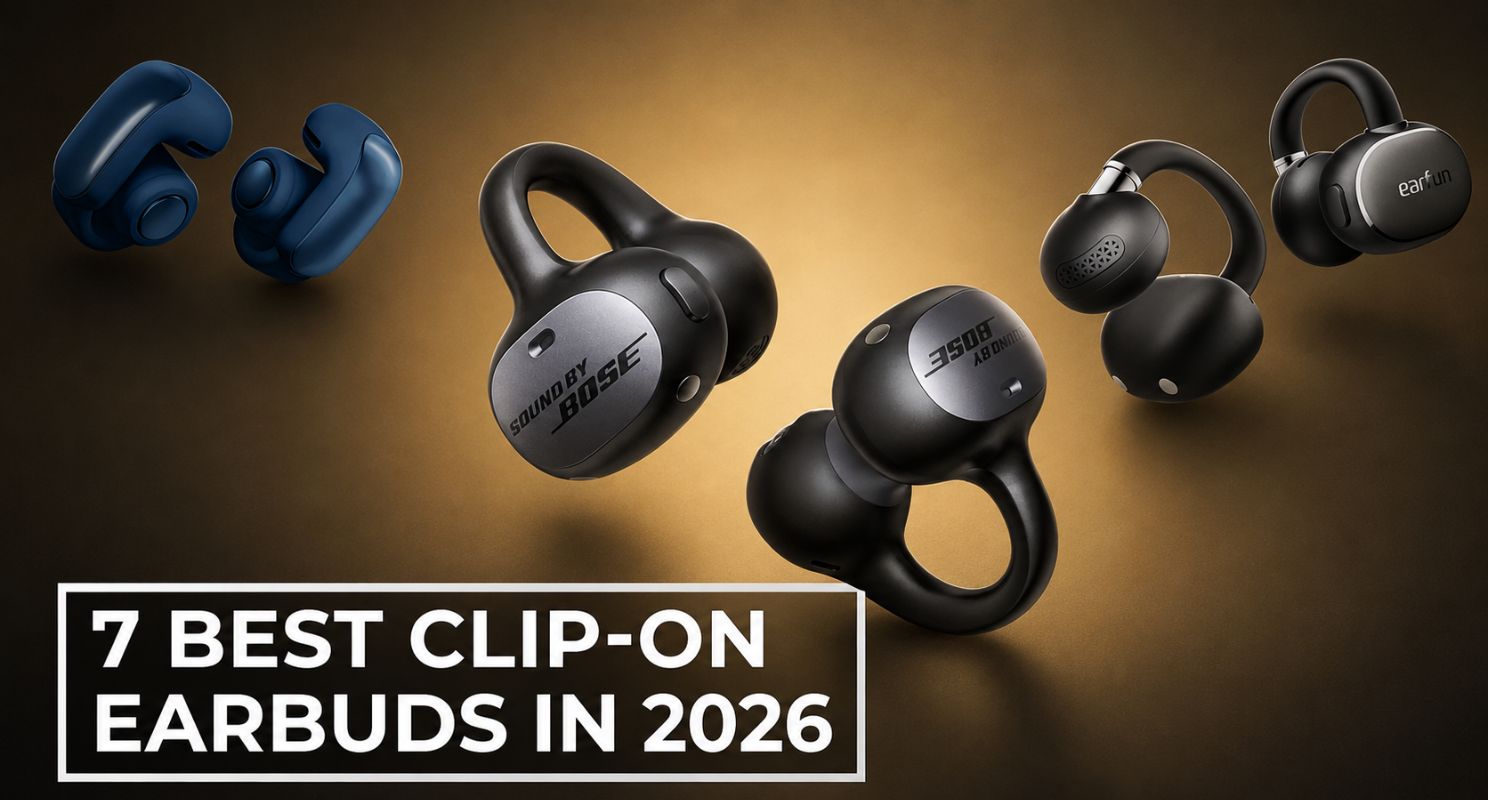
Clip-on earbuds make the most sense when comfort and awareness matter more than isolation. They leave the ear canal open, but that advantage can tempt listeners to raise the volume in traffic or at the gym. The Centers for Disease Control and Prevention (CDC) identifies repeated exposure to 85 A-Weighted Decibels (dBA) or more as hazardous, so open-ear users should resist overpowering loud surroundings.
This guide compares seven current models across budget, midrange, and premium tiers. The picks cover running, workouts, office calls, long listening sessions, smaller ears, high-resolution wireless audio, and day-to-day awareness. Readers who work around vehicles or equipment should also review HPR’s guide to the best earbuds for outdoor work before choosing an open design.
Headphones Pro Review (HPR) received no firsthand test log for these products, so this article does not claim that we wore, measured, or auditioned them. Each assessment combines current primary-source specifications with supportable conclusions about driver placement, open-ear bass behavior, environmental audibility, fit pressure, battery use, and microphone design.
Quick Overview for Clip-On Earbuds
| Best Budget Overall | Baseus Bowie MC2 |
| Best Budget for Features | EarFun Clip 2 |
| Best Midrange for Sound Quality | Baseus Inspire XC1 |
| Best Midrange for Comfort | soundcore AeroClip |
| Best Premium Overall | Bose Ultra Open Earbuds |
| Best Premium for Everyday Awareness | Sony LinkBuds Clip |
| Best Premium for Battery Life | Shokz OpenDots ONE |
In-Depth Look: Clip-On Earbuds
1. Baseus Bowie MC2
Best Budget Overall
- Delivers adjustable low-end weight through an 11 mm tri-magnet dynamic driver and SuperBass 3.0 processing
- Supports High-Resolution (Hi-Res) wireless playback through Sony’s Lossless Digital Audio Codec (LDAC)
- Provides detachable medium, large, and extra-large CloudComfort 2.0 cushions for different outer-ear shapes
- Resists dust, sweat, and rain with an Ingress Protection (IP) 67 rating on the earbuds
- Extends playback to a rated 11.5 hours per charge and 55 hours with the case when SuperBass 3.0 remains active
- Open-fit sub-bass response that depends heavily on exact speaker position
- Android-only LDAC access
- Charging case without the earbuds’ IP67 protection
The Baseus Bowie MC2 earns the Best Budget Overall award because it combines the longest rated battery life in the budget tier with multi-size pressure cushions, LDAC, strong water resistance, and app-based bass control. Buyers get an unusually complete feature set without moving into midrange pricing.
The 11 mm driver and SuperBass 3.0 processing can add useful mid-bass body, while the spatial mode can widen the apparent stage for movies and casual listening. The open gap cannot create the same deep sub-bass pressure as a sealed earbud, and moving the speaker a few millimeters away from its intended position can thin vocals and bass. At 5.1 g per earbud, the flexible C-ring and three cushion sizes should distribute pressure more evenly than a fixed-size clip, making the MC2 particularly relevant to readers comparing earbuds for smaller ears.
The MC2 does not use Active Noise Cancelation (ANC), so engine rumble, heating and ventilation noise, speech, and keyboard clatter remain audible by design. Four beamforming microphones use Artificial Intelligence (AI) processing to focus on speech during calls, but that processing affects the outgoing voice rather than the noise the wearer hears. Bluetooth 6.0, multipoint pairing, a 38 ms low-latency mode, a 10-minute quick charge for up to 3 hours, and the IP67 earbud rating make this the most versatile low-cost option here.
View on Amazon: Baseus Bowie MC2
2. EarFun Clip 2
Best Budget for Features
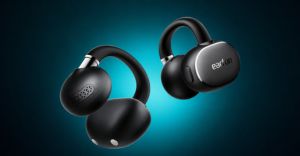
- Combines 12 mm dual-magnetic titanium-composite drivers with BassSurge processing and app Equalization (EQ)
- Supports LDAC, dual-device pairing, Google Fast Pair, and a low-latency mode over Bluetooth 6.0
- Provides up to 11 hours per charge and 40 hours with the case when LDAC remains off
- Uses physical buttons that reduce accidental commands during running and workouts
- Adds wireless case charging, Spatial Stage processing, and app-based AI translation
- Reduced battery rating of 6 hours per charge and 22 hours total with LDAC active
- Open-ear bass output that loses authority beside traffic or gym speakers
- IP55 protection that trails the Baseus Bowie MC2
The EarFun Clip 2 receives the Best Budget for Features award because it brings LDAC, wireless case charging, multipoint pairing, physical controls, spatial processing, translation tools, and extensive app adjustment to a relatively accessible price. No other budget pick in this list matches that breadth of functions.
Its 12 mm titanium-composite driver offers more radiating area than many compact clip designs, while BassSurge and EQ let users shape mid-bass and vocal presence. Heavy bass boosts can mask lower mids in any open earbud, so a restrained bass lift should preserve cleaner vocals and instrument separation. The elliptical sound outlet and Spatial Stage mode can broaden the presentation without matching the depth or precise center image of a sealed design, while each 5.5 g bud uses a 0.5 mm Nickel-Titanium (Ni-Ti) frame and soft silicone to reduce localized pressure.
Four microphones apply Environmental Noise Cancelation (ENC) to outgoing calls, but the Clip 2 leaves road noise, office conversation, and fan hum fully available to the wearer. That awareness suits runners and outdoor workers, while loud trains or crowded gyms will overpower fine treble detail and sub-bass, as HPR’s outdoor-work earbud recommendations explain. The rated 11-hour playback drops to 6 hours with LDAC, an important trade-off for buyers who want high-bitrate audio.
View on Amazon: EarFun Clip 2
3. Baseus Inspire XC1
Best Midrange for Sound Quality
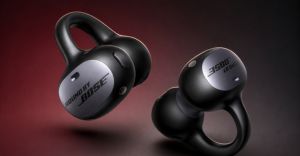
- Separates bass and upper-frequency duties through a 10.8 mm dynamic driver and a balanced-armature driver
- Supports LDAC, Advanced Audio Coding (AAC), Subband Codec (SBC), Dolby Audio, and Sound by Bose tuning
- Provides multipoint pairing, app EQ, and a rated 60 ms low-latency mode over Bluetooth 6.1
- Protects the earbuds against dust and powerful water jets with an IP66 rating
- Extends playback to approximately 8 hours per charge and 40 hours with the case under Baseus test conditions
- Open-ear sub-bass roll-off that remains dependent on speaker alignment
- LDAC availability limited to compatible Android devices
- Charging case without matching IP66 protection
The Baseus Inspire XC1 wins the Best Midrange for Sound Quality award because its hybrid driver system gives it the strongest hardware foundation for frequency separation in this price tier. Sound by Bose tuning, Dolby processing, LDAC, and app EQ add meaningful ways to refine that foundation.
The 10.8 mm dynamic driver handles the low-frequency workload, while the balanced-armature unit targets upper-midrange and treble detail. This division should reduce congestion when bass lines, vocals, and cymbals overlap, although the open placement still prevents sealed-earbud sub-bass pressure. Dolby Audio can expand the stage, but listeners who value stable vocal placement may prefer the standard mode, while the curved open ring, silicone air cushion, and flexible joint address ear-canal pressure and varying outer-ear thickness.
The XC1 intentionally omits ANC, allowing low-frequency transit rumble, 500 Hz to 2 kHz office noise, nearby speech, and keyboard transients to remain audible. Four microphones apply call-focused noise reduction, and multipoint support helps users move between a laptop and phone. The 8-hour earbud and 40-hour total ratings assume 50 percent volume with Bass Boost and Dolby Audio turned off, so feature-heavy users who need actual isolation should also compare HPR’s Bose QuietComfort Earbuds II review.
View on Amazon: Baseus Inspire XC1
4. Soundcore AeroClip
Best Midrange for Comfort
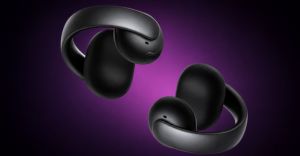
- Produces adjustable punch through a 12 mm titanium-coated driver and virtual bass processing
- Supports LDAC, multipoint pairing, custom EQ, and app control
- Provides up to 8 hours per charge and 32 hours with the charging case
- Keeps each earbud to approximately 6.0 g while using a flexible open-ring structure
- Protects the earbuds against dust and splashes with an IP55 rating
- Fixed clip geometry that may press differently across thick and thin ears
- Touch controls that can register unintended commands during fit adjustment
- Total battery rating that trails the Baseus and EarFun alternatives
The soundcore AeroClip receives the Best Midrange for Comfort award because its light 6.0 g build, adaptive open ring, included ear grips, and non-intrusive placement prioritize long wear without putting pressure inside the ear canal. It also retains the sound and connectivity tools expected at its higher midrange price.
The 12 mm titanium-coated driver and virtual bass processing can create convincing mid-bass punch at moderate volume, while LDAC and app EQ give Android users more control over clarity and tonal balance. Virtual bass cannot replace true low-frequency air movement, so the deepest electronic notes will feel lighter than they do through a sealed earbud. The open geometry should give music a spacious lateral presentation, but vocal image and treble balance will change if the speaker sits too far forward or backward.
The AeroClip offers no ANC or passive seal, which keeps traffic, announcements, coworkers, and keyboard clicks easy to hear but cannot provide refuge from an aircraft cabin or subway. Four AI-assisted microphones, wind-blocking meshes, Bluetooth 5.4, multipoint pairing, and a 10-minute charge for up to 3 hours support daily calls and commuting. Buyers with easily irritated outer ears should still compare fit guidance in HPR’s small-ear earbud guide, since clip pressure remains personal.
View on Amazon: soundcore AeroClip
5. Bose Ultra Open Earbuds
Best Premium Overall

- Directs sound toward the ear canal through Bose OpenAudio dipole-transducer technology
- Provides Immersive Audio, Auto Volume, multipoint pairing, and app EQ
- Uses a flexible light-grip joint that avoids pressure inside the ear canal
- Protects the earbuds against sweat and splashes with an IPX4 rating
- Adds up to 19.5 hours through the case beyond the earbuds’ rated 7-hour playback
- Premium price without ANC or a sealed listening option
- Shorter single-charge playback than several cheaper competitors
- Immersive Audio battery reduction to approximately 4 hours under current Bose guidance
The Bose Ultra Open Earbuds earn the Best Premium Overall award because they combine the most refined purpose-built open-ear acoustic system with a polished fit, useful automatic volume control, spatial audio, and dependable multipoint support. They focus on the open-ear experience itself rather than competing through the longest specification list.
Bose’s dipole-transducer system directs sound across the short gap to the ear canal while controlling some outward leakage. This architecture can preserve fuller mid-bass and clearer vocals than simply holding a conventional earbud outside the ear, but it still cannot create sealed sub-bass pressure. Immersive Audio widens the stage and adds motion processing, while the flexible joint grips the outer ear without entering the canal, although fixed stereo material may lose some center precision in the spatial mode.
The earbuds have no ANC, so aircraft rumble, subway energy, office speech, and typing remain part of the listening environment, while the call microphones remain exposed to wind and street noise at the outer ear. Auto Volume can raise playback as surroundings get louder, but users should avoid letting convenience drive unsafe levels; current Bose guidance lists up to 7 hours of playback, around 4 hours with Immersive Audio or Auto Volume, and up to 19.5 extra hours from the case, while the advertised 48-hour figure refers to connected standby. For a direct contrast with Bose’s sealed approach, read HPR’s QuietComfort Earbuds II evaluation.
View on Amazon: Bose Ultra Open Earbuds
6. Sony LinkBuds Clip
Best Premium for Everyday Awareness
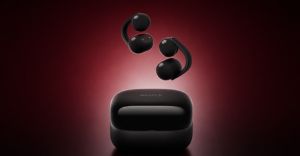
- Provides Standard, Voice Boost, and Sound Leakage Reduction listening modes
- Supports a 10-band EQ, Digital Sound Enhancement Engine (DSEE), 360 Reality Audio, and multipoint pairing
- Extends playback to a rated 9 hours per charge and 37 hours with the case
- Includes fitting cushions that improve stability on smaller or thinner ears
- Protects the earbuds against sweat and splashes with an IPX4 rating
- SBC and AAC codec support without LDAC
- Premium price despite the absence of wireless case charging
- Four-hour maximum communication rating for continuous calls
The Sony LinkBuds Clip receives the Best Premium for Everyday Awareness award because its three listening modes actively adapt an open design to music, speech, and quieter shared spaces. Sony also combines strong app control, multipoint support, fitting cushions, and a long 37-hour total battery rating.
Standard mode offers the most neutral starting point for music, while Voice Boost emphasizes the vocal band for podcasts and speech in busy locations. Sound Leakage Reduction mode lowers spill in quiet rooms, though that restraint can reduce bass scale and overall dynamics. DSEE restores some high-frequency information in compressed files, while the 10-band EQ adds finer tonal control and the supplied cushions help stabilize each approximately 6.5 g earbud.
The open shell keeps traffic, conversation, fan noise, and keyboard transients audible rather than electronically reconstructing them through a transparency microphone. Sony’s voice pickup system combines microphones, a bone-conduction sensor, and AI processing for outgoing speech, but open placement and wind can still challenge any microphone far from the mouth. The earbuds support SBC and AAC over Bluetooth 5.3, not LDAC, and provide up to 9 hours of AAC playback plus 28 hours from the case; if moisture dulls the output, HPR’s headphone water-ejection tool may help after drying but does not replace proper maintenance.
View on Amazon: Sony LinkBuds Clip
7. Shokz OpenDots ONE
Best Premium for Battery Life
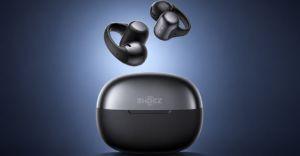
- Delivers up to 10 hours per charge and 40 hours with the charging case
- Combines a dual-driver Bassphere system with Dolby Audio, DirectPitch, and app EQ
- Keeps each earbud to approximately 6.5 g through a flexible nickel-titanium JointArc
- Supports multipoint pairing, interchangeable left and right use, and wireless case charging
- Protects the earbuds against dust, sweat, and splashes with an IP54 rating
- Premium price for earbuds without listening-focused ANC
- SBC and AAC codec support without LDAC
- Charging case without the earbuds’ IP54 protection
The Shokz OpenDots ONE wins the Best Premium for Battery Life award because its rated 10-hour single charge and 40-hour total exceed the other premium models in this guide. Wireless case charging, a 10-minute quick charge for up to 2 hours, and multipoint pairing strengthen its value for long workdays and travel.
The Bassphere acoustic system combines two drivers to provide the radiating area of a larger driver, while Dolby Audio can add width and DirectPitch aims sound toward the ear to reduce leakage. App-based preset and custom EQ modes provide useful tonal adjustment, but the open gap still limits deep sub-bass pressure and lets environmental noise mask quiet detail. Each 6.5 g earbud uses a soft silicone grip and flexible nickel-titanium JointArc that should adapt to different outer-ear shapes without creating ear-canal pressure.
The OpenDots ONE has no listening-focused ANC, so traffic, conversation, keyboard clicks, and transit noise remain audible by design. Its optimized microphones process outgoing speech, while Bluetooth 5.4, automatic left and right detection, multipoint pairing, and touch controls support daily use across a phone and computer. The IP54 rating applies to the earbuds rather than the case, so users should dry them before charging; if moisture dulls the output, HPR’s water-removal sound tool may help after drying but does not replace proper maintenance.
View on Amazon: Shokz OpenDots ONE
What to Look for in Clip-On Earbuds
Driver and Tuning
Driver size alone does not determine sound quality, but larger diaphragms can provide more useful low-frequency headroom in an open design. Look for adjustable EQ because speaker position and outer-ear shape can change bass, vocal balance, and treble more than a codec badge will.
Fit and Pressure
A secure clip should hold the speaker near the ear canal without pinching the outer ear. Multi-size cushions, flexible C-bridges, and fitting grips help, but buyers with small or sensitive ears should prioritize return options because clip pressure remains highly personal.
Awareness and Leakage
Open earbuds intentionally let traffic, speech, and workplace sounds through, so they do not replace hearing protection or ANC earbuds. Directional vents and leakage-reduction modes can improve privacy, but nearby people may still hear audio at high volume in a quiet room.
Battery and Charging
Compare single-charge playback with case-assisted totals, and read the conditions behind each rating. LDAC, spatial audio, automatic volume, high playback levels, and call use can cut real operating time well below a headline claim.
Codec and Connectivity
LDAC can carry more audio data on compatible Android devices, while AAC often provides the more practical path for Apple users. Multipoint pairing matters for switching between a phone and laptop, but Bluetooth version numbers alone do not guarantee better sound or stability.
Calls and Durability
Microphone noise reduction cleans the voice sent to callers, not the environmental sound reaching the wearer. Match the IP rating to sweat and rain exposure, remember that cases often receive less protection than earbuds, and never treat a water-resistance rating as permission to swim or shower.
Soundstage claims also deserve context. Open placement can feel spacious because outside sound mixes with playback, but that does not equal the controlled imaging of a well-engineered open-back headphone such as the model discussed in HPR’s HIFIMAN Arya Stealth Magnet Version review.
Frequently Asked Questions
Are Clip-On Earbuds Better Than In-Ear Earbuds?
Clip-on earbuds work better for listeners who dislike ear-canal pressure or need to hear traffic, coworkers, and announcements. In-ear earbuds usually provide deeper bass, stronger isolation, and more consistent tonality because their seal reduces environmental interference.
Do Clip-On Earbuds Have Active Noise Cancelation?
The seven models in this guide do not provide listening-focused ANC. Their open structure deliberately preserves ambient sound, although several use microphone noise reduction to make the wearer’s voice clearer during calls.
Can Other People Hear Clip-On Earbuds?
Sound leakage depends on volume, speaker position, directional acoustic design, and room quietness. Leakage usually becomes more noticeable at high levels in libraries, offices, or bedrooms, so a dedicated leakage-reduction mode can help but cannot guarantee privacy.
Are Clip-On Earbuds Safe for Running?
They can improve awareness because they do not block the ear canal, but awareness does not make every route safe. Keep the level low enough to recognize approaching vehicles, follow local rules, and choose a secure fit with suitable sweat and water resistance.
Which Clip-On Earbuds Last the Longest?
The Baseus Bowie MC2 has the highest verified total rating here at up to 55 hours with SuperBass 3.0 active, while HUAWEI FreeClip 2 leads the premium group at up to 38 hours. Feature use, volume, codec, temperature, and call time can reduce those laboratory ratings.
Final Verdict
The Baseus Bowie MC2 is the strongest budget choice because it combines multi-size pressure cushions, LDAC, a rated 55-hour total, four microphones, multipoint pairing, and IP67 earbud protection. The EarFun Clip 2 costs more within the budget tier but adds wireless charging, physical buttons, translation tools, and broader app features.
The Baseus Inspire XC1 is the sound-focused midrange pick because its dynamic and balanced-armature driver system offers the clearest technical path to better frequency separation. The soundcore AeroClip favors a lighter, simpler comfort-first experience, with LDAC, virtual bass, app EQ, and dependable 32-hour total playback.
Premium buyers should choose by use case. Bose Ultra Open Earbuds deliver the most polished dedicated open-ear experience, Sony LinkBuds Clip offers the smartest listening modes for daily awareness, and Shokz OpenDots ONE 2 combines the best premium battery package with strong water resistance and a light 5.1 g fit.