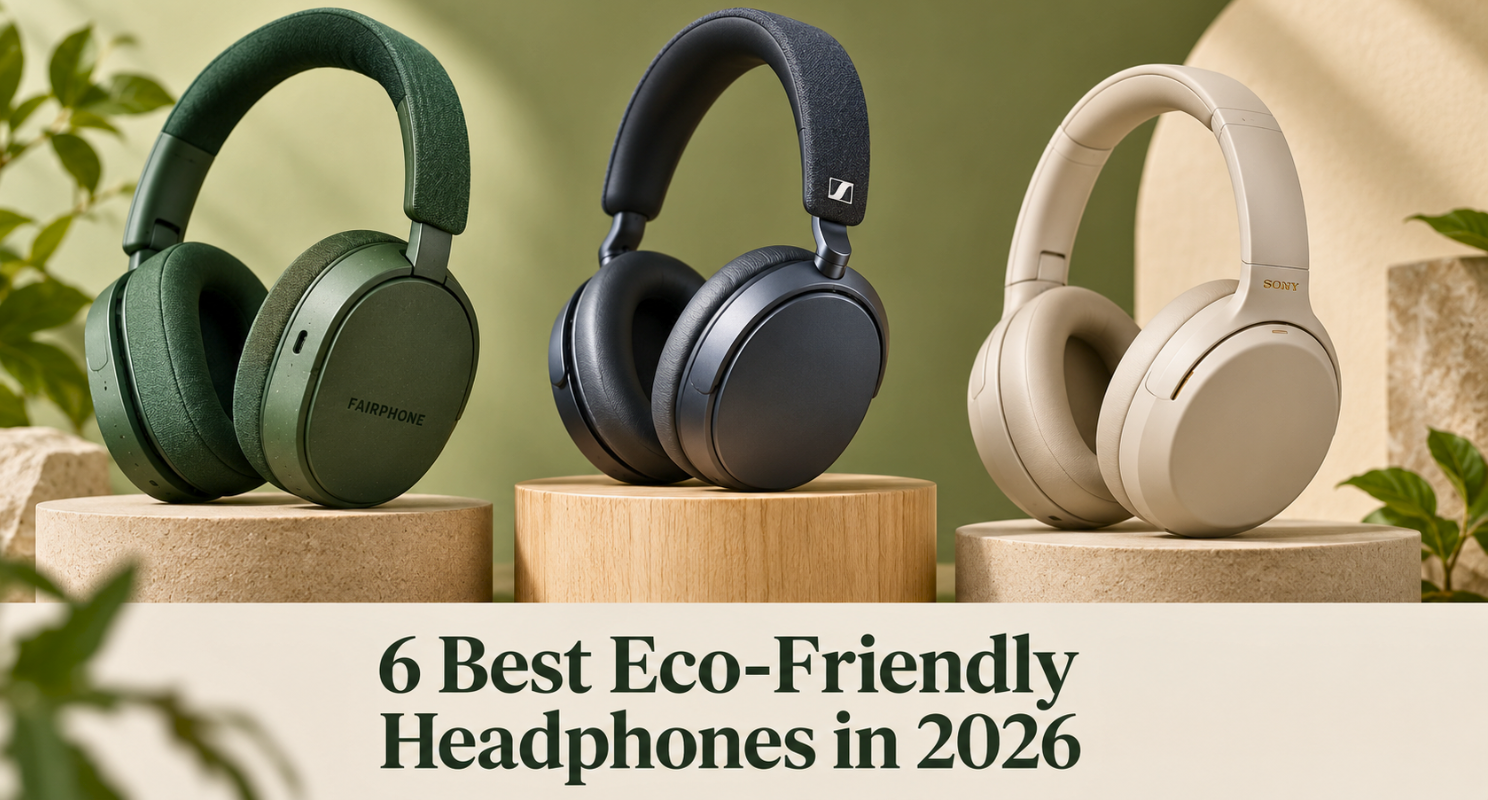
Eco-friendly headphones are not defined by one recycled-plastic claim. A more useful evaluation considers how long the product can remain in service, whether worn parts can be replaced, how the battery is handled, what materials are used, and whether the manufacturer provides a credible path for repair or recycling.
The scale of the problem gives those details real importance. The International Telecommunication Union’s Global E-waste Monitor 2024 reports that the world generated 62 billion kilograms of electronic waste in 2022, while only 22.3 percent was documented as formally collected and recycled. The World Health Organization’s e-waste fact sheet also explains that unsafe processing can release hazardous substances into surrounding air, soil, dust, and water.
This guide covers home listening, commuting, travel, outdoor awareness, and calls through six headphones and earbuds that reduce impact with repairable parts, recycled content, longer battery service, or lower-material charging systems. Current primary documentation supports every product name, specification, and sustainability claim used here. The recommendations do not claim hands-on testing or unpublished environmental measurements.
Quick Overview for Eco-Friendly Headphones
| Best Overall Eco-Friendly Headphones | Fairphone Fairbuds XL |
| Best Wired Eco-Friendly Headphones | Meze Audio STRADA |
| Best Wireless Eco-Friendly Headphones | Sennheiser MOMENTUM 5 Wireless |
| Best Premium Noise-Canceling Eco-Friendly Headphones | Sony 1000X THE COLLEXION |
| Best Open-Ear Eco-Friendly Earbuds | Sony LinkBuds Clip |
| Best Budget Eco-Friendly Earbuds | Skullcandy EcoBuds |
In-Depth Look: Eco-Friendly Headphones
1. Fairphone Fairbuds XL
Best Overall Eco-Friendly Headphones
- Allows owners to replace nine major components
- Extends usable life with a replaceable battery
- Uses over 80 percent recycled plastic and 92 percent recycled aluminum
- Provides active noise cancelation and up to 30 hours of playback
- Resists dust and moisture
- High initial price
- Noticeable 330 g weight
- Older Bluetooth 5.1 connection
- Closed-cushion heat buildup
The Fairphone Fairbuds XL earns the Best Overall Eco-Friendly Headphones award through its unusually comprehensive combination of repairability, recycled materials, and responsible assembly. Owners can replace nine parts with a screwdriver, including the battery, cushions, headband, and speaker modules.
Its 40 mm paper-diaphragm drivers work with app-based Equalization (EQ). Closed earcups provide passive isolation, while Active Noise Cancelation (ANC) targets steady background noise. Published specifications do not establish its exact bass, vocal, treble, or soundstage characteristics.
The 330 g frame may create more crown pressure and cushion heat than lighter models. Battery life reaches 30 hours with ANC off or 26 hours with it on, while its Ingress Protection 54 (IP54) rating covers dust and light moisture. Owners can also follow this headphone maintenance and water-ejection guidance.
View on Amazon: Fairphone Fairbuds XL
2. Meze Audio STRADA
Best Wired Eco-Friendly Headphones
- Extends product life through serviceable construction
- Allows owners to replace cables and chassis components
- Uses 50 mm dynamic drivers
- Combines wooden earcups with a magnesium frame
- Avoids battery aging
- High audiophile-level price
- No wireless connection
- No active noise cancelation
- Moderate 330 g weight
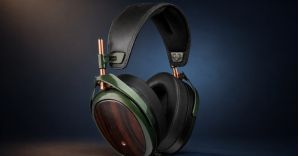
The Meze Audio STRADA earns the Best Wired Eco-Friendly Headphones award because its serviceable construction supports long-term ownership. Its wired design eliminates battery degradation, while replaceable cables and chassis parts prevent one worn component from ending the product’s useful life.
Its 50 mm drivers cover a stated 5 Hz to 30 kHz range, with Total Harmonic Distortion (THD) below 0.1 percent at 1 kHz. The 40-ohm impedance suits many portable sources, but the published figures cannot confirm tonal balance or soundstage width. Readers can compare another premium design in this HIFIMAN Arya Stealth Magnet Version review.
The closed wooden earcups favor passive isolation and bass containment over open-back spaciousness. They cannot electronically reduce travel rumble or speech, and the 330 g weight may become noticeable during long sessions. Serviceability forms the central environmental advantage.
View on Amazon: Meze Audio STRADA
3. Sennheiser MOMENTUM 5 Wireless
Best Wireless Eco-Friendly Headphones
- Allows owners to replace the battery
- Runs for up to 57 hours with ANC
- Uses 42 mm dynamic drivers
- Employs an eight-microphone ANC system
- Supports wireless, digital, and analog listening
- Premium flagship price
- No water-resistance rating
- Non-folding construction
- Dependence on future battery availability
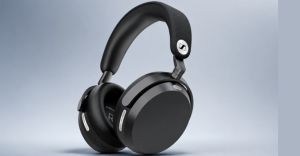
The Sennheiser MOMENTUM 5 Wireless earns the Best Wireless Eco-Friendly Headphones award because its replaceable battery addresses a major weakness of wireless audio. Its rated 57-hour playback also reduces charging frequency.
The 42 mm drivers span a stated 6 Hz to 40 kHz through Bluetooth or Universal Serial Bus Type-C (USB-C). Bluetooth 5.4 supports Low Complexity Subband Codec (SBC), Advanced Audio Coding (AAC), and aptX formats, while an eight-band EQ adjusts tonal balance.
Eight microphones support hybrid adaptive ANC, transparency, and anti-wind modes, although Sennheiser publishes no frequency-specific attenuation figures. The closed cushions may trap heat, and the frame does not fold or carry a water-resistance rating. Buyers can compare another isolation system in the Bose QuietComfort Earbuds II review.
View on Amazon: Sennheiser MOMENTUM 5 Wireless
4. Sony 1000X THE COLLEXION
Best Premium Noise-Canceling Eco-Friendly Headphones
- Incorporates recycled plastic into body and case components
- Uses bespoke 30 mm drivers
- Reduces travel and office noise through adaptive ANC
- Supports Bluetooth 6.0 and multipoint pairing
- Provides up to 24 hours with noise cancelation
- Luxury-level price
- Heavy 11.29 oz construction
- Non-replaceable battery
- No water-resistance rating
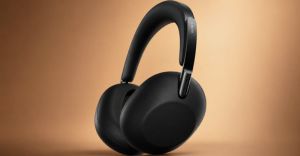
The Sony 1000X THE COLLEXION earns the Best Premium Noise-Canceling Eco-Friendly Headphones award by combining advanced isolation with recycled plastic in multiple body and case parts. Its environmental advantages remain narrower than the Fairphone’s repair system.
Sony uses bespoke 30 mm drivers with a stated wired response of 4 Hz to 40 kHz. Bluetooth supports SBC, AAC, Sony’s Lossless Digital Audio Codec (LDAC), and Low Complexity Communication Codec (LC3). Published specifications do not verify its exact bass emphasis, vocal position, treble character, or instrument separation.
Adaptive microphones target aircraft, engine, and office noise, although Sony provides no frequency-specific reduction figures. Large earcups and a wide headband distribute the 11.29 oz mass but may retain heat. Battery life reaches 24 hours with noise cancelation or 32 hours without it.
View on Amazon: Sony 1000X THE COLLEXION
5. Sony LinkBuds Clip
Best Open-Ear Eco-Friendly Earbuds

- Uses recycled plastic in several components
- Maintains awareness through an open-ear design
- Provides up to 37 hours with the case
- Resists sweat and light splashes
- Supports multipoint pairing
- Minimal passive isolation
- Reduced deep-bass pressure
- No active noise cancelation
- Non-replaceable batteries
The Sony LinkBuds Clip earns the Best Open-Ear Eco-Friendly Earbuds award by combining recycled-plastic components with an awareness-focused design. Its clip shape leaves the ear canal open to traffic, conversations, alarms, and workplace signals.
The Sony LinkBuds Clip earns the Best Open-Ear Eco-Friendly Earbuds award by combining recycled-plastic components with an awareness-focused design. Its clip shape leaves the ear canal open to traffic, conversations, alarms, and workplace signals.
Each earbud uses a 0.39-inch driver with a stated 20 Hz to 20 kHz response. The open construction trades sealed sub-bass pressure and isolation for awareness, while Standard, Voice Boost, and Sound Leakage Reduction modes alter the presentation. Readers needing tougher options can consult this earbuds for outdoor work guide.
Each earbud weighs about 0.23 oz, while Air Fitting Cushions stabilize the clip without sealing the canal. Playback reaches nine hours or 37 hours with the case, and the Ingress Protection X4 (IPX4) rating covers sweat and splashes. Sony also lists multipoint pairing and Artificial Intelligence-assisted voice pickup.
View on Amazon: Sony LinkBuds Clip
6. Skullcandy EcoBuds
Best Budget Eco-Friendly Earbuds

- Uses 65 percent certified recycled plastic
- Reduces its stated carbon footprint by 50 percent
- Eliminates the battery from the charging dock
- Provides eight hours of playback
- Keeps the price accessible
- No active noise cancelation
- No battery reserve in the dock
- No multipoint connection
- Limited sound adjustment
The Skullcandy EcoBuds earns the Best Budget Eco-Friendly Earbuds award through its accessible price, recycled plastic, and battery-free dock. Skullcandy reports a 50 percent reduction in upstream Scope 3 carbon emissions against comparable products, based on an Ecochain calculation.
Its 6 mm drivers cover a stated 20 Hz to 20 kHz range and offer Music, Bass Boost, and Podcast EQ presets. A secure tip seal should improve bass containment and passive isolation, but published specifications cannot confirm vocal position, treble smoothness, or stage width. ANC and multipoint pairing are absent.
The earbuds and dock weigh 23.6 g, while three tip sizes adjust insertion depth and seal. Playback reaches eight hours, and a 10-minute charge provides approximately two hours. The dock draws USB-C power from another device; buyers with fit concerns can consult the earbuds for small ears guide.
View on Amazon: Skullcandy EcoBuds
What to Look for in Eco-Friendly Headphones
Prioritizing Repairability
Replaceable batteries, cushions, cables, and headbands can extend useful life more effectively than a small recycled-plastic percentage. Confirm that consumers can purchase spare parts and complete repairs with ordinary tools.
Comparing Recycled Materials
Check whether published percentages describe the whole product or only selected components. Recycled housing plastic does not mean that every internal material is recycled.
Evaluating Battery Longevity
Wireless batteries gradually lose capacity. Longer runtime reduces charging cycles, while a replaceable cell prevents battery degradation from ending the product’s useful life.
Assessing Sound and Isolation
Environmental credentials should not replace acoustic suitability. Closed earcups offer isolation, ANC targets steady noise, and open-ear models preserve awareness.
Reviewing Comfort and Durability
Consider weight, clamping pressure, cushion materials, water resistance, and replaceable wear surfaces. Discomfort or weak construction can cause premature replacement.
Verifying Disposal and Recycling
Use certified recycling facilities, manufacturer take-back programs, or municipal electronic-waste collections. Do not place headphones or rechargeable batteries in household trash.
Frequently Asked Questions
What Makes Headphones Eco-Friendly?
Eco-friendly headphones may use recycled materials, replaceable parts, lower-impact packaging, or repairable construction. Longevity often matters as much as material composition because keeping one device longer delays replacement and waste.
Which Headphones Here Are the Most Repairable?
The Fairphone Fairbuds XL provides the most extensive repair system, with nine replaceable parts. The Meze Audio STRADA is fully serviceable, while the Sennheiser MOMENTUM 5 Wireless includes a replaceable battery.
Are Wired Headphones More Sustainable?
Wired headphones avoid rechargeable-battery degradation, but sustainability also depends on construction, repairability, and lifespan. A durable wireless model with a replaceable battery may outlast a poorly built wired alternative.
Do Recycled Materials Affect Sound Quality?
Recycled housing materials do not automatically determine sound quality. Driver design, enclosure acoustics, damping, fit, and signal processing have more direct effects.
Final Verdict
The Fairphone Fairbuds XL provides the strongest overall sustainability package. Its nine replaceable parts, user-swappable battery, recycled metal and plastic content, IP54 protection, renewable-energy assembly, and long warranty directly address material sourcing and premature replacement.
Choose the Meze Audio STRADA when wired audiophile performance and serviceability matter most. Its detachable cables, repairable chassis, metal frame, and battery-free operation support long ownership, although its environmental case relies more on durability than recycled-content reporting.
The Sennheiser MOMENTUM 5 Wireless offers the best balance of wireless features and battery longevity. Its replaceable battery, 57-hour runtime, high-resolution connections, and advanced ANC provide modern functionality without making battery failure the end of the product.
Sony’s 1000X THE COLLEXION suits buyers prioritizing premium isolation, while the LinkBuds Clip favors awareness and low ear weight. The Skullcandy EcoBuds remains the affordable choice through recycled plastic, a battery-free dock, and a reduced stated carbon footprint.