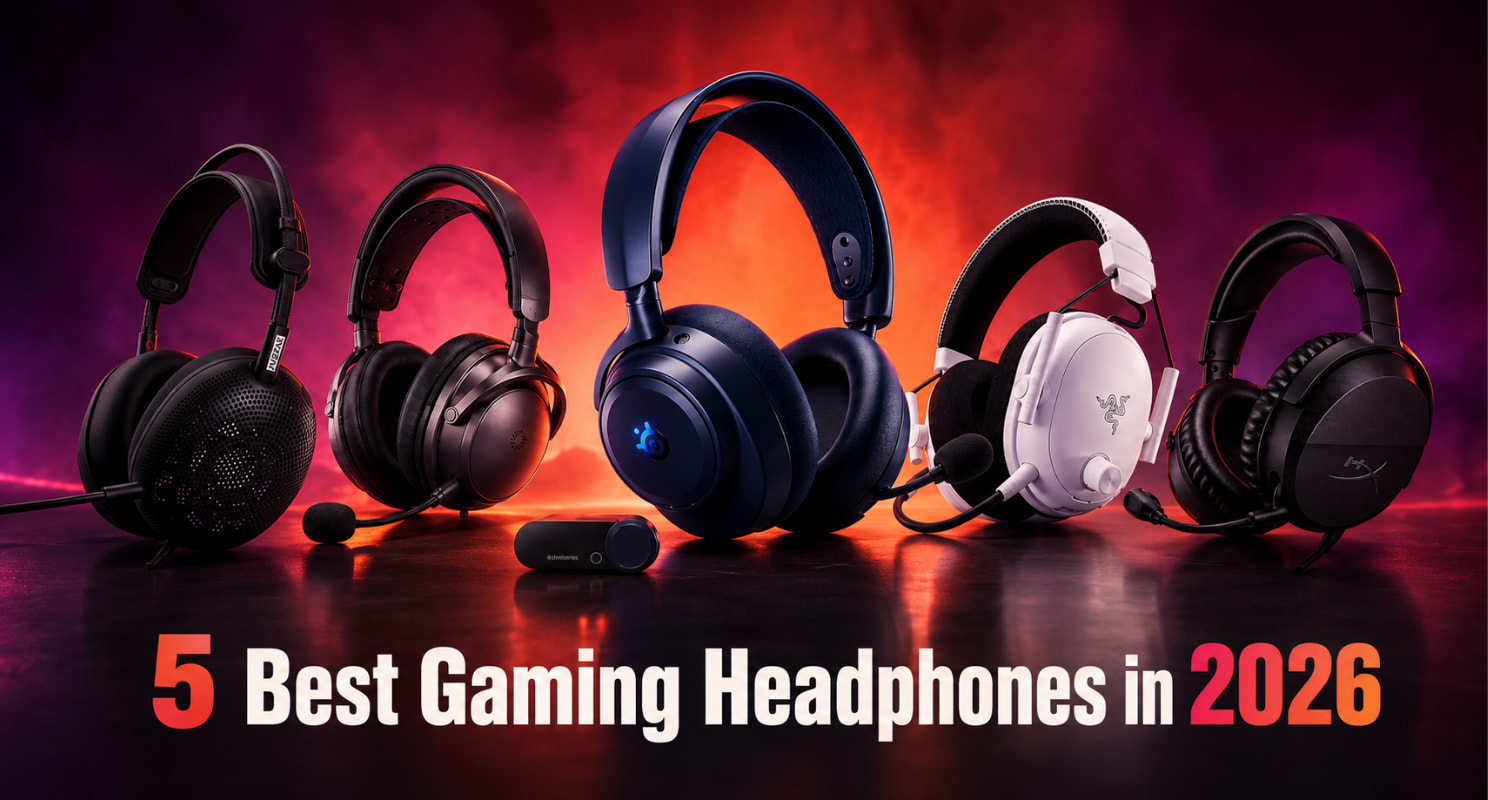
Modern gaming headsets cover everything from lightweight open-back listening to wireless systems capable of mixing several devices. Some models emphasize competitive imaging, while others prioritize cinematic bass, microphone quality, isolation, or long battery life. The best choice depends on your platform, room conditions, preferred games, and usual session length.
Listening habits also matter. According to the World Health Organization’s safe-listening guidance, adults can listen at an average level of 80 decibels for up to 40 hours per week, but that recommended exposure falls to four hours at 90 decibels. A detailed headset that reveals quiet cues without excessive volume can therefore improve both gameplay and long-term listening comfort.
This guide covers five current gaming headsets for different budgets and priorities. The selections include a multi-platform flagship, a lightweight open-back model, an audio-focused wireless headset, a competitive option, and an affordable wired pick. Product names, variants, connections, battery claims, and technical specifications were verified through current manufacturer documentation without inventing hands-on testing.
Quick Overview for Gaming Headphones
| Best Overall Gaming Headset | SteelSeries Arctis Nova Pro Omni |
| Best Wired Open-Back Gaming Headset | Sony INZONE H6 Air |
| Best Wireless Gaming Headset | Audeze Maxwell 2 |
| Best Competitive Gaming Headset | Razer BlackShark V3 Pro |
| Best Budget Gaming Headset | HyperX Cloud Stinger 3 |
In-Depth Look: Gaming Headphones
1. SteelSeries Arctis Nova Pro Omni
Best Overall Gaming Headset
- Mixes game, chat, mobile, and line-in audio
- Maintains continuous operation with two batteries
- Supports high-resolution wireless processing
- Reduces steady distractions with adjustable ANC
- Offers more than 200 game-focused EQ presets
- High flagship price
- Bulky GameHub for smaller desks
- Heat buildup from leatherette cushions
- Complicated controls for basic users
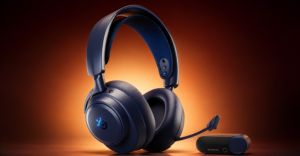
The SteelSeries Arctis Nova Pro Omni earns the Best Overall Gaming Headset award because it brings connectivity, sound adjustment, source mixing, and continuous battery operation into one system. Its Wireless GameHub supports three Universal Serial Bus (USB) sources, while Bluetooth and line connections accommodate phones, speakers, consoles, and streaming equipment.
SteelSeries uses neodymium drivers rated from 10 Hz to 40 kHz and 24-bit, 96 kHz processing through the Low Complexity Communication Codec Plus (LC3plus). Its ten-band Equalization (EQ) controls can reduce excessive bass, strengthen dialogue, or emphasize positional details. Adjustable Active Noise Cancelation (ANC) handles steady fan and room noise, while transparency mode restores environmental awareness.
Memory foam cushions and a suspended headband distribute pressure, although the vegan leather surface may retain heat. The ClearCast Pro microphone adds onboard Artificial Intelligence (AI) noise rejection, while two hot-swappable batteries prevent lengthy charging interruptions. Readers considering similar noise control in a smaller format can explore the Bose QuietComfort Earbuds II review.
View on Amazon: SteelSeries Arctis Nova Pro Omni
2. Sony INZONE H6 Air
Best Wired Open-Back Gaming Headset
- Creates a spacious open-back presentation
- Reduces head pressure with a 199 g chassis
- Supports 360 Spatial Sound for Gaming
- Connects through 3.5 mm and USB-C options
- Includes a detachable cardioid microphone
- Minimal isolation from surrounding noise
- Noticeable outward sound leakage
- No Bluetooth or 2.4 GHz wireless connection
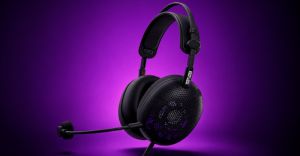
The Sony INZONE H6 Air earns the Best Wired Open-Back Gaming Headset award because its ventilated earcups and 199 g construction prioritize openness and long-session comfort. It suits players with a quiet private room who value directional scale and reduced head pressure more than isolation or wireless convenience.
Its 40 mm dynamic drivers carry a 28-ohm impedance and a sensitivity rating of 99 decibels per milliwatt. The analog connection has a stated 5 Hz to 80 kHz range, while the USB-C Audio Box supports 360 Spatial Sound for Gaming. Readers interested in how open planar headphones handle space and imaging can compare the HIFIMAN Arya Stealth Magnet Version review.
The ventilated cups release heat more effectively than sealed leatherette designs, but conversations, keyboards, and computer fans remain audible. Sound also leaks outward, making the headset unsuitable for shared rooms. Its detachable cardioid microphone concentrates on the player’s voice, while the wired signal path removes charging, pairing, and radio-interference concerns.
View on Amazon: Sony INZONE H6 Air
3. Audeze Maxwell 2
Best Wireless Gaming Headset
- Uses large 90 mm planar magnetic drivers
- Separates overlapping effects with low distortion
- Supports wireless, Bluetooth, USB, and analog audio
- Provides more than 80 hours of specified playback
- Filters microphone noise through physical and AI processing
- Heavy 560 g construction
- No ANC on the standard model
- Premium price compared with mainstream alternatives
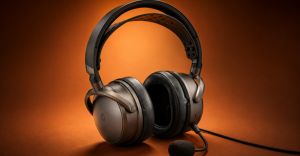
The Audeze Maxwell 2 earns the Best Wireless Gaming Headset award because it combines 90 mm planar magnetic drivers, broad connectivity, and more than 80 hours of specified battery life. Separate PlayStation and Xbox editions include different platform features, so buyers should confirm the correct version before ordering.
Audeze specifies a 10 Hz to 50 kHz range and Total Harmonic Distortion (THD) below 0.1 percent at 100 decibels. Its planar system supports controlled bass, centered voices, and separation between dense effects. Connections include a low-latency USB-C dongle, Bluetooth 5.3, USB audio, and an active 3.5 mm input.
Bluetooth codec support includes Lossless Digital Audio Codec (LDAC), Advanced Audio Coding (AAC), Low Complexity Communication Codec (LC3), LC3plus, and Low Complexity Subband Codec (SBC). The 560 g frame remains its main compromise despite the suspension strap. Players who find full-size headsets uncomfortable can compare alternative designs in the earbuds for small ears guide.
View on Amazon: Audeze Maxwell 2
4. Razer BlackShark V3 Pro
Best Competitive Gaming Headset
- Minimizes wireless delay with low-latency connectivity
- Highlights positional cues through game-specific profiles
- Adjusts hybrid ANC across four levels
- Captures clear speech with a 12 mm microphone
- Supports wireless, Bluetooth, USB, and analog audio
- Moderate 367 g weight
- Limited Bluetooth codec selection
- Restricted spatial-audio compatibility
- Competitive tuning that may need adjustment
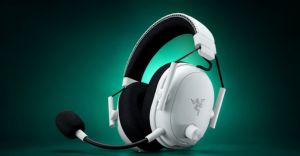
The Razer BlackShark V3 Pro earns the Best Competitive Gaming Headset award because its specified 10-millisecond minimum wireless latency, game-focused sound profiles, and wide-band microphone directly support ranked play. Four connection methods and adjustable hybrid ANC make it suitable for both competitive and everyday gaming.
Its 50 mm bio-cellulose drivers cover a stated 12 Hz to 28 kHz range at 32 ohms. Game-specific EQ profiles can emphasize footsteps, reloads, and movement without raising the entire volume. THX Spatial Audio adds 7.1.4 processing on compatible Windows 11 systems, although players who prefer a naturally open presentation may want to examine an open-back planar headphone review.
Flowknit memory foam cushions provide a secure seal while releasing more heat than solid leatherette. The detachable 12 mm microphone covers a specified 20 Hz to 20 kHz range and uses a unidirectional pickup pattern. Razer claims up to 70 hours of 2.4 GHz playback and approximately six hours from a 15-minute charge.
View on Amazon: Razer BlackShark V3 Pro
5. HyperX Cloud Stinger 3
Best Budget Gaming Headset
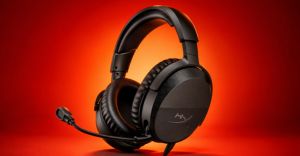
- Keeps the price low with wired connectivity
- Uses 50 mm dynamic drivers
- Connects across major gaming platforms
- Mutes the microphone through an upward swivel
- Reinforces the frame with steel sliders
- No wireless connectivity
- No active noise cancelation
- Limited sound-adjustment options
- Heat buildup from leatherette cushions
The HyperX Cloud Stinger 3 earns the Best Budget Gaming Headset award because it covers the essential requirements with 50 mm drivers, a 275 g closed-back frame, broad wired compatibility, and a swivel-to-mute microphone. The supplied Amazon link points to the wired version rather than the separate wireless model.
HyperX lists a 20 Hz to 20 kHz response for this headset. Its sealed earcups can produce stronger physical bass pressure than the open Sony, although the simpler tuning offers less control over bass weight or positional emphasis. The analog connection avoids battery maintenance and wireless latency but relies partly on the connected controller, computer, or adapter.
Memory foam and rotating earcups help the headset accommodate different head shapes, while stainless-steel sliders reinforce the adjustable frame. Passive isolation can soften fan and keyboard noise but will not remove nearby voices. Owners experiencing muffled or moisture-affected output can consult the headphone water-ejection guidance for recovery information and limitations.
View on Amazon: HyperX Cloud Stinger 3
What to Look for in Gaming Headphones
Matching Platform Compatibility
Confirm the exact console or computer edition before buying. Xbox authorization, PlayStation spatial features, chat mixing, and desktop software support can vary even when two versions share the same product name.
Prioritizing Positional Imaging
Large drivers do not automatically produce accurate directionality. Controlled bass decay, clear upper-midrange detail, stable channel matching, and a coherent soundstage help footsteps and environmental effects remain distinct when the game mix becomes crowded.
Comparing Connection Latency
Dedicated 2.4 GHz wireless normally suits competitive gaming better than standard Bluetooth. Wired analog removes radio delay and battery management, while Bluetooth remains useful for calls, music, and casual mobile play.
Assessing Isolation and Awareness
Closed earcups and ANC reduce distractions but separate the player from the surrounding room. Open-back headphones release heat and create a more spacious presentation, yet they admit external noise and leak game audio. The Bose QuietComfort Earbuds II analysis provides another example of how ANC and fit influence isolation.
Evaluating Comfort and Weight
Compare headset mass, clamp, earcup depth, suspension design, and cushion material. A heavy headset may distribute pressure effectively, but shallow pads or heat-retaining materials can still become uncomfortable. Buyers who need secure audio equipment for more active environments can also explore the earbuds for outdoor work guide.
Reviewing Microphone and Battery Needs
Directional microphones usually reject room noise more effectively than wide pickup patterns, although aggressive software filtering can make voices sound unnatural. Wireless users should compare battery life, charging time, and replacement options, while wired users should confirm cable length and controller compatibility.
Frequently Asked Questions
Are Wired Gaming Headphones Better Than Wireless Models?
Wired headsets remove battery management, pairing problems, and radio interference. Modern 2.4 GHz wireless systems can still provide sufficiently low latency for competitive gaming while offering greater freedom of movement. The better option depends on the player’s setup and platform.
Are Open-Back Headphones Good for Gaming?
Open-back headphones can produce a spacious presentation that helps environmental effects feel less confined. They work best in quiet private rooms because they provide little isolation and leak sound to anyone sitting nearby.
Do Gaming Headsets Need Active Noise Cancelation?
ANC helps when computer fans, air conditioners, or low room rumble cover quiet details. It matters less in a silent room and cannot completely remove irregular speech or sharp keyboard noise. Passive sealing and sensible volume remain important.
Which Headset Works Best Across Several Systems?
The SteelSeries Arctis Nova Pro Omni offers the broadest source management through its GameHub, multiple USB inputs, Bluetooth, and line connections. Players who only use one console can save money and complexity by choosing one of the more focused alternatives.
Final Verdict
The SteelSeries Arctis Nova Pro Omni provides the most complete overall package for multi-platform players. Its GameHub, extensive source mixing, adjustable ANC, customizable sound, onboard microphone processing, and hot-swappable batteries make it especially useful for gamers who regularly move between computers, consoles, and mobile devices.
The Sony INZONE H6 Air is the stronger choice for players who want an exceptionally light open-back headset for a quiet room. Its 199 g frame and ventilated design reduce heat and pressure, although the lack of isolation makes it unsuitable for shared or noisy environments.
Choose the Audeze Maxwell 2 when planar sound quality, connection flexibility, and battery endurance matter more than weight. Competitive players may prefer the Razer BlackShark V3 Pro for its low-latency wireless system, game-specific sound profiles, hybrid ANC, and wide-band microphone.
The HyperX Cloud Stinger 3 remains the most practical entry-level option. It lacks wireless connectivity and advanced processing, but its manageable weight, wired compatibility, swivel microphone, and straightforward controls cover the fundamentals without the cost or complexity of a flagship headset.