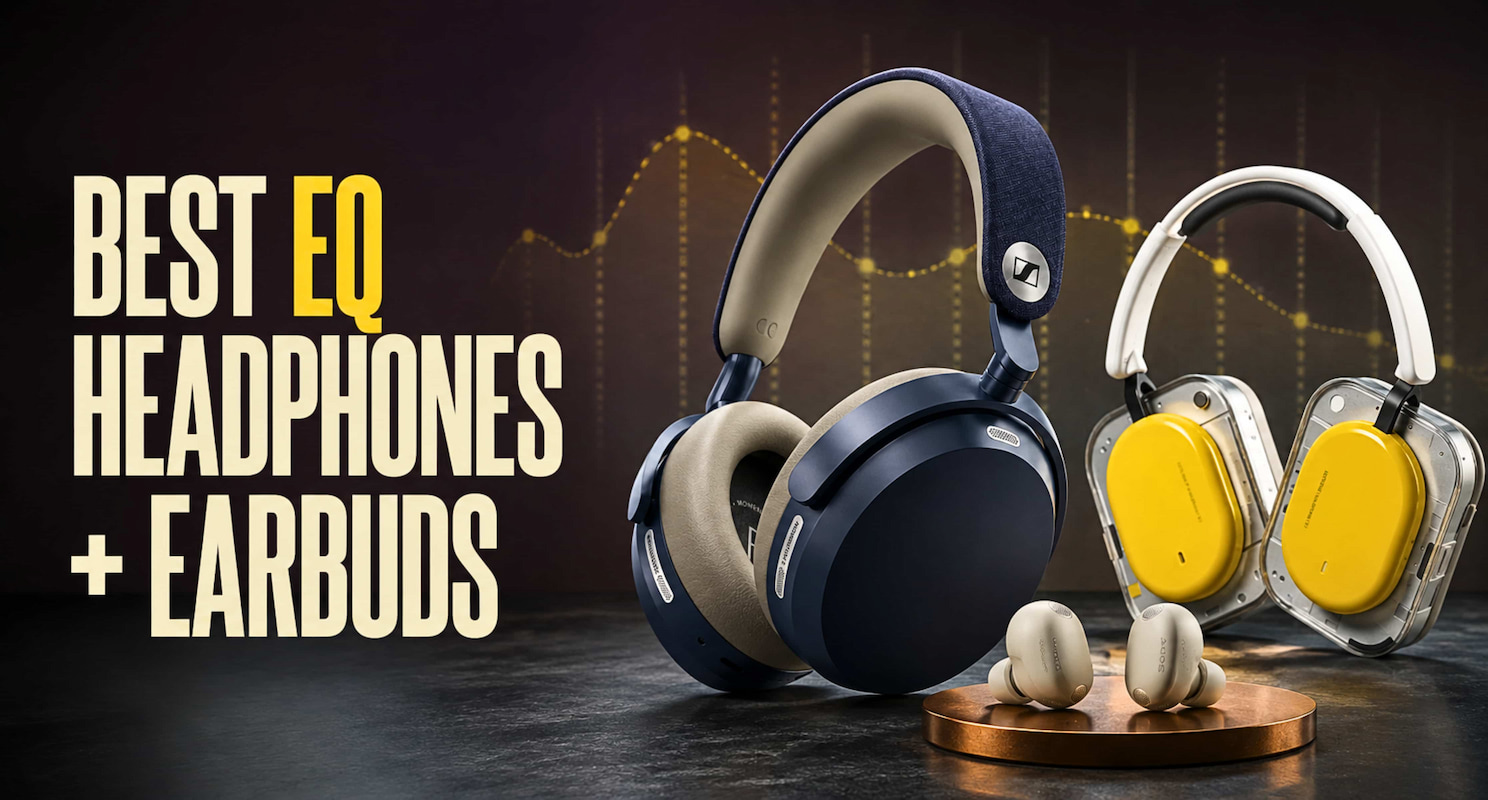
Shape Every Frequency Your Way
Equalization (EQ) can make a capable pair of headphones or earbuds fit your music, hearing preferences, and listening environment more effectively. A careful adjustment can reduce excessive bass, bring recessed vocals forward, soften sharp treble, or improve speech clarity without replacing the underlying sound signature. Volume still matters: the World Health Organization’s safe-listening guidance says adults can listen at 80 dB for up to 40 hours per week, while increasing the level to 90 dB reduces that allowance to only four hours.
The best EQ products combine useful presets with precise custom controls and dependable Digital Signal Processor (DSP) implementation. Presets make quick adjustments easy, while graphic or parametric controls let experienced users target specific frequency regions with greater accuracy. Active Noise Cancelation (ANC), ear-tip seal, earpad fit, codec support, and driver capability also influence the result because poor isolation or an unstable fit can weaken bass, mask detail, and encourage listeners to raise the volume.
This guide compares over-ear headphones, sealed earbuds, and open-ear models suited to commuting, flights, office work, Galaxy devices, outdoor awareness, and budget listening. Each selection receives an award based on its EQ flexibility, acoustic hardware, comfort, isolation, battery life, connectivity, and overall value. The evaluations rely on current manufacturer specifications and official support documentation, with unsupported details clearly identified instead of using fabricated listening sessions or unverified laboratory measurements.
Quick Overview for EQ Headphones and Earbuds
| Award Subcategory | Product Name |
| Overall Best EQ Headphones | Sennheiser MOMENTUM 5 Wireless |
| Best Budget EQ Headphones | Nothing Headphone (a) |
| Best Advanced EQ Earbuds | Nothing Ear (3a) |
| Best Noise-Canceling EQ Earbuds | Sony WF-1000XM6 |
| Best EQ Earbuds for Galaxy Users | Samsung Galaxy Buds4 Pro |
| Best Value EQ Headphones | FIIO EH13 |
| Best Open-Ear EQ Earbuds | Sony LinkBuds Clip |
| Best Budget EQ Earbuds | MOONDROP PUDDING ANC TWS |
In-Depth Look: EQ Headphones and Earbuds
1. Sennheiser MOMENTUM 5 Wireless
Overall Best EQ Headphones
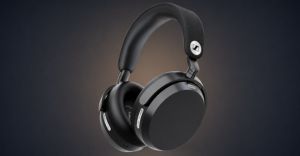
- Gives users an eight-band EQ plus guided Sound Personalization
- Combines a 42 mm dynamic driver with aptX Lossless and USB-C audio
- Delivers up to 57 hours of rated playback with adaptive ANC active
- Uses an owner-replaceable battery to improve long-term serviceability
- $399.95 manufacturer price that exceeds mainstream wireless headphones
- Substantial 290 g weight for listeners sensitive to crown pressure
- Closed circumaural pads that may accumulate warmth during long sessions
The Sennheiser MOMENTUM 5 Wireless earns the Overall Best EQ Headphones award because it combines an eight-band equalizer, guided Sound Personalization, Sound Check tools, premium codec support, and multiple wired listening modes. Its mix of manual control and guided tuning gives both experienced listeners and first-time EQ users a practical route to a preferred balance.
The 42 mm dynamic driver covers a manufacturer-specified 6 Hz to 40 kHz range over USB and Bluetooth, which gives the EQ system broad operating bandwidth. An eight-band layout can trim broad bass warmth, adjust vocal presence, and soften upper-frequency emphasis with more precision than a basic three-band control. The circumaural pads surround the ears, but the 290 g chassis makes headband adjustment important for listeners who develop crown pressure.
Sennheiser uses eight digital microphones for hybrid adaptive ANC and claims up to three times stronger midrange reduction than the previous generation, although that remains a manufacturer comparison rather than an independent measurement. The battery reaches up to 57 hours with ANC, and the replaceable 700 milliamp-hour (mAh) pack addresses long-term battery wear. Bluetooth 5.4, aptX Lossless, aptX Adaptive, AAC, SBC, 24-bit/96 kHz USB-C audio, analog input, multipoint, automatic wind reduction, and four call microphones make this the most complete premium EQ package here.
View on Amazon: Sennheiser MOMENTUM 5 Wireless
2. Nothing Headphone (a)
Best Budget EQ Headphones
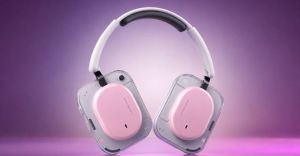
- Offers four immediate presets plus Custom and Advanced EQ modes
- Supports wireless, Universal Serial Bus Type-C (USB-C), and 3.5 mm playback
- Extends rated playback to 75 hours with ANC or 135 hours without it
- Adds tactile controls, dual-device connection, and adaptive noise control
- Light splash protection that trails workout-focused alternatives
- Missing automatic wear detection and automatic play or pause
- Closed synthetic-leather earpads that can retain more heat than open designs
The Nothing Headphone (a) earns the Best Budget EQ Headphones award because the Nothing X app combines Balanced, More Bass, More Treble, and Voice presets with Custom and Advanced EQ modes in an accessible full-size package. Buyers can start with quick tonal changes or move into finer control without sacrificing wired playback options.
A 40 mm titanium-coated dynamic driver gives those adjustments a full-size acoustic platform. Cutting an excessive bass region before adding treble helps preserve headroom, while the memory-foam polyurethane leather pads create the consistent seal that low-frequency tuning needs. Closed cups also isolate more naturally than an open design, although listeners who prioritize airy staging may prefer the presentation described in our HIFIMAN Arya Stealth review.
Nothing rates the adaptive ANC system for up to 40 dB of reduction and provides High, Mid, Low, and Adaptive modes, so steady transit rumble should present an easier target than nearby speech or keyboard clicks. Codec support includes Sony’s Lossless Digital Audio Codec (LDAC), Advanced Audio Coding (AAC), and the Subband Codec (SBC); Nothing rates AAC playback at 75 hours with ANC and 135 hours without it, while LDAC lowers those figures to 62 and 90 hours. The Ingress Protection (IP) rating is IPX2, and the headphones also support USB-C audio, a 3.5 mm input, call-noise processing, and dual connection.
View on Amazon: Nothing Headphone (a)
3. Nothing Ear (3a)
Best Advanced EQ Earbuds
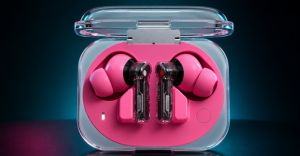
- Provides Advanced EQ control over frequency, gain, and filter width
- Supports LDAC High-Resolution Audio and dual-device connection
- Extends manufacturer-rated total listening time to 42 hours
- Includes four liquid-silicone tip sizes for seal adjustment
- Shorter earbud runtime when ANC and high-bitrate audio run together
- Sealed stem design that may not suit every small outer ear
- Recording controls that require attention to local consent laws
The Nothing Ear (3a) earns the Best Advanced EQ Earbuds award because its Nothing X controls move beyond broad bass and treble sliders. The Advanced EQ interface lets users select frequency, gain, and filter width, then save and share tuning profiles, which makes it more flexible than a preset-only earbud.
The 12 mm dynamic driver gives bass adjustments meaningful physical surface area, but a clean correction should start with the seal and then use cuts before large boosts. Four liquid-silicone tip sizes help stabilize bass response and reduce pressure points, while readers with compact ears can compare additional fit-focused options in our guide to the best earbuds for small ears. The app can also move vocals forward or calm upper-frequency energy without forcing one fixed sound profile.
Nothing rates wideband ANC for a peak reduction of up to 45 dB and offers adaptive control, so it should address steady low-frequency noise more readily than unpredictable voices. Ear (3a) supports LDAC High-Resolution Audio, reaches up to 42 hours with the case under the manufacturer’s conditions, and includes call recording plus Audio Snapshot features. Those recording tools add utility, but buyers should confirm consent requirements before using them during calls.
View on Amazon: Nothing Ear (3a)
4. Sony WF-1000XM6
Best Noise-Canceling EQ Earbuds
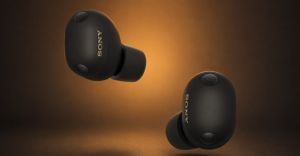
- Combines custom EQ, Clear Bass control, and Find Your Equalizer guidance
- Supports LDAC, multipoint connection, and High-Resolution Audio playback
- Provides up to eight hours of rated playback with noise cancelation active
- Includes IPX4 splash resistance and wireless case charging
- $329.99 manufacturer price that exceeds most customizable true wireless earbuds
- Ear-tip seal dependency for consistent bass and noise reduction
- Limited LDAC availability on devices that do not support Sony’s codec
The Sony WF-1000XM6 earns the Best Noise-Canceling EQ Earbuds award because Sony pairs its Sound Connect tuning tools with the dedicated High-Definition (HD) Noise Canceling Processor QN3e. Presets, custom slots, Clear Bass, and Find Your Equalizer provide a practical path from guided preference matching to manual correction.
Sony specifies a 0.33-inch dynamic driver and a Bluetooth response up to 40 kHz when LDAC runs at 96 kHz and 990 kbps. The custom EQ can reduce excess bass before lifting vocal presence, while Clear Bass separates low-end quantity from the rest of the curve. Each earbud weighs about 0.23 ounces with a medium tip, but the noise-isolation tips still need a stable seal to keep bass and ANC consistent.
The QN3e processor targets continuous engine and train noise, while speech and sharp keyboard sounds remain more difficult for any ANC system. Sony rates the earbuds for eight hours with noise cancelation on and 12 hours with it off, and the case raises total ANC-on playback to 24 hours. Codec support covers LDAC, AAC, SBC, and Low Complexity Communication Codec (LC3), while multipoint, ambient sound, IPX4 protection, and wireless charging round out the daily feature set; readers who want another isolation reference can compare our Bose QuietComfort Earbuds II review.
View on Amazon: Sony WF-1000XM6
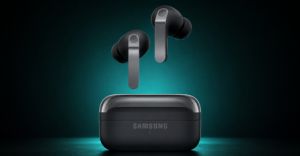
5. Samsung Galaxy Buds4 Pro
Best EQ Earbuds for Galaxy Users
- Offers a nine-band equalizer for direct bass, midrange, and treble control
- Pairs Adaptive EQ 2.0 with a two-way speaker and dual amplifiers
- Uses 24-bit/96 kHz audio on supported Galaxy devices
- Adds IP57 dust and water resistance for more demanding daily use
- Full tuning and high-resolution features tied most closely to Galaxy devices
- Six-hour ANC-on earbud rating that requires regular case charging
- Missing LDAC and aptX support for broader high-bitrate compatibility
The Samsung Galaxy Buds4 Pro earns the Best EQ Earbuds for Galaxy Users award because Samsung combines a nine-band equalizer with Adaptive EQ 2.0 and direct One UI controls. Galaxy owners receive both manual frequency shaping and automatic compensation for ear shape and fit.
A wider woofer and precision planar tweeter split low and high frequencies, while separate amplifiers reduce the burden on one full-range driver. That architecture lets the nine-band EQ target bass weight, vocal position, and treble energy more selectively. Each earbud weighs 5.1 g with the medium tip, and three silicone tip sizes support seal adjustment, although readers with difficult fits should also review our small-ear earbud recommendations.
Adaptive ANC 2.0 changes processing with the environment, while a sealed canal fit provides passive help against speech and office noise. Samsung rates playback at six hours with ANC and seven hours without it, or 26 and 30 hours with the case. Samsung Seamless Codec (SSC) Ultra High Quality (UHQ) audio reaches 24-bit/96 kHz on compatible Galaxy hardware, while AAC, SBC, LC3, Bluetooth 6.1, a Voice Pickup Unit (VPU), three microphones per earbud, IP57 protection, and wireless case charging cover broader daily needs.
View on Amazon: Samsung Galaxy Buds4 Pro
6. FIIO EH13
Best Value EQ Headphones
- Provides a ten-band EQ with Pop, Rock, and Classical presets
- Stores three custom EQ curves in the FIIO Control app
- Runs for up to 45 hours with ANC or 75 hours without it
- Supports LDAC, dual-device connection, and 3.5 mm wired playback
- Maximum 42 dB ANC figure derived from FIIO laboratory testing
- Reduced 45-hour battery ceiling when noise cancelation remains active
- Undisclosed pad depth and clamping-force measurements for fit comparison
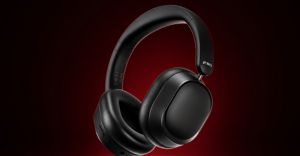
The FIIO EH13 earns the Best Value EQ Headphones award because it supplies a ten-band EQ, three savable custom curves, and several genre presets at a substantially lower list price than most full-size competitors here. It also keeps LDAC, hybrid ANC, wired playback, and long battery life instead of treating EQ as its only major feature.
The 40 mm driver uses a sapphire-coated dome with a composite surround, and FIIO says this structure increases rigidity while supporting bass extension. A ten-band curve can reduce a broad low-frequency shelf, lift vocal intelligibility, or calm a narrow treble region without forcing one global tone control. The rotating, foldable frame improves portability, but FIIO does not publish pad-depth or clamp measurements, so buyers should check return options if fit sensitivity matters.
FIIO rates the hybrid feedforward and feedback ANC system for a maximum 42 dB reduction and provides three strength levels for transit and office use. Five microphones and Environmental Noise Cancelation (ENC) process calls, while the battery reaches up to 45 hours with ANC and 75 hours without it. LDAC, dual-device pairing, gaming and cinema modes, a two-hour charge time, and powered DSP compensation during 3.5 mm use make the EH13 unusually flexible for its price.
View on Amazon: FIIO EH13
7. Sony LinkBuds Clip
Best Open-Ear EQ Earbuds

- Keeps speech, traffic, and workplace cues audible through an open clip design
- Provides Sound Connect EQ, Voice Boost, and leakage-reduction controls
- Delivers up to nine hours per charge and 37 hours with the case
- Supports multipoint connection, IPX4 protection, and lightweight wear
- Absent ANC for flights, trains, and other high-noise environments
- Open acoustic path that limits deep bass and passive isolation
- SBC and AAC codec support without LDAC or LC3
The Sony LinkBuds Clip earns the Best Open-Ear EQ Earbuds award because it combines Sound Connect tuning with a design that intentionally preserves environmental awareness. The app can shape the tonal balance, while Standard, Voice Boost, and Sound Leakage Reduction modes adapt the output to conversation, spoken content, and shared spaces.
Sony specifies a 0.39-inch driver in an open-air enclosure. EQ can add some warmth or emphasize vocals, but large bass boosts cannot recreate the acoustic seal of an in-ear tip and may consume headroom quickly. Each side weighs about 0.23 ounces, and the Air Fitting Cushions let users adjust the clip without placing a tip inside the canal.
LinkBuds Clip omit ANC by design, so listeners continue to hear engine rumble, office speech, and keyboard clatter. That trade-off fits walking and situational-awareness use, and our guide to earbuds for outdoor work explains why awareness and weather resistance can matter more than isolation in some jobs. Sony rates the earbuds for nine hours plus 28 hours from the case, while multipoint, IPX4 protection, AAC, SBC, and Artificial Intelligence (AI) voice pickup support everyday calls and mobility.
View on Amazon: Sony LinkBuds Clip
8. MOONDROP PUDDING ANC TWS
Best Budget EQ Earbuds

- Costs less than the premium earbuds while retaining MOONDROP Link tuning support
- Supports AAC, SBC, and Low Latency High-Definition Audio Codec transmission
- Extends rated AAC playback to 12.5 hours per charge with 41 hours listed for case playtime
- Connects through Bluetooth 6.0 with a standard USB-C charging port
- Undisclosed official ANC attenuation depth for direct comparison
- Unpublished official EQ band count for the PUDDING profile
- Limited primary-source detail for microphone and water-resistance ratings
The MOONDROP PUDDING ANC True Wireless Stereo (TWS) model earns the Best Budget EQ Earbuds award because it brings MOONDROP Link app tuning support to a $49.99-class product. Buyers get a lower entry price without giving up ANC, High-Resolution Audio codec support, or long manufacturer-rated battery life.
The sealed in-ear format lets DSP changes affect bass and vocal balance more predictably than an open design, provided the included tips form a stable seal. MOONDROP does not publish the PUDDING’s EQ band count on its English specification page, so buyers should treat the app as a tuning advantage without assuming parametric control that the company has not documented. Large boosts also remain less desirable than moderate cuts because they reduce digital headroom.
The official product name confirms ANC, but MOONDROP does not publish a numerical attenuation depth for this model, which prevents a responsible decibel comparison with Sony, Nothing, FIIO, or Samsung. Bluetooth 6.0 supports AAC, SBC, and Low Latency High-Definition Audio Codec (LHDC), while the 55 mAh earbud batteries reach about 12.5 hours under AAC and MOONDROP lists about 41 hours for charging-case playtime. The sparse published microphone and protection data make this a stronger choice for low-cost music tuning than for buyers who need documented call or workout performance.
View on Amazon: MOONDROP PUDDING ANC TWS
What to Look for in EQ Headphones and Earbuds
Choose the Right EQ Architecture: Presets offer speed, graphic EQ divides the spectrum into fixed bands, and parametric EQ adds control over center frequency, gain, and filter width. Choose parametric control for corrective tuning and a simpler graphic layout for quick genre or preference changes.
Check the Hardware Headroom: EQ cannot repair a poor seal, a distorted driver, or an enclosure that cannot produce the requested bass. Cut unwanted energy before boosting another region, and keep changes moderate so the DSP retains enough headroom for musical peaks.
Match the Isolation to the Environment: Sealed ANC models suit flights and commutes, while open-ear models preserve speech and traffic awareness. Outdoor users should balance isolation against safety, weather resistance, and call needs, as explained in our outdoor-work earbud guide.
Confirm the Codec and Device Support: LDAC, LHDC, aptX Lossless, and Samsung’s proprietary codec require compatible source hardware. iPhone users often fall back to AAC, while Galaxy owners receive the deepest Buds4 Pro integration and some Android devices expose more high-bitrate choices.
Evaluate the Fit and Controls: A broken ear-tip seal can remove bass and weaken ANC before the EQ curve becomes relevant. Compare tip sizes, pad depth, clamp, weight, and app accessibility, and consult our small-ear fit guide if standard shells cause discomfort.
Protect the Listening Level: Boosting several bands raises total output and can increase Sound Pressure Level (SPL), so lower the master volume or preamp when applying positive gain. The WHO safe-listening standard for gaming and esports specifically notes that maximum EQ settings can raise headphone output voltage and SPL.
Frequently Asked Questions
Can EQ Make Any Headphone Sound Neutral?
EQ can correct broad tonal imbalances, but it cannot fully fix poor fit, severe driver distortion, narrow acoustic cancelation notches, or limited extension. Start with a good seal, use moderate cuts, and compare at matched volume.
Is Parametric EQ Better Than Graphic EQ?
Parametric EQ offers more precision because it controls frequency, gain, and filter width. Graphic EQ remains easier for quick adjustments, so the better choice depends on whether you want detailed correction or simple preference tuning.
Should I Boost Bass or Cut Other Frequencies?
Cutting unwanted mid-bass or upper-mid energy usually preserves more headroom than applying a large bass boost. If distortion, imbalance, or connection problems persist after resetting the curve, use our headphone troubleshooting tools before assuming the driver needs more EQ.
Which EQ Headphones Work Best Across Different Devices?
Nothing Headphone (a), Sennheiser MOMENTUM 5 Wireless, FIIO EH13, and Sony’s app-supported models offer broad Android and iOS compatibility, although codec choices vary. Galaxy Buds4 Pro deliver their fullest tuning, codec, and adaptive features inside Samsung’s ecosystem.
Final Verdict
The Sennheiser MOMENTUM 5 Wireless is the strongest all-around EQ choice because it combines an eight-band equalizer, guided Sound Personalization, aptX Lossless, USB-C audio, adaptive ANC, long rated battery life, and a replaceable battery. Nothing Headphone (a) becomes the Best Budget EQ Headphones choice for buyers who want accessible presets, Advanced EQ, LDAC, wired playback, and unusually long manufacturer-rated battery life in a more approachable full-size package.
Among sealed earbuds, Nothing Ear (3a) provides the most advanced low-cost tuning interface, while Sony WF-1000XM6 best combines EQ tools with premium noise cancelation. Samsung Galaxy Buds4 Pro makes the most sense for Galaxy users who can access its nine-band equalizer, Adaptive EQ 2.0, and 24-bit/96 kHz Samsung codec.
FIIO EH13 delivers the strongest full-size value with ten bands and three custom slots. Sony LinkBuds Clip is the awareness-first option, and MOONDROP PUDDING ANC TWS offers the least expensive route into app-managed DSP tuning. Choose by EQ architecture, fit, source compatibility, isolation, and safe listening level instead of judging the products by band count alone.